Heat pumps are becoming one of the most efficient and cost-effective ways for homeowners to manage indoor comfort. Heat pumps can reduce the amount of electricity used for heating by up to 75% compared to conventional electric resistance heating systems—a major advantage for families looking to lower energy bills while improving comfort.
In hot and humid regions like Bryan and College Station, Texas, HVAC systems work harder and longer throughout the year, especially during months of extreme heat when cooling demand peaks. Homes in this climate need equipment that can maintain stable comfort in both summer and winter, and a heat pump provides exactly that.
If you are thinking about upgrading your home HVAC system, this guide will walk you through why replacing a traditional AC and furnace setup with a heat pump can deliver significant benefits, including reduced energy costs, improved comfort control, quieter operation, long-term value, and a lower carbon footprint.
Key Takeaways
Heat pumps provide both heating and cooling in one system, making them ideal for climates with long summers and seasonal winter needs.
They can reduce electricity used for heating by up to 75%, helping homeowners save hundreds of dollars annually on energy bills.
Heat pumps offer better humidity control, consistent comfort, and quieter operation than traditional HVAC setups.
Environmentally friendly: they lower carbon emissions, improve indoor air quality, and reduce dependence on fossil-fuel heating.
Many homeowners qualify for federal tax credits, rebates, and utility incentives, increasing ROI and boosting home value.
Working with a local installer like Central Air & Refrigeration ensures correct sizing, expert installation, and long-term performance support to maximize heat pump benefits.
What is a Heat Pump and How Does it Work?
A heat pump is a highly efficient heating and cooling system that works by transferring heat rather than generating it. Instead of burning fuel like a furnace or using high-resistance electric heating, a heat pump moves heat between the indoors and outdoors using a refrigerant cycle and compressor system.
In cooling mode, a heat pump removes heat from inside the home and releases it outdoors—similar to a traditional air conditioner. In heating mode, the process reverses: the heat pump extracts heat from outdoor air (even in cold temperatures) and transfers it inside to warm the home.
Types of heat pumps relevant for homeowners
There are several types of heat pumps available today, each suited to different home layouts and climate conditions:
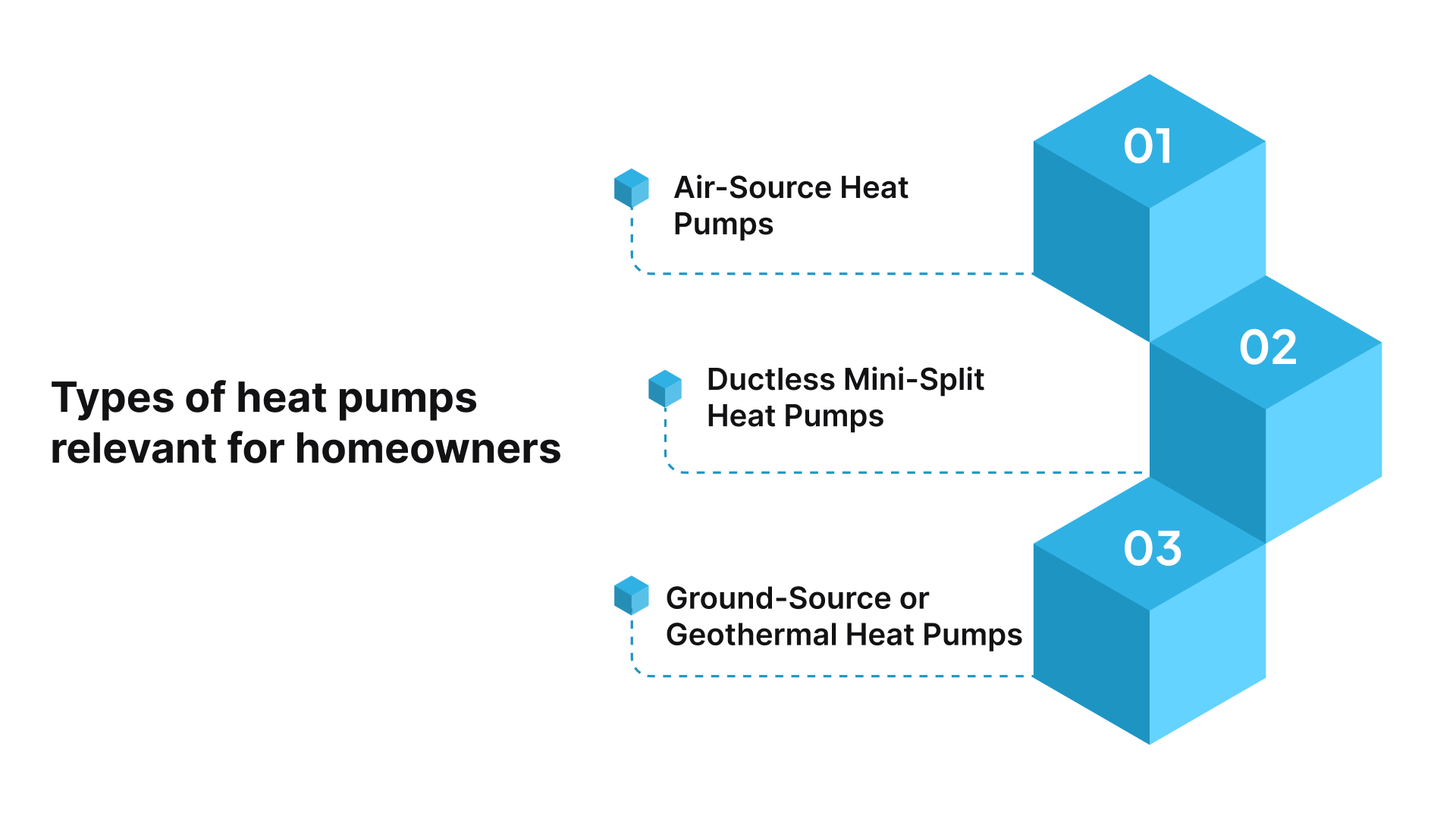
Air-Source Heat Pumps (ASHP): The most common option for U.S. homes and highly effective in Texas climates. Ideal for homeowners replacing a central HVAC system or wanting both heating and cooling in a single unit.
Ductless Mini-Split Heat Pumps: Excellent for homes without ductwork, older properties, home additions, or rooms with uneven temperatures. They offer individual zone control and strong energy efficiency.
Ground-Source or Geothermal Heat Pumps: Extremely efficient but higher initial cost. These systems move heat from the ground instead of the air and are less common for residential use due to installation complexity.
For most homes in Bryan and College Station, air-source and ductless mini-split systems provide the best balance of cost, efficiency, and climate performance.
Why heat pumps are ideal for hot/humid climates
Heat pumps are particularly effective in regions that experience long stretches of heat along with seasonal cold. In Texas, where cooling demand dominates, a heat pump functions as a high-efficiency air conditioner throughout the summer and then reverses operation to provide heating during cooler months without needing a separate furnace.
Additional advantages include:
Excellent humidity control, improving indoor comfort and air quality
Smooth and consistent temperature output, eliminating hot and cold spots
Reduced energy waste by avoiding short-cycling and oversized equipment
Quieter operation compared to traditional systems
Because they deliver both heating and cooling through the same system, heat pumps eliminate the need for multiple pieces of equipment and simplify long-term maintenance.
Knowing how the system works helps us explore why the benefits for homeowners are significant.
Key Benefits of Heat Pumps for Homeowners
From energy savings to superior comfort, heat pumps deliver multiple benefits that make them one of the smartest upgrades available for modern homes.
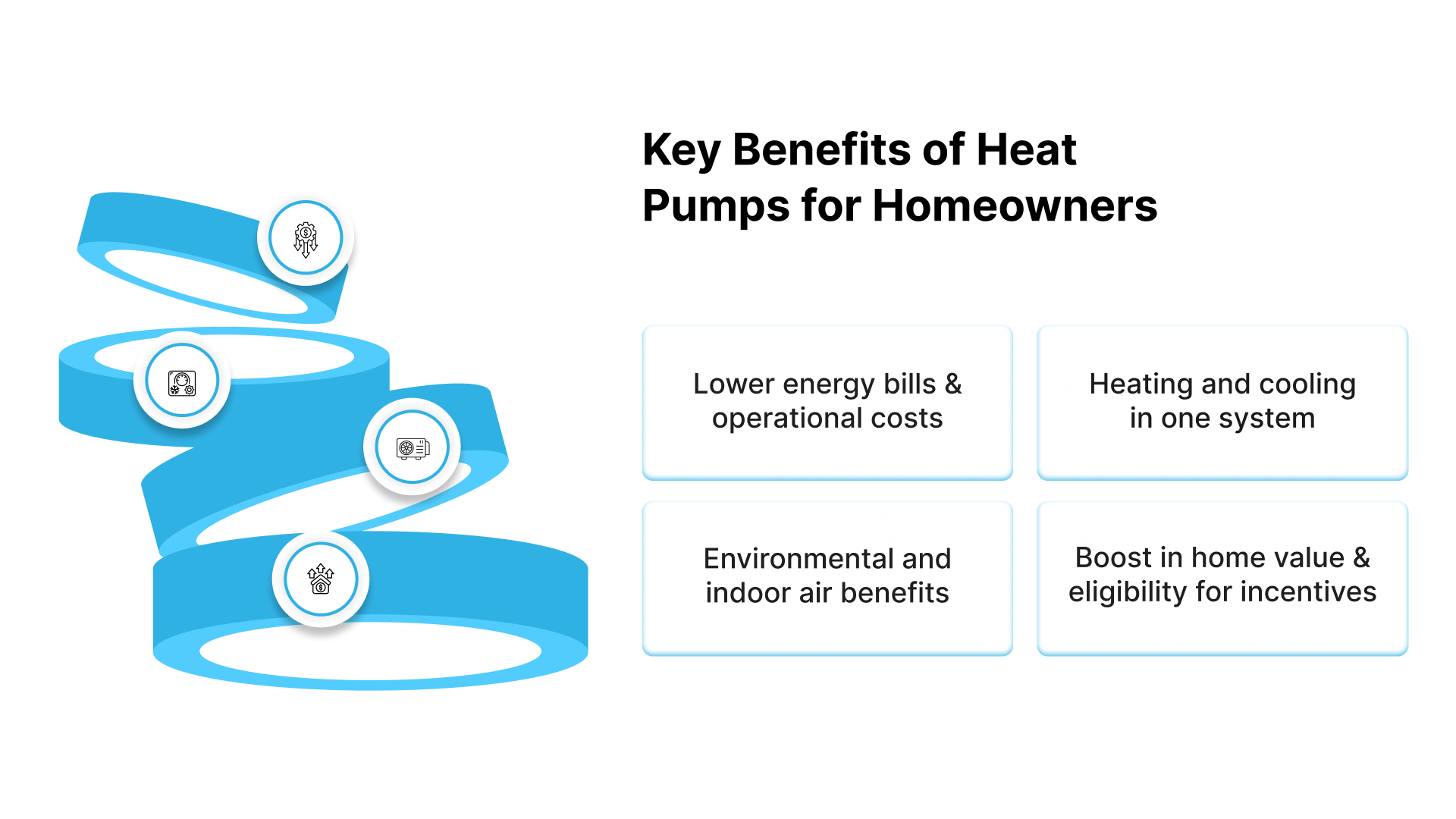
Lower energy bills & operational costs
One of the biggest advantages of a heat pump is the dramatic reduction in energy consumption compared to traditional heating systems. Because heat pumps transfer heat instead of generating it, they use significantly less electricity.
Energy efficiency translates directly into predictable, long-term financial benefits. Modern heat pumps can substantially reduce annual heating and cooling costs, often saving homeowners hundreds of dollars per year, depending on climate and equipment being replaced.
Year-round comfort: heating and cooling in one system
Unlike traditional HVAC setups that require separate equipment for heating (furnace) and cooling (AC), a heat pump provides both functions in a single system. This is especially valuable for homes in Texas, where cooling demand dominates most of the year, but winter nights can still require supplemental heat. Instead of maintaining and servicing two systems, a heat pump simplifies the entire home comfort approach.
Environmental and indoor air benefits
Heat pumps offer clear environmental advantages by reducing reliance on fossil-fuel-based heating equipment. Since they move heat rather than burn fuel, they produce lower carbon emissions and help improve outdoor and indoor air quality.
Research from RMI (Rocky Mountain Institute) highlights that heat pumps can significantly reduce climate-warming emissions, especially when replacing oil, propane, or outdated electric systems. Because they do not require combustion, they also help reduce indoor air pollutants associated with gas furnaces, contributing to healthier air inside the home.
Boost in home value and eligibility for incentives
Upgrading to a high-efficiency heat pump can also increase home value by positioning the property as more energy-efficient and environmentally responsible, traits highly valued by today’s buyers. Many utility companies, energy-efficiency programs, and federal incentive programs offer rebates, tax credits, or financing support for heat pump installations, which helps offset upfront costs.
Taking advantage of these financial incentives can help homeowners reduce the overall installation cost while boosting long-term return on investment.
With all these benefits, one of the next questions is: how do you choose the right system?
How to Choose and Install the Right Heat Pump for Your Home
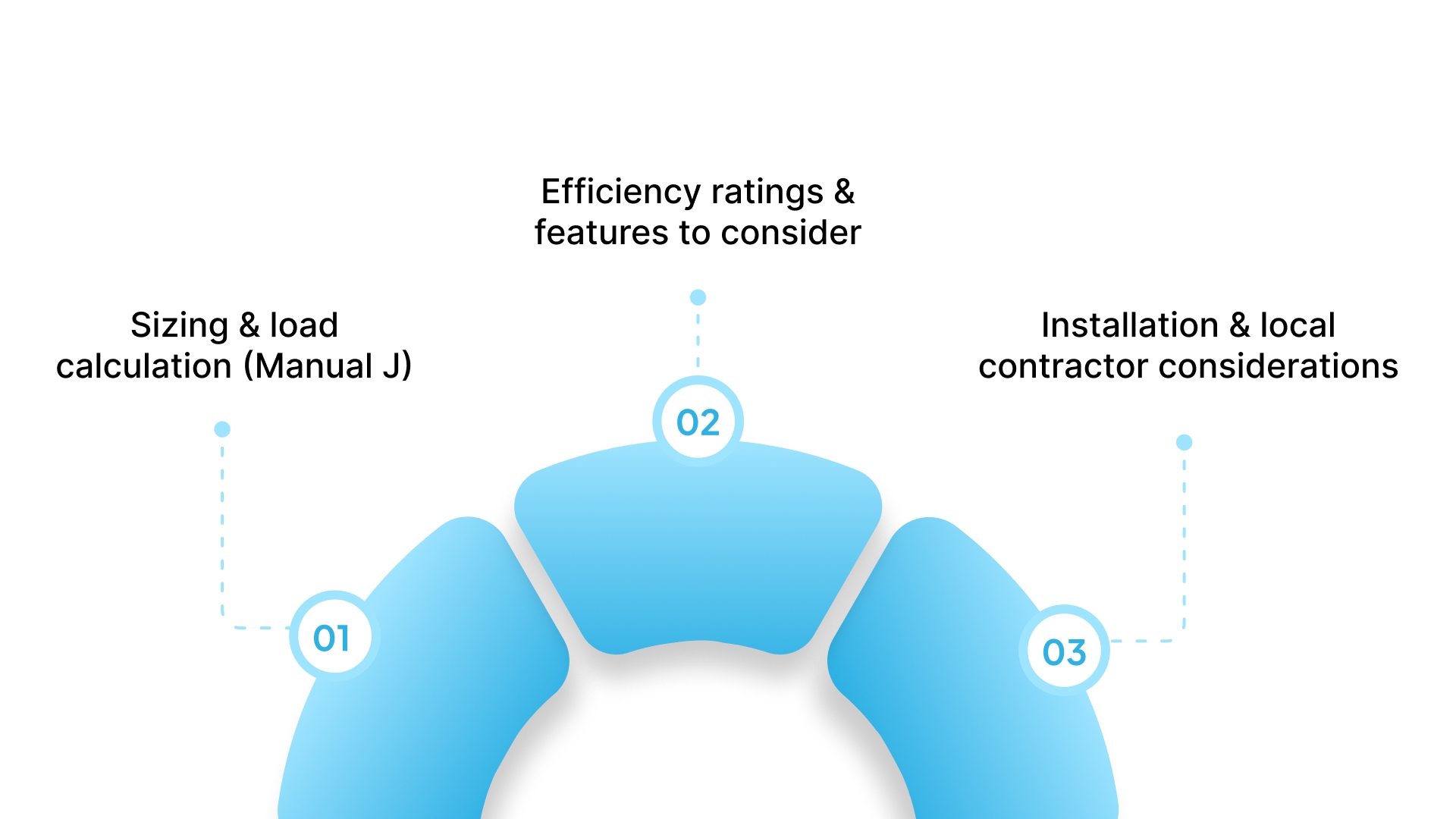
Selecting the right heat pump involves careful evaluation of home requirements, efficiency levels, and installation quality—decisions that directly influence comfort and long-term performance.
Sizing & load calculation (Manual J)
Choosing the right heat pump begins with accurate system sizing. Installing a system that is too small will cause it to run continuously and struggle to maintain comfortable temperatures, while an oversized system can short-cycle, reduce humidity control, waste energy, and wear out more quickly. This is especially important in hot and humid regions like Bryan and College Station, where proper dehumidification is essential for comfort.
A qualified HVAC contractor should perform a Manual J load calculation, which evaluates the home’s square footage, insulation levels, window exposure, occupancy, ductwork condition, and regional climate data. This calculation ensures that the selected heat pump is appropriately sized for the home’s real heating and cooling needs rather than relying on guesswork or outdated system sizing.
Efficiency ratings & features to consider
Heat pump efficiency is measured by two main ratings:
SEER (Seasonal Energy Efficiency Ratio) or SEER2—measures cooling efficiency.
HSPF (Heating Seasonal Performance Factor) — measures heating efficiency.
Higher SEER/SEER2 and HSPF ratings generally mean lower operating costs and improved performance, especially in climates with long cooling seasons. Homeowners should also consider features such as:
Variable-speed compressors, which adjust capacity smoothly for consistent comfort
Advanced humidity control
Smart thermostat compatibility
Noise reduction technology
These features not only improve comfort but can also enhance long-term energy savings and system lifespan.
Installation and local contractor considerations
Even the most advanced heat pump will underperform if installed incorrectly. Quality installation plays a major role in long-term system performance, efficiency, and warranty protection. Homeowners should choose an HVAC contractor who:
Understands local climate conditions and equipment performance under Texas heat and humidity
Uses correct refrigerant handling and follows manufacturer installation standards
Evaluates and improves ductwork as part of installation
Provides clear maintenance and warranty guidance
From system sizing to humidity control and proper installation, Central Air & Refrigeration helps you select and install a heat pump built for Texas properties. Schedule your consultation today.
Once installed, you will want to maintain it properly to ensure you get the full benefits over the long run.
Maintenance, Lifespan & Maximizing Return on Investment
Proper care and maintenance play a major role in how long a heat pump lasts and how much value it delivers over its lifetime.
Typical lifespan & maintenance best practices
A well-installed and properly maintained heat pump can provide 15 years or more of reliable service. Just like any HVAC system, performance and longevity depend heavily on routine care. Without maintenance, efficiency declines, energy use increases, and components such as compressors and coils face faster wear.
To keep your system running smoothly, homeowners should:
Schedule annual professional tune-ups
Replace air filters every 1–3 months, depending on usage and household conditions
Keep outdoor units free from debris, leaves, or blocked airflow
Clean coils and check refrigerant charge periodically
Inspect ductwork for leaks and airflow restrictions
Routine preventive care minimizes repair frequency, protects warranty coverage, and supports long-term efficiency.
Monitoring performance and adjusting for climate
Heat pumps perform exceptionally well in hot and humid climates like Bryan and College Station, but their performance depends on maintaining proper airflow and humidity control. Homeowners should monitor:
Indoor comfort consistency—no uneven cooling or excessive humidity
Energy bill patterns—unexpected increases may signal declining efficiency
Airflow changes can indicate clogged filters or duct issues
System noise or cycling—abnormal behavior should be checked promptly
A heat pump that is struggling to keep up during extreme heat is often signaling the need for maintenance rather than replacement. Addressing issues early prevents damage and preserves efficiency.
ROI: payback periods, energy savings, lifecycle costs
Heat pumps not only reduce energy consumption but also offer a strong long-term return on investment. American households can save an average of about $557 per year when switching to a high-efficiency heat pump from a traditional system, depending on home size, climate, and equipment replaced. Combined with fewer system components to maintain and strong warranty options, heat pumps often pay for themselves through reduced utility bills and lower maintenance costs over time.
Additionally, federal tax credits, utility rebates, and local incentive programs can significantly reduce upfront installation costs, accelerating overall payback timelines.
How Central Air & Refrigeration Helps Homeowners Get the Most Value from a Heat Pump
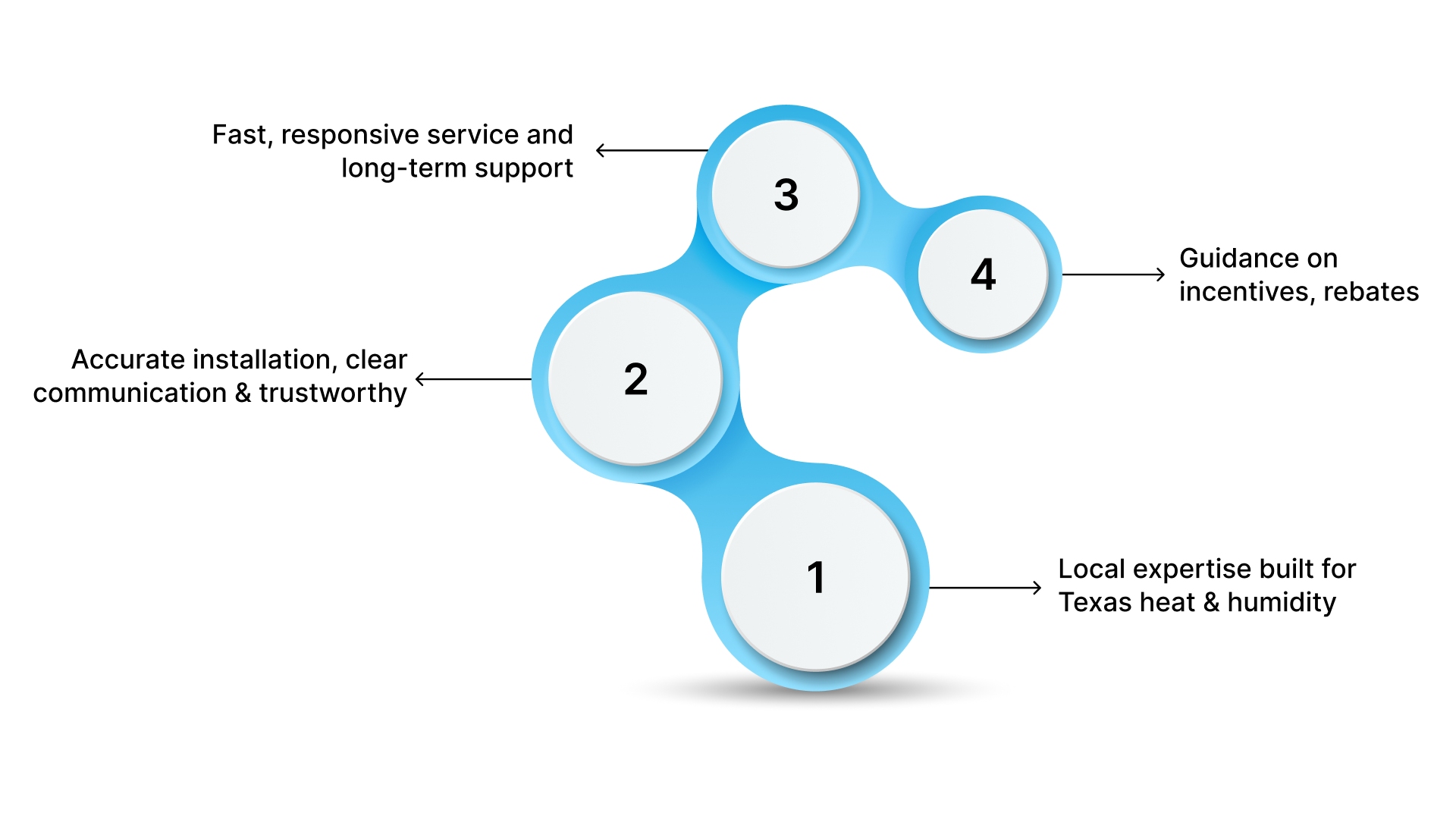
Choosing to install a heat pump is a major decision, and the long-term benefits depend heavily on selecting the right equipment and ensuring expert installation. That’s why homeowners in Bryan and College Station rely on Central Air & Refrigeration—a local team committed to delivering reliable comfort, transparent guidance, and long-term performance support.
Local expertise built for Texas heat and humidity
Our technicians understand how heat pumps perform in local conditions and recommend models that provide strong cooling capacity, humidity control, and efficiency throughout the year—not just in mild seasons.
Accurate installation & trustworthy recommendations
Proper installation is essential to achieving the advertised benefits of a heat pump. We follow industry-standard Manual J load calculations, evaluate ductwork, and verify airflow and refrigerant charge to ensure the system runs at peak efficiency.
Fast, responsive service and long-term support
As a local company, we offer responsive scheduling and ongoing maintenance support after installation rather than handing off service calls to third-party contractors. Our maintenance plans help protect system performance, extend lifespan, and minimize unexpected breakdowns, especially before peak summer heat arrives.
Guidance on incentives, rebates, and savings opportunities
Upgrading to a heat pump may qualify for federal tax credits and utility rebates, depending on the model and efficiency level selected. We help homeowners understand available incentives and determine which options provide the best return on investment so they save as much as possible upfront and long-term.
Lower your energy bills, improve comfort, and enjoy year-round performance with a properly sized, professionally installed heat pump. Request your free heat pump estimate today.
Conclusion
A heat pump offers one of the most versatile and energy-efficient solutions for year-round home comfort. By transferring heat rather than generating it, heat pumps deliver major energy savings, improved indoor comfort, quieter operation, and a reduced environmental footprint.
The hot, humid climate places heavy demand on cooling systems, and a properly sized, professionally installed heat pump can make a measurable difference in managing energy use and maintaining comfort during extreme temperatures. Partnering with a trusted local expert like Central Air & Refrigeration ensures your system is chosen based on real performance needs, installed correctly, and supported long-term.
If you’re ready to explore whether a heat pump is the right upgrade for your home, contact Central Air & Refrigeration today to schedule a free consultation and personalized energy-savings estimate.
Frequently Asked Questions (FAQ)
1. Are heat pumps worth it in a hot and humid climate like Texas?
Yes. Modern heat pumps are engineered to perform efficiently in a wide range of temperatures, including hot and humid climates like Bryan and College Station. They provide strong cooling during long summer seasons and reliable heating during cooler months, making them an excellent all-in-one solution. When properly sized and installed, heat pumps deliver better humidity control and more consistent comfort compared to older AC and furnace systems.
2. How much can I save on my energy bill with a heat pump?
Savings vary depending on system type, efficiency rating, home insulation, and current utility costs. However, heat pumps can reduce electricity use for heating by up to 75%, and many homeowners see hundreds of dollars per year in lower energy bills. Over the lifetime of the unit, this can translate to significant cost reduction and a strong return on investment.
3. Will a heat pump work during extreme heat or cold?
Yes — modern heat pumps are built to operate efficiently across a wide temperature range. In Texas, where cooling needs are high and winter temperatures are relatively mild, heat pumps perform exceptionally well. Choosing a model rated for your climate zone and ensuring proper installation and maintenance are key to optimal performance.
4. What incentives or rebates are available for installing a heat pump?
Many homeowners are eligible for federal tax credits, utility rebates, and energy-efficiency incentive programs that help offset installation costs. Eligibility may depend on equipment efficiency ratings and the type of system installed. Partnering with an experienced HVAC company can help you identify available rebates and complete the required documentation.
5. How often does a heat pump need maintenance, and how long will it last?
Heat pumps typically last 15 years or more with proper maintenance. Homeowners should plan to:
Replace filters every 1–3 months
Schedule annual professional tune-ups
Keep outdoor units clear of debris
Monitor airflow, noise levels, and energy usage
Regular maintenance preserves efficiency, prevents breakdowns, and protects warranty coverage.