Cooling issues create real operational risk. For homeowners in Texas, it means uncomfortable living spaces and rising energy costs. For restaurants, offices, and retail locations, it affects customer experience, staff comfort, and day-to-day operations. For property managers, it leads to tenant complaints, repeated service requests, and unpredictable maintenance costs, especially during long, humid Texas summers.
And with air conditioning responsible for about 12% of total U.S. household electricity consumption, an aging or failing system quickly becomes a cost burden, not just a comfort problem.
This guide gives you a fast, practical breakdown of what AC replacement really costs, how the process works, and how to choose the right system for Texas conditions, whether you're managing a home, a business, or multiple properties.
Quick Glance
Replacing your AC unit is one of the largest home comfort upgrades, especially in high-heat Texas climates where systems run harder and wear out faster.
Most AC units last 10–15 years, and warning signs like rising energy bills, uneven cooling, and frequent breakdowns indicate it may be time to replace.
Replacement costs typically range from $5,000–$12,000, depending on system size, SEER2 efficiency rating, installation complexity, and home requirements.
A successful AC replacement follows three stages: professional load calculation and planning, system selection, and proper installation with performance testing.
Choosing a trusted local partner like Central Air & Refrigeration ensures accurate sizing, transparent pricing, reliable installation, and long-term support.
HVAC Units in Homes: A Glimpse
In residential settings, an HVAC system is a combination of equipment that works together to heat, cool, and circulate air throughout the home. While the term HVAC covers heating, ventilation, and air conditioning, in most Texas homes, the focus is heavily on the cooling side due to long periods of extreme heat and humidity.
A typical home HVAC system includes:
Outdoor condenser unit (responsible for releasing heat outside)
Indoor air handler or evaporator coil (moves conditioned air through the home)
Heat pump or furnace (provides heating in cooler months)
Thermostat (the control center for temperature and system scheduling)
Duct system that distributes air to different rooms
Refrigerant lines, which carry heat to and from the indoor and outdoor units
Together, these components work as a single system. If any piece becomes inefficient or fails, overall comfort and performance decline, especially during peak summer demand.
Why HVAC units eventually need replacement
Even with proper maintenance, HVAC systems naturally wear down over time. In Texas, extended periods of high heat require AC systems to run far more hours per year compared to cooler states, meaning components experience greater stress and fatigue. This heavy workload can shorten system lifespan compared to the national average of 10–15 years.
Common reasons why systems reach the replacement stage include:
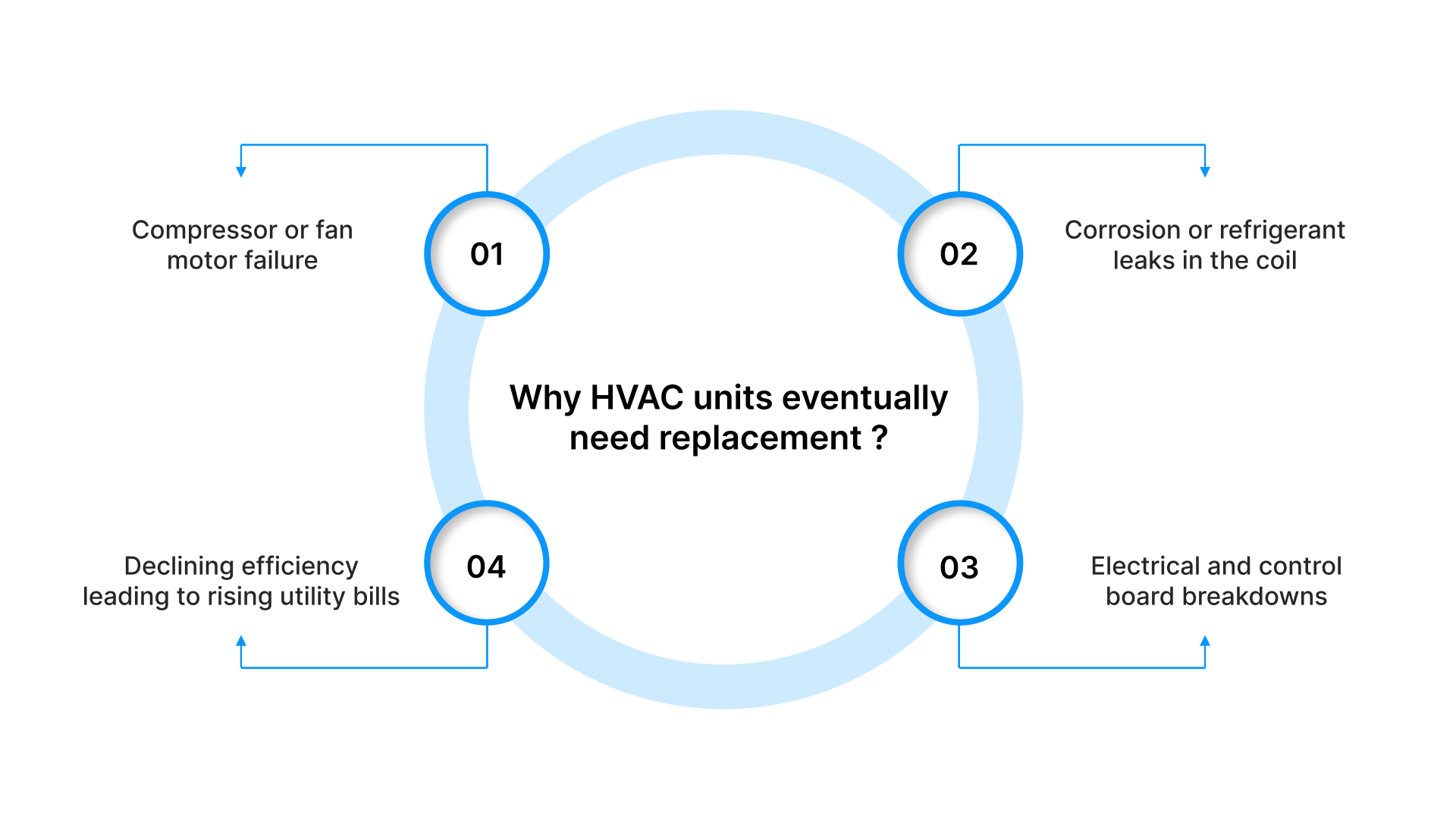
Compressor or fan motor failure
Corrosion or refrigerant leaks in the coil
Electrical and control board breakdowns
Declining efficiency leading to rising utility bills
Additionally, older units may run on outdated technology or lower efficiency ratings compared to modern SEER2-rated systems, which can significantly reduce energy use and improve comfort. At a certain point, replacing an aging system becomes more cost-effective and reliable than continuing to repair it.
Now that you understand the role an HVAC system plays in your home and why it reaches a replacement point, let’s explore why many homeowners today are choosing full system replacement over ongoing repairs.
When Should You Consider Replacing Your AC Unit?
Most residential air conditioning systems in the United States have an average lifespan of 10–15 years under normal operating conditions. In hot regions like Texas, where AC systems run longer and harder throughout extended summers, that lifespan can be shorter, especially if the unit has not received consistent maintenance over the years.
Typical lifespan and warning signs
Homeowners often experience early signs that an AC system is nearing the end of its life. Common warning indicators include:
Rising energy bills without a change in household usage, suggesting declining efficiency
Frequent breakdowns and repeated service calls
Uneven cooling or rooms that never reach the set temperature
Unusual noises, odors, or reduced airflow
Excess humidity indoors, even when the AC is running
R-22 refrigerant dependence, which is outdated and expensive to refill, due to being phased out
If multiple symptoms appear at once, it often signals that the unit is no longer economically worth repairing and may be approaching full failure.
Repair vs replacement: how to decide?
Situation | Repair | Replace |
|---|---|---|
System Age | Under 10 years | 10–15+ years (shorter in Texas due to extended cooling seasons) |
Operating Costs | Bills stable, efficiency still reasonable | Rising bills with no change in usage, declining efficiency |
Breakdown Frequency | 1–2 minor issues per year | Frequent repairs, repeating problems, or major component failures |
Comfort Performance | Cooling is consistent | Uneven temperatures, weak airflow, poor humidity control |
Repair Cost | Low-cost fixes that restore normal operation | Repair cost > 50% of replacement value |
Refrigerant Type | Uses current refrigerants | Uses R-22 (phased out and expensive) |
Risk Level in Texas Heat | Low risk of mid-season failure | Higher risk of breakdown during peak heat when emergency service is limited |
Long-Term Value | Extends remaining lifespan at reasonable cost | Higher efficiency, lower bills, more predictable performance |
From residential systems to commercial cooling, our team helps you choose and install the right unit with clear guidance and dependable service. Request a service estimate today.
Having decided that replacement may be the right move, the next question every homeowner asks is: how much will it cost to replace an AC unit?
How Much Does Replacing an AC Unit Cost in 2026?
Across the United States, replacing a central air conditioning system typically costs between $5,000 and $12,000, including equipment and professional installation. Some estimates for newer, higher-end systems place the upper range even higher, especially for larger homes or premium variable-speed units.
Costs also vary based on system size. For example, replacing a 2-ton AC unit (suited for smaller homes or spaces) usually falls in the $2,500–$7,300 range, with many homeowners paying around $4,000–$5,500 installed. Larger homes that require 3-ton or 4-ton systems will naturally sit at the higher end of the national cost spectrum, especially when ductwork or electrical upgrades are involved.
Factors that drive cost up or down
Several key factors influence where your project lands within (or beyond) those ranges:
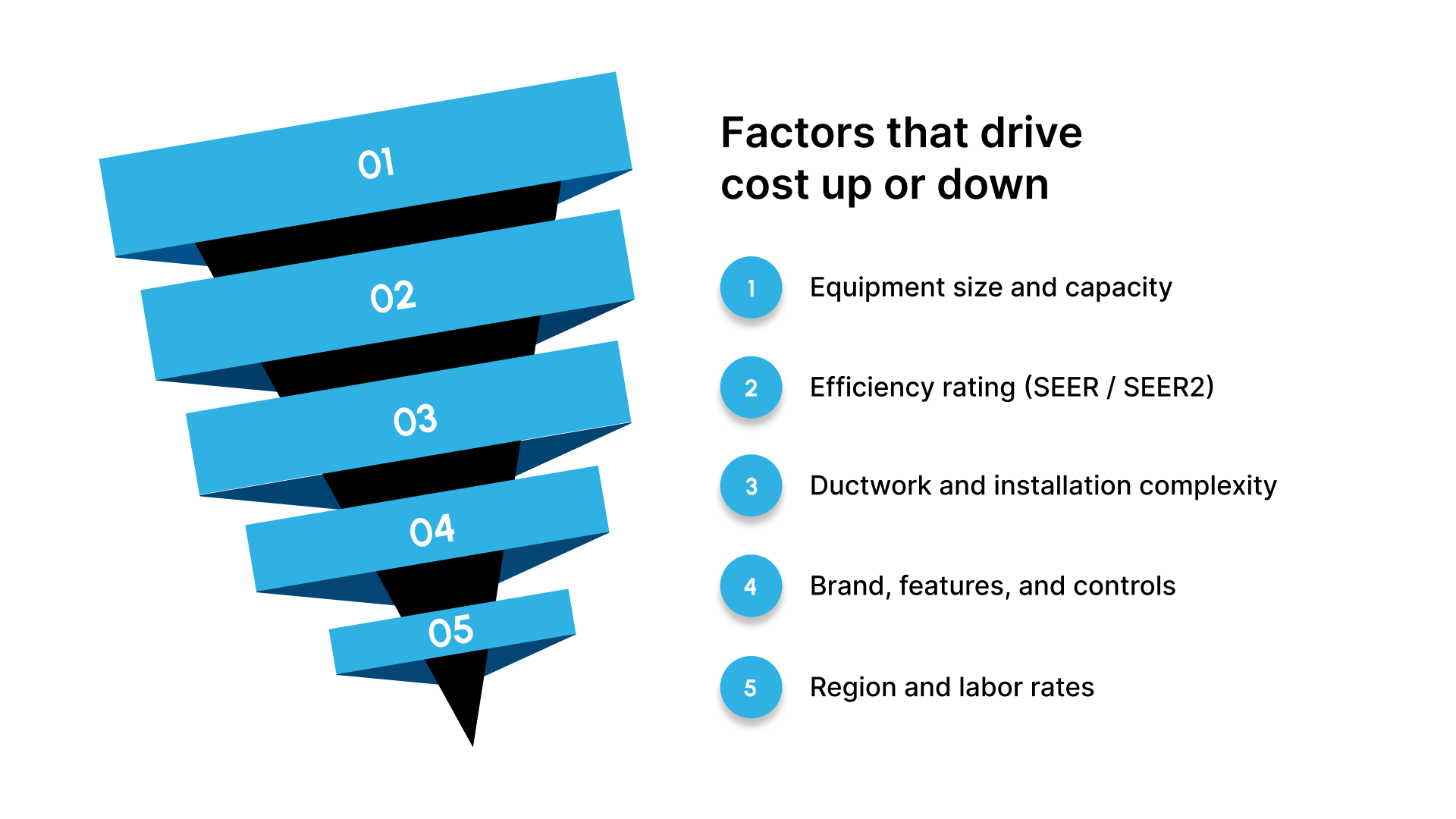
Equipment size and capacity
Bigger homes and higher cooling loads require larger systems (measured in tons). A 2-ton unit will almost always cost less than a 4-ton unit, both in upfront price and ongoing energy use.
Efficiency rating (SEER / SEER2)
The Seasonal Energy Efficiency Ratio (SEER/SEER2) indicates how efficiently an air conditioner uses electricity. Higher SEER2 units use less energy but cost more upfront. Choosing between a standard-efficiency and a high-efficiency model can significantly change both your installation cost and your monthly utility bills.
Ductwork and installation complexity
If your ducts are leaky, undersized, or poorly laid out, they may need to be sealed, upgraded, or partially replaced. Tight attics, difficult access points, or structural modifications can also add to labor costs.
Brand, features, and controls
Premium brands, variable-speed compressors, advanced filtration, smart thermostats, and zoning options can all add to the total project cost, but they may offer quieter operation and better comfort control.
Region and labor rates
Labor costs are not the same everywhere. Some areas have higher permit fees or inspection requirements, and during peak summer, demand can drive installation pricing and scheduling constraints.
Cost considerations specific to the local climate
In Bryan and College Station, the climate creates a few extra considerations for AC replacement:
Long, hot, and humid summers
Your system will run heavily for several months of the year, which means efficiency and reliability aren’t optional, they are essential. Undersized or low-efficiency units may have lower upfront costs but often result in higher monthly bills and shorter lifespans.
Potential need for slightly larger or more robust systems
Depending on your home’s size, insulation, and exposure, your contractor may recommend a system size and efficiency level that can comfortably handle extreme heat waves without constantly running at full tilt.
Seasonal demand and timing
If you wait until your AC fails in the middle of July, you may face longer wait times and less flexibility on scheduling. Planning replacement before peak season can help you control both timing and, in some cases, cost.
This is where working with a local partner like Central Air & Refrigeration makes a tangible difference. Our technicians understand how Texas heat and humidity affect sizing, efficiency choices, and long-term costs. We evaluate your home, usage patterns, and budget, then recommend options that balance upfront investment with ongoing comfort and energy savings without pushing unnecessary upgrades.
Whether it is an AC upgrade, a heat pump install, or refrigeration repair, our locally owned team delivers dependable service made for the Texas climate. Schedule your service today.
Now that you have a clear picture of what it costs to replace an AC unit and the factors that influence pricing, let’s walk through the step-by-step process so you know exactly what to expect during an AC replacement.
Step-by-Step Guide to Replacing Your AC Unit
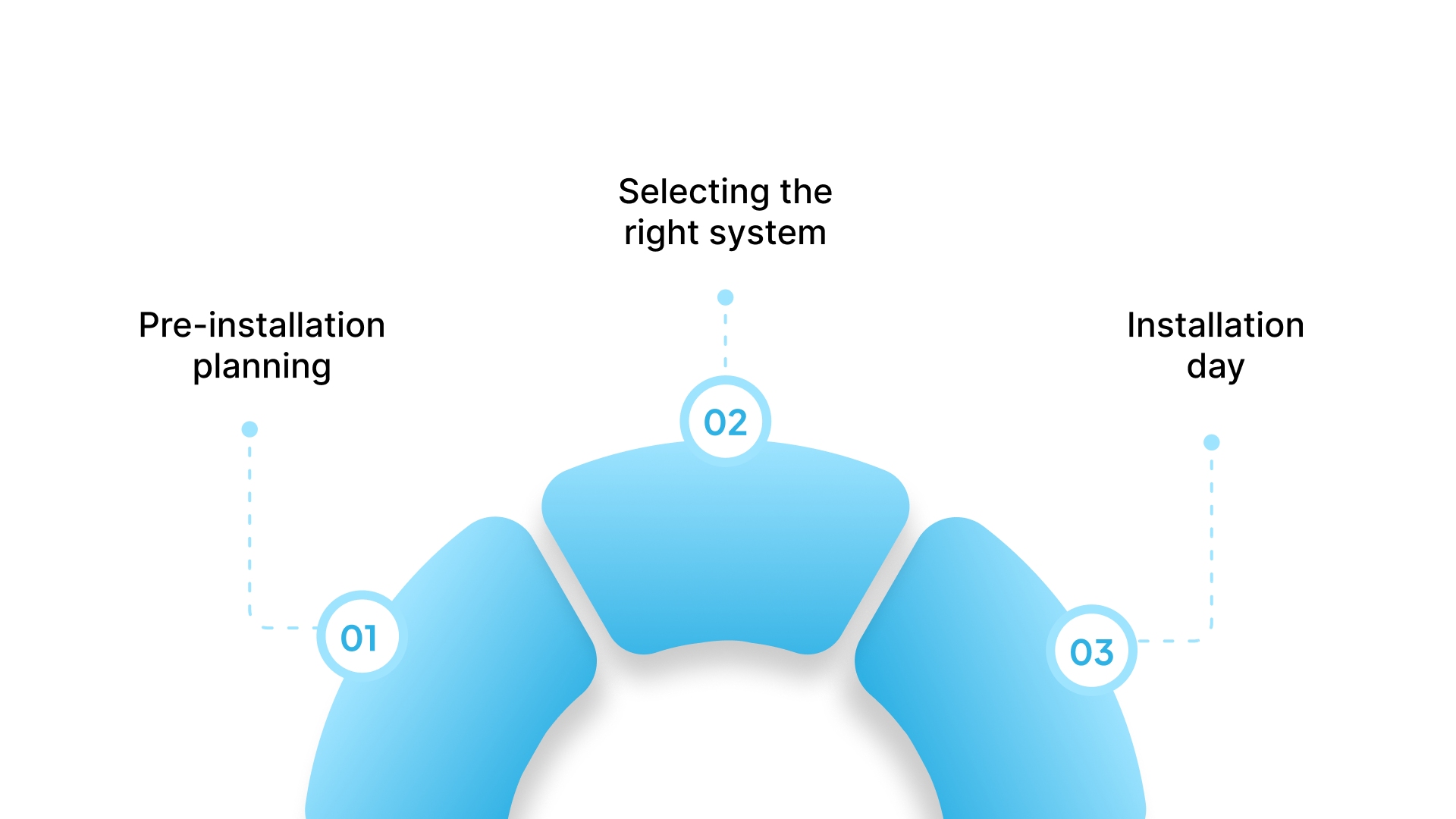
Replacing an AC unit involves several stages, and understanding each step will help you plan confidently, avoid unexpected costs, and ensure a smooth installation experience.
Step 1: Pre-installation planning
The first and most important step in a successful AC replacement is proper planning. A qualified HVAC professional will start by performing a Manual J load calculation, which determines the correct system size based on your home’s square footage, layout, insulation quality, window exposure, and occupancy. This calculation ensures the new system is sized accurately rather than relying on guesswork or simply replacing the unit with the same size as before.
During this planning stage, your technician should also evaluate:
Ductwork condition: checking for leaks, crushed sections, or improper sizing that could restrict airflow
Insulation and ventilation: making sure conditioned air is not being lost through poorly sealed areas
Electrical capacity and access to installation areas: preventing complications on installation day
Many homeowners also choose to schedule replacement during off-peak seasons (spring or fall) to access more flexible scheduling and sometimes more favorable pricing due to lower demand. Planning ahead rather than waiting until the system fails mid-summer helps prevent emergency expenses and discomfort.
Step 2: Selecting the right system
Once planning is complete, the next step is choosing the right replacement equipment. One of the most important considerations is efficiency rating, measured by SEER or SEER2. Higher SEER2 systems cost more initially but offer lower energy bills over time and improved comfort, especially in high-heat climates.
Additional decisions include:
Correct system capacity: ensuring you avoid oversizing or undersizing. An oversized system may short-cycle and struggle to remove humidity, while an undersized unit will run constantly and still fail to cool effectively.
Matching indoor and outdoor units: replacing only one component can reduce efficiency and shorten equipment lifespan, so pairing compatible equipment is key.
Brand quality and warranty protection: strong warranties indicate system reliability, and installation quality often matters more than the brand name itself.
Your HVAC professional should present multiple system options with clear price comparisons and explain the long-term benefits of each so you can make an informed decision.
Step 3: Installation day
On installation day, your crew will handle the removal of the old system and prepare your home for the new equipment. This usually includes:
Safely recovering refrigerant from the old unit and disconnecting the electrical and drain lines
Inspecting and, if necessary, adjusting or sealing ductwork
Installing the new outdoor condenser, indoor air handler/evaporator, and connecting refrigerant lines
Charging the system with refrigerant, testing electrical components, and running full system diagnostics
Homeowners can prepare by clearing access around the indoor and outdoor units, securing pets, and ensuring the technician can reach the thermostat and breaker panel. Communication throughout the process helps ensure expectations are clear and the installation goes smoothly.
With your new system installed and running efficiently, the next step is to protect your investment through proper warranties and ongoing maintenance planning.
Warranties, Maintenance & Maximizing Your Investment
A new air conditioning system is a major investment, and a strong warranty protects that investment long-term.
Understanding warranties
Most manufacturers offer standard parts warranties ranging from 5 to 10 years, depending on system brand and model. Many manufacturers also require system registration shortly after installation to activate the full warranty period, so it’s important to confirm that your installer handles this step on your behalf.
In addition to manufacturer warranties, homeowners should ask about labor warranties, which cover the cost of service work if an installation-related issue appears in the first year or more. A high-quality installation team will stand behind their work and clearly explain what is covered.
Working with a local HVAC company like Central Air & Refrigeration provides an added advantage: if you need support after installation, you are speaking directly with a nearby team, not a national hotline or rotating subcontractors. This means faster response times, stronger accountability, and a relationship with people who know your home’s system and local climate demands.
Maintenance tips to extend lifespan and save money
Even a brand-new AC system needs regular maintenance to stay efficient and reliable. Routine care helps lower energy bills, prevent breakdowns, and extend system lifespan. A well-maintained AC can last significantly longer and operate at peak performance.
Preventive maintenance should include:
Annual professional tune-ups to evaluate system performance
Replacing air filters every 1–3 months, depending on usage and household conditions
Cleaning evaporator and condenser coils to ensure optimal airflow and heat transfer
Checking ductwork for leaks that reduce efficiency
Keeping outdoor units clear of debris or vegetation
Poor maintenance is one of the biggest causes of high energy bills and early equipment failure, as clogged filters, dirty coils, and restricted airflow make the system work harder and wear out faster.
What to expect in the months and years after installation
In the first year after replacement, homeowners should track energy bills and note any unusual changes in performance, noise, or airflow. Scheduling regular check-ups before peak summer months in Texas helps catch small issues before they become costly repairs.
For optimal performance:
Plan annual maintenance appointments
Log energy usage changes season to season
Respond quickly to unusual system behavior rather than waiting
Ask your HVAC provider about maintenance plan options to simplify scheduling
How Central Air & Refrigeration Helps You in HVAC Replacement
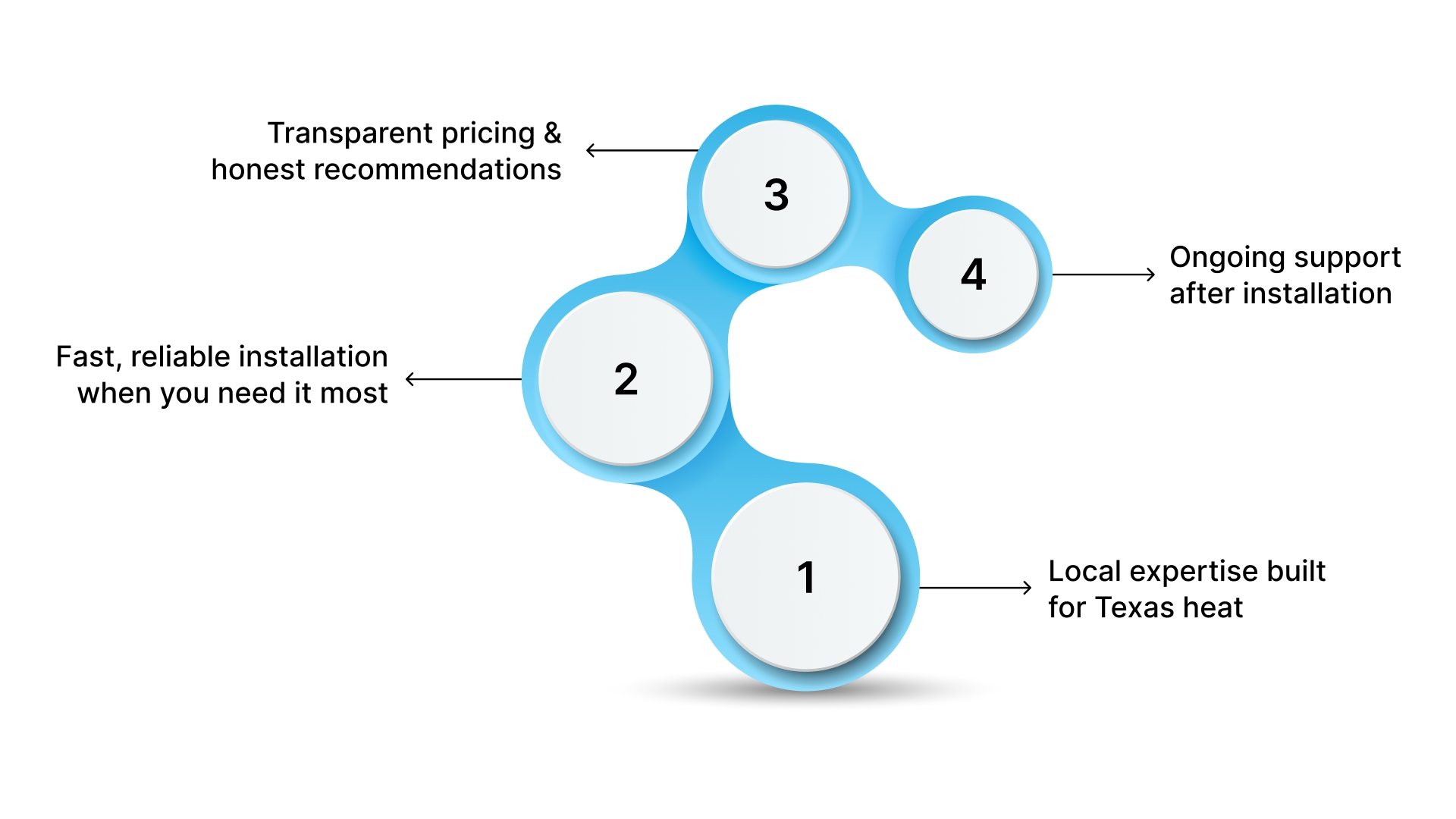
Replacing an AC unit is a major decision, and having the right partner can make the difference between a stressful experience and a smooth, well-planned transition. Homeowners and businesses in Bryan and College Station rely on Central Air & Refrigeration because of the following reasons:
Local expertise built for Texas heat
Our team understands the unique cooling demands of the region, where extreme summer temperatures and high humidity require more than a basic installation.
Fast, reliable installation when you need it most
We prioritize urgent replacement projects and provide clear scheduling and communication from inspection to final testing.
Ongoing support after installation
Unlike one-and-done contractors, we stay involved well after installation day. We offer maintenance plans to help protect your investment, assist with warranty registration and documentation, and provide ongoing service to minimize breakdown risks and energy waste.
Conclusion
Replacing an AC unit is a major investment, but with the right information and the right partner, the process becomes far more manageable.
If you are ready to replace your AC unit, call Central Air & Refrigeration to schedule a free home system inspection and personalized estimate. Our team will help you compare system sizes, efficiency ratings, and warranty options so you can make the best decision for your home and budget.
Don’t wait for the next heat wave to push an aging system past its limit. Get ahead of summer now and ensure your home stays comfortable, efficient, and reliably cooled—no matter how high temperatures climb. Contact us today!
Frequently Asked Questions
1. How do I know if it’s better to repair or replace my AC unit?
If your system is over 10–15 years old, repair costs are high, performance is poor, or it uses outdated refrigerant such as R-22, replacement may be the smarter long-term move. Evaluate the unit’s age, recent repair history, efficiency performance, and refrigerant type. Ask your contractor for both repair and replacement estimates, and compare the cost of continuing to maintain versus upgrading now for better reliability and energy savings.
2. Can I install my AC unit myself to save money?
While DIY projects are increasingly common, installing a central AC system involves handling refrigerants, wiring, and ensuring correct sizing—these tasks carry safety, code, warranty, and performance risks. For most homeowners, hiring a qualified HVAC contractor is strongly recommended. A professional installation protects warranty coverage, ensures safe and correct operation, and often ends up being cost-effective when you factor in long-term energy and repair savings.
3. What size system do I need for my home, and does “bigger mean better”?
Size matters, as both undersized and oversized systems bring problems. According to building-science experts, proper sizing requires a load calculation (Manual J) rather than rule-of-thumb estimates. Your contractor should perform a load calculation considering your home’s square footage, insulation, number of windows, and occupancy. Oversized units will short-cycle and may not remove humidity effectively; undersized units will struggle to cool properly. The right size optimizes performance, comfort, and energy efficiency.
4. How much energy-efficiency improvement can I expect with a new AC unit?
Modern systems with higher SEER/SEER2 ratings are significantly more efficient than older models. Some guides suggest that upgrading can reduce cooling-related energy costs by tens of percent, depending on climate and usage. The exact savings depend on your prior system’s efficiency, usage hours, and electricity cost. In a hot climate like Bryan/College Station, the difference can be meaningful. Ask your installer to model estimated energy savings for your home when comparing system options.
5. After installation, what maintenance should I plan to keep my AC unit performing well?
Most experts agree that annual professional tune-ups plus quarterly filter changes and periodic inspections extend system life and prevent efficiency losses. Set up a maintenance schedule immediately after installation: replace air filters every 1-3 months, schedule at least one full service per year (ideally before summer), keep the outdoor unit clear of debris, check ducts for leaks, and monitor energy bills for unexpected spikes. Proper maintenance protects your investment and keeps warranties valid.