Commercial HVAC systems are among the biggest energy consumers in any building. In fact, commercial buildings in the United States spend nearly 32% of their electricity on space heating, according to data from the U.S. Energy Information Administration (EIA). With such a significant portion of operating costs tied directly to temperature control, even small improvements in system performance can translate into meaningful savings for businesses.
This cost impact is even more pronounced in hot, humid regions like Bryan and College Station, Texas, where commercial air conditioning units endure year-round demand. Long cooling seasons, high humidity, and frequent heat waves force systems to work harder and run longer, often leading to rising energy bills, unexpected breakdowns, and uncomfortable indoor conditions for employees and customers. Without consistent preventive maintenance, problems can escalate quickly and disrupt business operations.
This guide walks you through the essential maintenance tasks, efficiency strategies, and early warning signs you should know to keep your commercial AC system performing at its best. Let’s read on to find out more.
Key Takeaways
Commercial buildings spend up to 32% of their electricity on HVAC, making AC maintenance one of the biggest opportunities to reduce operating costs.
In hot, humid regions like Bryan–College Station, Texas, commercial AC units run longer and face higher strain, increasing the need for preventive maintenance.
A proper maintenance routine—air filter changes, coil cleaning, refrigerant checks, electrical inspections, ductwork testing—keeps systems efficient and prevents downtime.
Professional technicians provide deeper diagnostics, refrigerant testing, electrical safety inspections, system performance evaluations, and detailed maintenance logs.
Businesses should schedule monthly, quarterly, and biannual maintenance depending on system type and operating environment.
Early warning signs such as rising energy bills, uneven cooling, humidity issues, and strange smells indicate that immediate service is needed.
Central Air & Refrigeration supports local businesses with tailored AC maintenance plans, same-day service, documented reports, and climate-specific expertise.
Why Commercial AC Maintenance Matters
Keeping a commercial AC system well-maintained is a direct business advantage. From lowering operating expenses to protecting customer satisfaction, maintenance plays a critical role in daily operations.
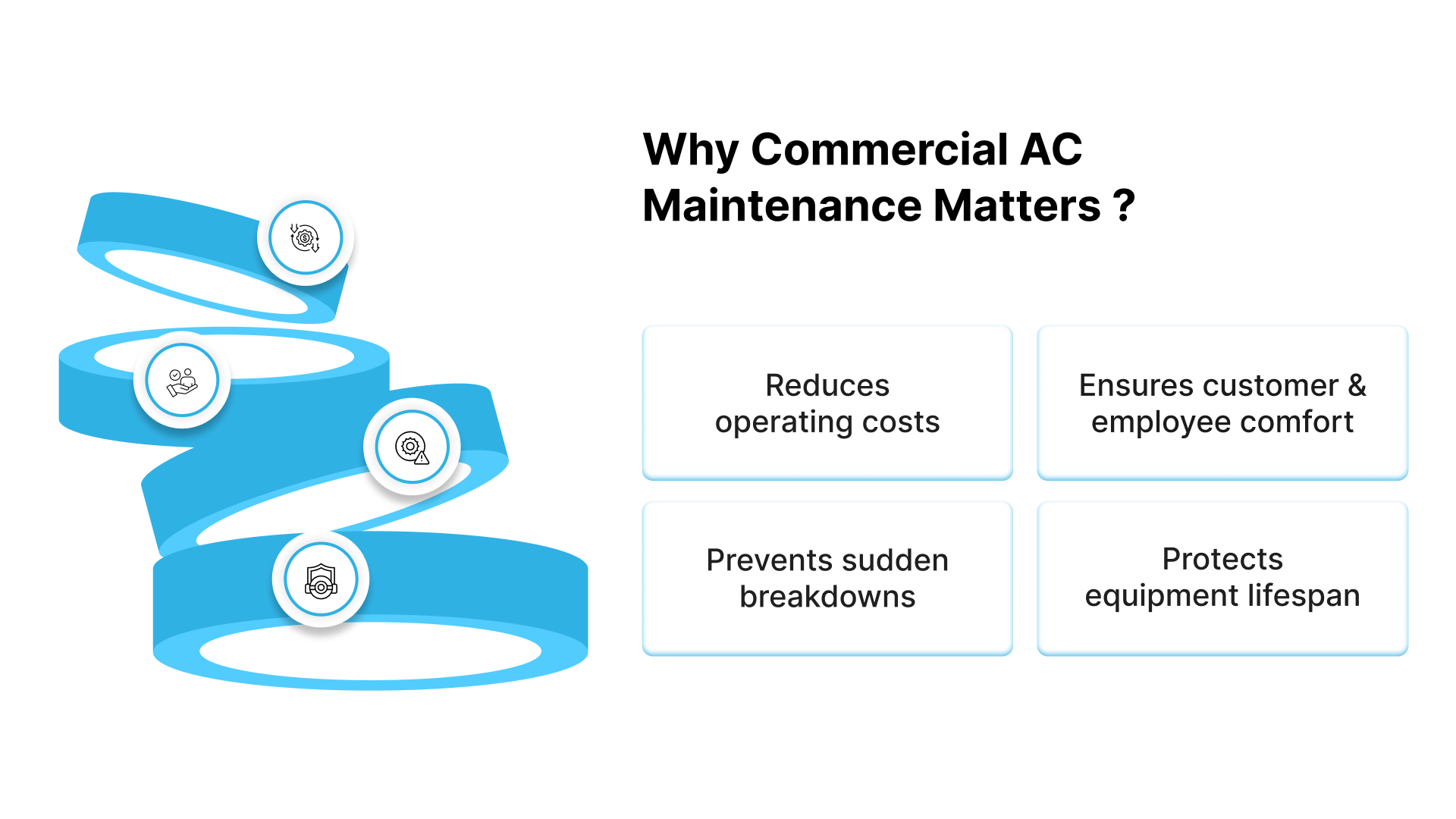
Reduces operating costs
Poor maintenance is one of the biggest drivers of wasted energy. According to ENERGY STAR, up to 30% of the energy used by commercial HVAC systems is lost due to improper upkeep.
Dirty coils, clogged filters, and airflow restrictions make AC units work harder than necessary, dramatically increasing monthly utility bills. Regular cleaning and inspections help systems run efficiently and reduce unnecessary energy spend.
Ensures customer & employee comfort
Comfortable indoor temperatures influence how customers behave, affecting foot traffic, dwell time, and overall experience. For employees, a well-regulated environment boosts productivity and reduces complaints. Poor cooling can cost businesses far more than just energy dollars.
Prevents sudden breakdowns
Commercial AC failures often strike during the hottest days of the year, when systems are overloaded and repair demand is highest. Preventive maintenance identifies failing components early, helping businesses avoid unexpected downtime, emergency repair costs, and disruptions to operations.
Protects equipment lifespan
Commercial AC units, whether rooftop units (RTUs), split systems, or heat pumps, are major investments. Regular maintenance slows component wear, prevents overheating, and extends the equipment’s operational life, delaying costly replacements and improving return on investment.
Now that you understand the importance of commercial AC maintenance, here is the complete preventive maintenance checklist your business needs.
The Ultimate Commercial AC Preventive Maintenance Checklist
A well-maintained commercial cooling system is essential for reliable performance, especially for businesses like restaurants, retail stores, office buildings, gyms, and managed properties where indoor comfort directly affects customer satisfaction and daily operations. Below is a practical, business-focused preventive maintenance checklist to keep your AC running efficiently year-round.
Replace or clean air filters
Filters should be cleaned or replaced every 30–60 days, depending on how much dust, grease, foot traffic, or equipment heat your business generates. Restaurants, salons, gyms, and high-traffic spaces may require even more frequent changes.
Inspect and clean condenser & evaporator coils
Dirty coils can significantly increase energy use by putting unnecessary strain on the system. Regular coil cleaning helps maintain proper heat exchange and reduces cooling costs significantly.
Check refrigerant levels
Low refrigerant forces the unit to work harder, leading to:
Higher power consumption
Poor cooling performance
Frozen coils
Premature compressor failure
Routine refrigerant checks help detect leaks early and prevent costly breakdowns.
Inspect ductwork for leaks
Leaky ducts waste 20–40% of conditioned air, reducing system efficiency and causing hot and cold spots. Businesses with long duct runs or older buildings are particularly vulnerable.
Check belts, motors, and electrical connections
Commercial AC units rely on multiple moving components. Worn belts, loose wiring, and failing motors often cause unexpected shutdowns, usually during peak business hours. Early detection prevents emergency repairs and expensive downtime.
Clear condensate drain lines
Blocked drains can cause water leaks, mold growth, indoor humidity spikes, and foul odors. Regular flushing prevents moisture-related damage, especially in humid climates like Texas.
Verify thermostat calibration
Improper thermostat readings can cause:
Uneven cooling
Short cycling
Higher energy bills
Make sure the thermostat is correctly calibrated and located away from heat sources or drafty areas.
Some commercial AC maintenance tasks go far beyond what an in-house team can safely or effectively handle. This is where professional help comes in handy.
Advanced Commercial AC Maintenance: What Professional Technicians Do
Professional HVAC technicians use specialized tools, diagnostic equipment, and industry-standard procedures to evaluate system health and prevent failures long before they disrupt business operations.
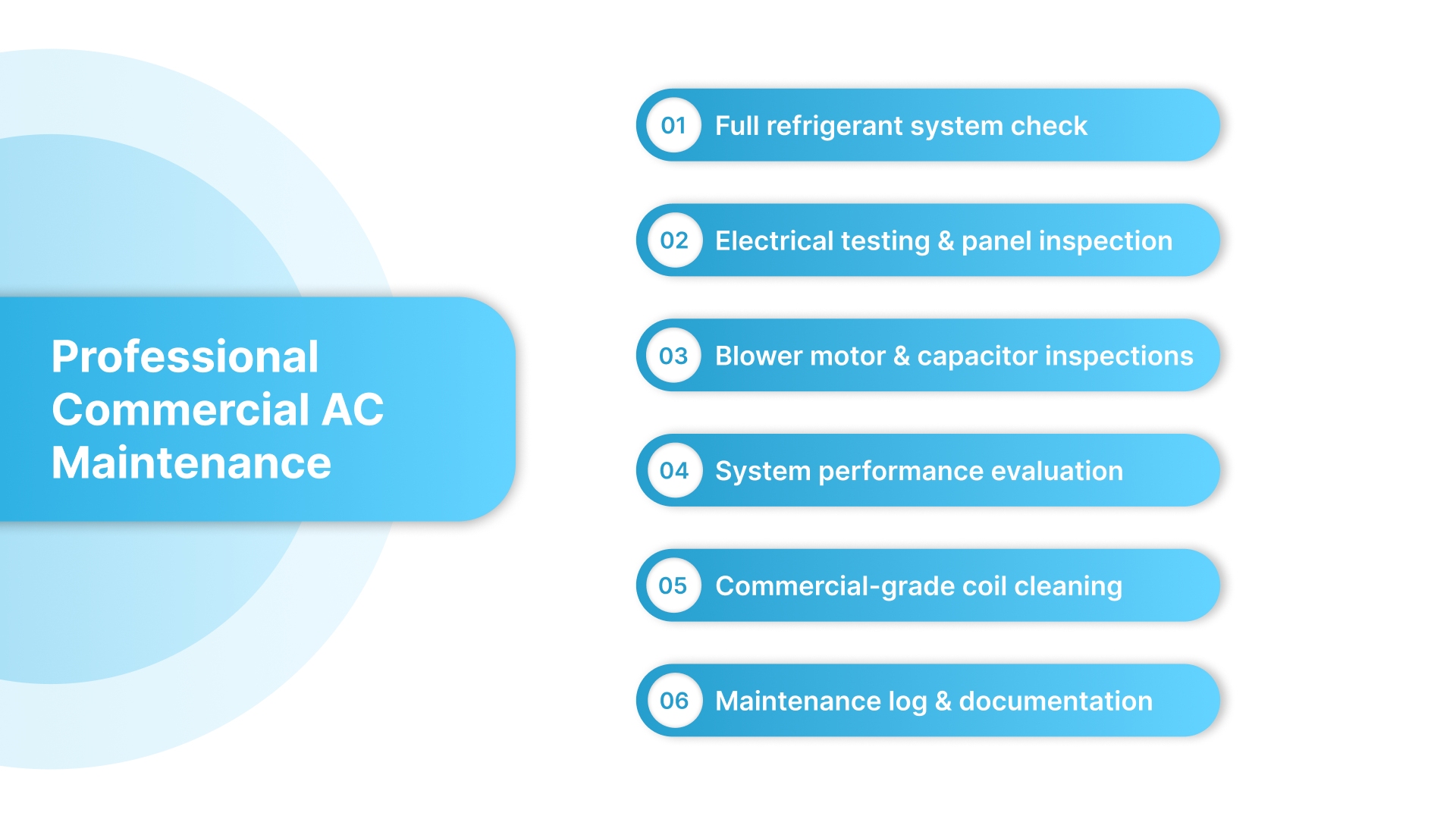
Full refrigerant system check
Technicians inspect refrigerant levels, test system pressures, and perform leak detection across lines, coils, and connections. Even a minor refrigerant imbalance can cause poor cooling, frozen coils, and major energy waste, making this one of the most important professional tasks.
Electrical testing & panel inspection
Commercial AC units draw significant electrical load. Technicians test wiring, relays, breakers, contactors, and control boards to prevent breakdowns caused by shorts, corrosion, or overheated components. Electrical issues are a leading cause of sudden failures in rooftop units and split systems.
Fan, blower motor, and capacitor inspections
Motors and capacitors work hardest during Texas summers and are common failure points. Professionals test motor amperage, blade condition, balance, and capacitor performance to ensure proper airflow and prevent overheating.
System performance evaluation
This includes:
Airflow measurement
Coil temperature differential readings
Static pressure testing in ducts
Thermostat response testing
These diagnostics help determine overall system efficiency and identify problems like duct leaks, airflow restrictions, or failing components before they escalate.
Commercial-grade coil cleaning
Professional coil cleaning uses powerful equipment and safe chemical cleaners designed specifically for HVAC systems. These tools remove deep grease, dirt, dust, and organic buildup that standard DIY methods cannot reach, restoring performance and protecting the compressor.
Maintenance log & documentation
Businesses—especially property managers and multi-location operators—need accurate service records for budgeting, asset management, and compliance. Technicians provide written logs showing system condition, repairs made, upcoming maintenance needs, and efficiency notes.
Maintenance is only effective if done consistently. So, let’s look at the ideal schedule for keeping your commercial AC system running at peak performance.
How Often Should Commercial AC Systems Be Serviced?
Commercial cooling systems operate under heavier and more consistent loads than residential units, especially in hot regions like Texas. Establishing a clear maintenance schedule helps prevent downtime and protects your equipment investment.
Monthly inspections
Your in-house team or building staff should perform basic monthly checks, including:
Filter inspections and replacements: Dirt buildup restricts airflow and increases energy use.
Condensate drain checks: Prevents drain clogs, overflow, mold growth, and water damage.
Thermostat verification: Ensures accurate temperature control and avoids unnecessary cycling.
These simple steps help detect early issues before they escalate.
Quarterly maintenance
Every 3 months, commercial systems benefit from more thorough inspections such as:
Coil cleaning: Essential for restaurants, gyms, retail stores, and offices with heavy foot traffic or airborne contaminants.
Belt testing and adjustment: Belts stretch over time and can break unexpectedly, shutting the system down.
Duct airflow checks: Ensures proper ventilation, balanced cooling, and energy-efficient airflow.
Quarterly maintenance is especially critical during peak cooling seasons.
Biannual or annual full service
Professional tune-ups should occur twice per year—once before summer and once before winter.
Full service includes:
System diagnostics
Electrical testing
Refrigerant inspection
Fan and motor evaluation
Comprehensive cleaning
Commercial rooftop units (RTUs) and large split systems require at least two professional tune-ups per year to maintain warranty requirements and avoid mid-season failures.
Higher-frequency needs for restaurants & retail
Certain businesses need more frequent service due to environmental factors.
Restaurants: Grease and smoke increase coil contamination, requiring more frequent cleaning.
Retail stores & gyms: High foot traffic brings dust, dirt, lint, and fibers that clog filters and coils faster.
Custom maintenance intervals ensure continuous cooling and prevent sudden shutdowns during business hours.
Even with routine maintenance, commercial AC systems eventually show signs of strain. Let’s review the warning signals.
Early Warning Signs Your Commercial AC Needs Attention
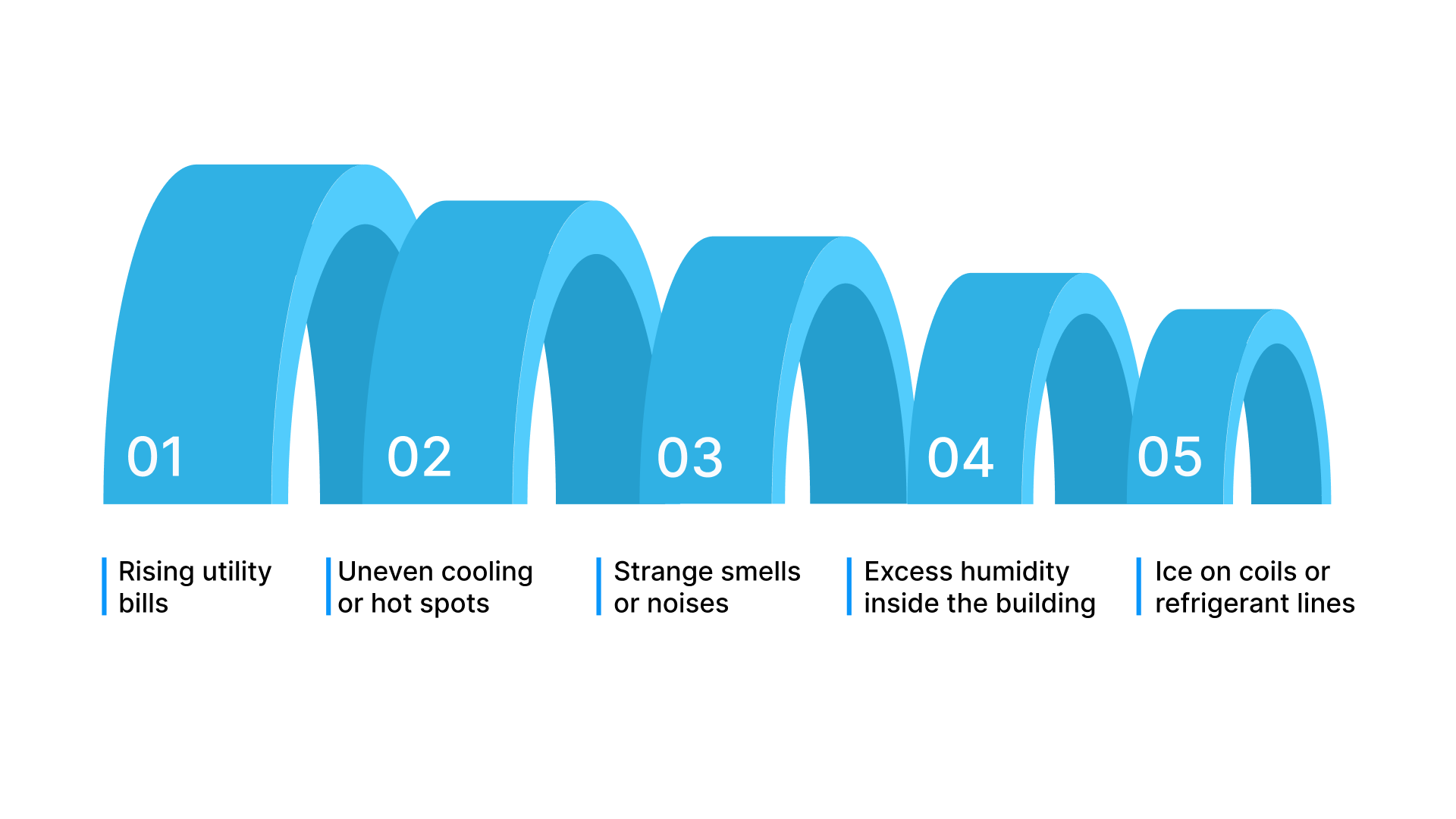
Even well-maintained systems can show signs of strain, especially during long Texas cooling seasons. Catching these issues early prevents expensive repairs and protects business operations.
Rising utility bills
A sudden increase in electricity costs is often the first indicator of dirty coils, reduced airflow, or inefficient components. Spikes in energy use typically mean the system is working harder than it should.
Uneven cooling or hot spots
If certain areas of the building aren’t cooling properly, it may be due to duct leaks, blocked vents, or failing blower motors. Uneven temperatures disrupt customer comfort and employee productivity.
Strange smells or noises
Burning smells may signal electrical problems, while chemical or sweet odors can indicate a refrigerant leak. Loud rattling, grinding, or buzzing noises often point to failing motors, loose parts, or damaged belts.
Excess humidity inside the building
High indoor humidity can result from malfunctioning coils, clogged drain lines, or poor airflow. This not only affects comfort but also increases mold and moisture risks.
Ice on coils or refrigerant lines
Ice buildup is a clear sign of airflow restriction, dirty filters, low refrigerant, or blocked coils. If not addressed quickly, it can lead to compressor failure.
To maximize system performance, businesses need consistency and a reliable service partner.
How Central Air & Refrigeration Helps Businesses Maintain Peak AC Efficiency
Commercial HVAC systems require consistent, expert care, especially in high-demand climates like Bryan and College Station. Central Air & Refrigeration provides business-focused maintenance solutions designed to reduce downtime, protect equipment, and keep operating costs under control.
Tailored maintenance plans for commercial properties
Custom service schedules are developed based on building type, system size, operating hours, and environmental factors. Whether for restaurants, retail stores, medical offices, or multi-unit properties, each plan is structured to match the facility’s cooling load and budget requirements.
Same-day or next-day response
Commercial AC failures directly impact customer experience and business operations. Central Air & Refrigeration prioritises rapid response for business clients, ensuring cooling systems are restored quickly and efficiently to avoid extended downtime.
Local expertise
Commercial AC units in the Brazos Valley operate under heavy year-round usage. The team’s expertise with Texas temperature patterns, humidity challenges, and common failure points ensures accurate diagnostics and long-lasting solutions tailored to local conditions.
Transparent reporting & documentation
Every service includes detailed logs, maintenance records, and diagnostic reports. This level of documentation supports property managers, facility teams, and multi-location businesses that require organized records for planning, budgeting, and compliance.
Protect your HVAC investment before peak season hits. Book your preventive HVAC service now.
Conclusion
Commercial AC maintenance is a direct investment in lower operating costs, longer equipment lifespan, healthier indoor air, and consistent comfort for employees and customers. Routine inspections, filter changes, coil cleaning, and professional tune-ups help businesses avoid unexpected breakdowns and optimize energy performance.
In hot, humid regions like Bryan–College Station, commercial AC systems work harder and run longer than in many other parts of the country. That makes preventive maintenance even more essential for keeping your building cool, efficient, and free of costly disruptions.
Let Central Air & Refrigeration help your business stay comfortable, efficient, and ready for Texas weather. Ask about our commercial maintenance plans to keep your HVAC system protected year-round. Contact us today!
Frequently Asked Questions (FAQ)
1. How often should a commercial AC unit be serviced?
Most commercial HVAC systems should be professionally serviced twice a year—once in the spring before cooling season and again in the fall before heating season. High-demand businesses like restaurants or gyms may require more frequent maintenance.
2. What maintenance tasks should be done monthly?
Monthly tasks include:
Checking and replacing air filters
Inspecting condensate drain lines
Verifying thermostat accuracy
Confirming proper airflow and vent clearance
These quick checks help prevent small issues from turning into expensive repairs.
3. How long do commercial AC units last?
With consistent maintenance, commercial units generally last 12–20 years, depending on the system type, installation quality, and daily usage. Rooftop units (RTUs) typically experience the most wear due to sun exposure and outdoor conditions.
4. What causes commercial AC units to fail?
Common causes include:
Dirty or clogged coils
Low refrigerant from leaks
Electrical failures
Blocked drain lines
Poor airflow or failing blower motors
Most failures stem from neglected preventive maintenance.
5. What are the signs that a commercial AC system needs repair?
Warning signs include:
Rising utility bills
Uneven or inadequate cooling
Unusual noises or vibrations
Foul smells from vents
Constant cycling or long run times
Any of these symptoms should be evaluated quickly to avoid costly downtime.