Introduction
A commercial refrigerator that fails without warning can cost your business thousands in lost inventory, trigger health code violations, and force you into expensive emergency repairs. Most failures don't happen suddenly. Equipment typically shows signs of trouble days or even weeks before a complete breakdown.
This article gives restaurant owners, grocery stores, and food service businesses in Bryan, TX a practical framework to recognize early warning signs before a complete breakdown occurs, along with clear steps for what to do about each one. Catching these signals early is the difference between a $200 service call and an $8,000 emergency repair with spoiled inventory.
Key Takeaways
- Commercial refrigerators show warning signs before they fail—knowing them saves inventory and costly downtime
- Watch for three warning categories: visual signs, unusual sounds, and performance issues like temperature swings or rising energy bills
- Compressor and refrigerant issues are the most serious red flags requiring immediate professional attention
- A simple monthly self-inspection catches most problems before they escalate
- When in doubt, call a certified refrigeration technician rather than a general handyman
Early Warning Signs Your Commercial Refrigerator Is Failing
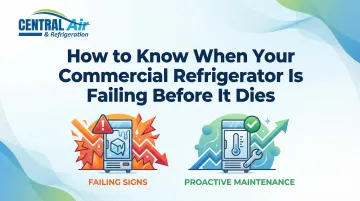
Warning signs fall into three observable categories: visual, audible, and performance-based. Catching even one of these signs early can be the difference between a minor service call and a full unit replacement.
Visual Warning Signs
External condensation (visible "sweating" on the outside of the cabinet) signals a disrupted refrigerant or compressor system. Hot refrigerant gas normally keeps cabinet surfaces slightly warm, preventing moisture buildup. If you see beads of water forming on the outside of your unit, the internal cooling cycle isn't working properly.
Excessive frost or ice buildup inside the unit indicates a failing door seal, blocked defrost drain, or malfunctioning defrost heater. A thin layer of frost is normal, but thick ice accumulation on interior walls or evaporator coils is not. This ice acts as insulation, preventing proper heat exchange and forcing your compressor to work harder. Check for:
- Ice buildup thicker than 1/4 inch on interior walls
- Frost covering evaporator coils completely
- Icicles forming inside the cabinet
- Ice blocking air vents or fan blades
Hot or warm cabinet sides can indicate a failing condenser fan or dirty condenser coils. Mild warmth is normal — that's heat dissipating from the condenser. But if the sides are too hot to hold your hand against for more than a few seconds, the condenser is struggling to release heat and your compressor is compensating with longer run cycles.
Audible Warning Signs
Your commercial refrigerator has a normal operating sound — a consistent low hum. Deviations from this baseline tell you something's wrong:
- Knocking or clanking: Internal mechanical failure in the compressor or motor
- Louder buzzing or humming: Fan motor struggling or an electrical problem developing
- Screeching or squealing: Worn fan belts or motor bearings — address this immediately
- Rattling: Loose internal components vibrating against the cabinet
The counterintuitive sign: unusual silence. If your unit stops making its normal operating hum, the compressor motor may have stopped running entirely. This is often paired with inadequate cooling inside and requires same-day attention — by the time the compressor quits entirely, contents are already at risk.
Performance-Based Warning Signs
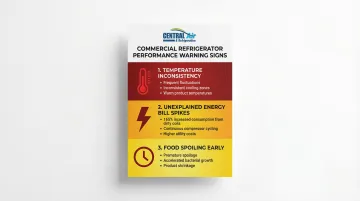
Temperature inconsistency is the primary red flag. Watch for:
- Food spoiling before its expiration date
- Warm spots in certain areas of the unit
- Thermostat reading that keeps climbing despite the unit running continuously
Check internal temperatures with an independent thermometer to verify the thermostat isn't giving false readings. Place the thermometer in the center of the unit and wait 30 minutes before reading. Compare this to your thermostat display — more than a 2-3°F discrepancy indicates calibration issues.
Unexplained energy bill spikes signal a struggling refrigerator. A failing unit runs its compressor longer and harder to compensate for efficiency losses, which shows up directly in utility costs. Dirty condenser coils alone can increase energy consumption to 165% of normal levels, and the EPA estimates refrigeration drives 40-60% of total electricity use in food retail settings. If your energy bills jump 20% or more without a clear cause, your refrigeration equipment is the first place to look.
How to Read the Severity of What You're Seeing
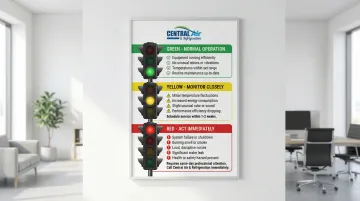
Not every warning sign requires an emergency call. The key is knowing what each sign indicates — and how fast you need to act. This traffic-light framework helps you sort urgent problems from ones that can wait.
Green (Normal — No Action Needed)
Normal operation includes:
- Slight warmth on unit sides (heat dissipation is working)
- Consistent low hum from the compressor and fans
- Stable internal temperature of 41°F or below for refrigerators and 0°F or below for freezers
- Minimal condensation only when doors are frequently opened during busy periods
These are signs your equipment is functioning as designed. No action needed beyond your regular maintenance schedule.
Yellow (Monitor Closely — Schedule Service Soon)
Minor deviations warrant scheduling a service appointment within the next week or two:
- Slight temperature fluctuations of 2-3°F that self-correct
- Occasional unusual noises that stop after a few minutes
- Energy use increases of 10-15% above baseline
- Thin frost that disappears during normal defrost cycles
Keep a log of when these occur and their frequency. Note the time, duration, and what the temperature read when each event happened. If they become more frequent or persistent, move to the red category.
Red (Act Immediately — Do Not Wait)
Critical signs require same-day professional attention:
- Temperatures rising above 41°F (entering the FDA danger zone where bacteria multiply rapidly)
- Compressor not starting or clicking on and off rapidly
- Refrigerant leaks (oily residue near lines, hissing sounds)
- Persistent loud mechanical noises that don't stop
- Any sign of electrical failure (tripped breakers, burning smell)
The FDA defines the Temperature Danger Zone as 41°F to 135°F — the range where bacteria and toxins multiply rapidly. Food held there long enough creates a direct health code violation and liability exposure.
Repair vs. Replace Decision: If repair costs exceed 50% of the cost of a new unit and your equipment is older than 10 years, replacement is typically the better financial call. Commercial refrigerators last 10-15 years with proper maintenance, and a major failure late in that window signals the unit has run its course.
Compressor and Refrigerant Red Flags (The Most Critical Signs)
The compressor drives everything in a commercial refrigeration system — and when it starts to fail, the consequences move fast. Compressor problems sit at the top of the severity scale because they typically mean either a major repair bill or full unit replacement.
Struggling Compressor Symptoms
Watch for these specific signs:
- Compressor runs continuously but the unit never reaches the set temperature
- Compressor is hot to the touch — a sign the motor is overworking or failing internally
- Circuit breaker trips repeatedly due to excessive electrical draw from mechanical resistance
- Rapid cycling: the compressor clicks on and off every few minutes without holding temperature
Refrigerant Leak or Low Charge Signs
Refrigerant issues manifest as:
- Unit runs constantly but never reaches target temperature
- Ice forming in unusual places (on refrigerant lines rather than the evaporator)
- Oily stains near the compressor or refrigerant lines
- Slight hissing sound from the refrigerant system
Critical note: Refrigerant handling is EPA-regulated under Section 608 and must be performed only by a certified technician. This is not a DIY fix. For commercial refrigeration systems containing 50+ pounds of refrigerant, leak rates exceeding 20% require mandatory corrective action within 30 days.
What Poor Compressor Pumping Looks Like
Even when refrigerant levels check out, a worn compressor may simply fail to move enough refrigerant through the system. Here's what that looks like from the operator's side:
- Inadequate cooling despite the unit running constantly
- Warm air coming from the unit's interior even when the compressor is on
- Food temperatures rising steadily over hours or days
You can observe these symptoms, but a technician must diagnose the root cause using pressure gauges and other diagnostic tools. Don't wait to call one. Poor compressor pumping typically escalates to complete failure within days.
Quick Self-Inspection Any Owner Can Do Monthly
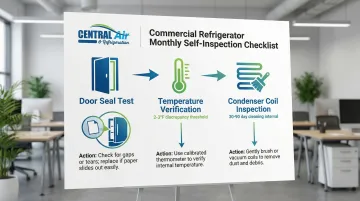
Door Seal (Gasket) Test
Close the door on a piece of paper or dollar bill and try to slide it out. If it slides easily without resistance, the seal is worn and warm air is leaking in, forcing the unit to overwork.
Visually inspect for:
- Cracks or tears in the rubber gasket
- Gaps where the gasket doesn't contact the cabinet frame
- Brittleness (the gasket should be flexible, not stiff)
- Mold or mildew buildup in gasket folds
Replace worn gaskets immediately—they're inexpensive but cause significant efficiency losses.
Temperature Verification Check
Place an independent thermometer inside the unit and compare to the displayed thermostat reading after 30 minutes. Position the thermometer in the center, away from walls and doors, for the most accurate reading.
Look for:
- More than a 2-3°F discrepancy between thermometer and display
- Readings above 41°F in refrigerators or above 0°F in freezers
- Temperature fluctuations greater than 5°F over a 24-hour period
Discrepancies indicate thermostat calibration issues or internal airflow problems.
Condenser Coil Inspection
Condenser coils are typically located at the bottom or back of commercial refrigerators. Dirty coils are the main reason for service calls and the single easiest maintenance item you can address yourself.
What to look for:
- Thick dust or debris coating the coils
- Grease buildup (common in restaurant kitchens)
- Blocked airflow around the coil area
- Visible lint or hair accumulation
Clean condenser coils every 30-90 days depending on your environment. Kitchens with high grease or flour in the air need monthly attention; cleaner environments can stretch to quarterly.
Use a coil brush or vacuum with a soft brush attachment. Never use high-pressure water—it can bend or damage the fins.
When to Call a Refrigeration Technician
Any sign involving the compressor, refrigerant system, electrical components, or persistent temperature failure is beyond DIY territory and requires a certified refrigeration technician. Don't call a general handyman—commercial refrigeration systems involve different refrigerants, pressures, and components than residential equipment.
What Professional Diagnostics Include
A professional diagnostic visit includes:
- Pressure testing the refrigerant system to detect leaks
- Testing thermostat calibration and accuracy
- Inspecting electrical connections and capacitors
- Checking fan motor function and airflow
- Assessing compressor health with amperage readings
This thorough inspection identifies problems you can't see and prevents small issues from becoming catastrophic failures.
Why Local Expertise Matters
Knowing who to call before an emergency strikes saves critical time. For businesses in Bryan, TX, Central Air & Refrigeration provides 24/7 emergency service with technicians who know commercial refrigeration inside and out.
When a red-flag sign appears at 2 AM, you won't be scrambling for a number or waiting on an out-of-town crew. Fast local response means less downtime and less inventory at risk.
Preventive Maintenance That Prevents Sudden Failure
Most commercial refrigerator failures are preventable with a consistent maintenance schedule. Industry best practices recommend professional service every 3-6 months for commercial units in high-use environments like restaurants and grocery stores.
What Professional Maintenance Should Cover
A comprehensive preventive maintenance visit includes:
- Refrigerant level check and leak detection
- Condenser and evaporator coil cleaning
- Door gasket inspection and replacement if needed
- Thermostat calibration verification
- Fan motor inspection and lubrication
- Drain line clearing to prevent clogs
- Electrical connection tightening
- Compressor performance assessment
The Cost Comparison
Catching these issues during a scheduled visit is far cheaper than responding to a breakdown at 2 AM on a Friday.
Emergency repairs average $2,500 to $8,000 per incident when you factor in overtime labor, expedited parts, and lost inventory. Preventive maintenance costs a fraction of that and addresses problems while they're still minor.
Central Air & Refrigeration serves businesses throughout Bryan, TX with routine commercial refrigeration maintenance — helping extend equipment lifespan, lower energy bills, and prevent costly emergency callouts. With 24/7 emergency availability and 10+ years serving local restaurants, grocery stores, and commercial kitchens, they build maintenance schedules around your equipment and operating hours.
Conclusion
Commercial refrigerators don't fail without warning—they give owners clear signals through visual, audible, and performance-based signs. Knowing how to read those signals is the difference between a planned service call and an emergency breakdown that wipes out thousands in repairs and lost inventory.
Your action steps:
- Perform monthly self-inspections using the door seal test, temperature verification, and coil inspection
- Keep a log of any irregularities, including temperature spikes, unusual sounds, or excess condensation
- Treat red-flag signs (temperature failures, compressor issues, refrigerant leaks) as same-day emergencies
- Find a certified refrigeration technician in your area now—not after something goes wrong
Most refrigerator failures are preventable. Catch the early signs, act on them quickly, and you'll spend far less on repairs—and nothing on lost product.
Frequently Asked Questions
What are the signs a commercial freezer is failing?
The most common observable signs include temperature inconsistency (food spoiling before expiration), excessive frost buildup on walls or coils, strange noises (knocking, buzzing, or unusual silence), external condensation, and unexplained increases in energy bills. Each of these symptoms points to a specific mechanical issue — catching them early through a professional inspection prevents the full-system failures that mean lost inventory and emergency replacement costs.
What are the most common problems with commercial refrigerators?
The top failure points are dirty condenser coils, worn door gaskets allowing warm air infiltration, thermostat miscalibration, compressor wear from age or overwork, and blocked drain lines causing water backup. Most of these are preventable with routine maintenance every 3-6 months and monthly owner inspections.
What are the symptoms of poor pumping in commercial refrigeration compressors?
Key symptoms include the unit running constantly without reaching temperature, warm air inside despite the compressor being active, and circuit breakers tripping repeatedly. These all point to a compressor that can no longer build sufficient refrigerant pressure — a condition that needs professional diagnosis before the unit fails entirely.
What does the red exclamation mark mean on a commercial freezer?
A red exclamation mark typically signals that internal temperatures have exceeded a safe threshold or the system has detected a fault. If food temperatures are affected, contact a refrigeration technician right away — delays risk food safety violations and spoiled inventory.
How should a commercial refrigerator be maintained and how often should it be serviced?
Plan for professional servicing every 3-6 months — high-use operations like restaurants and grocery stores should lean toward the shorter interval. Between visits, monthly owner checks covering coil cleaning, gasket condition, and temperature logs catch most developing issues before they become expensive repairs.
What is the lifespan of a commercial refrigerator?
Most commercial refrigerators last 10-15 years with proper maintenance. Units over 10 years old experiencing repeated problems should be evaluated against the cost of a new unit using the 50% rule—if repairs exceed half the replacement cost, replace rather than repair. Older units are also less energy-efficient and more prone to compressor failure.