Regular AC maintenance is one of the easiest ways to keep your home cool, comfortable, and energy-efficient, especially when the temperatures rise.
Many homeowners don’t realize that small issues like clogged filters, dirty coils, or low refrigerant can slowly reduce cooling performance and lead to expensive repairs later. With a few routine checks and timely tune-ups, your system can run smoothly for years.
In this blog, you’ll find practical tips to help you maintain your AC, prevent breakdowns, and save money on energy bills.
Key Takeaways
Changing or cleaning the air filter every 1–3 months is the most effective DIY AC maintenance tips for improving system airflow, efficiency, and indoor air quality.
Professional, annual AC maintenance is necessary to clean the hidden evaporator coil, check high-voltage electrical components (like the capacitor), and monitor for refrigerant leaks, which prevent costly failures.
Maintain at least two feet of clear space around the outdoor AC unit and keep the fins free of debris to allow for efficient heat exchange, a simple step in home AC maintenance.
If your system is low on refrigerant, it has a leak that must be found and repaired by a professional; simply recharging the system is a temporary and harmful solution.
Simple Home AC Maintenance You Can Do
A significant part of maintaining an efficient system involves easy, regular tasks that property owners can perform themselves. These actions are your first line of defense against common performance issues.
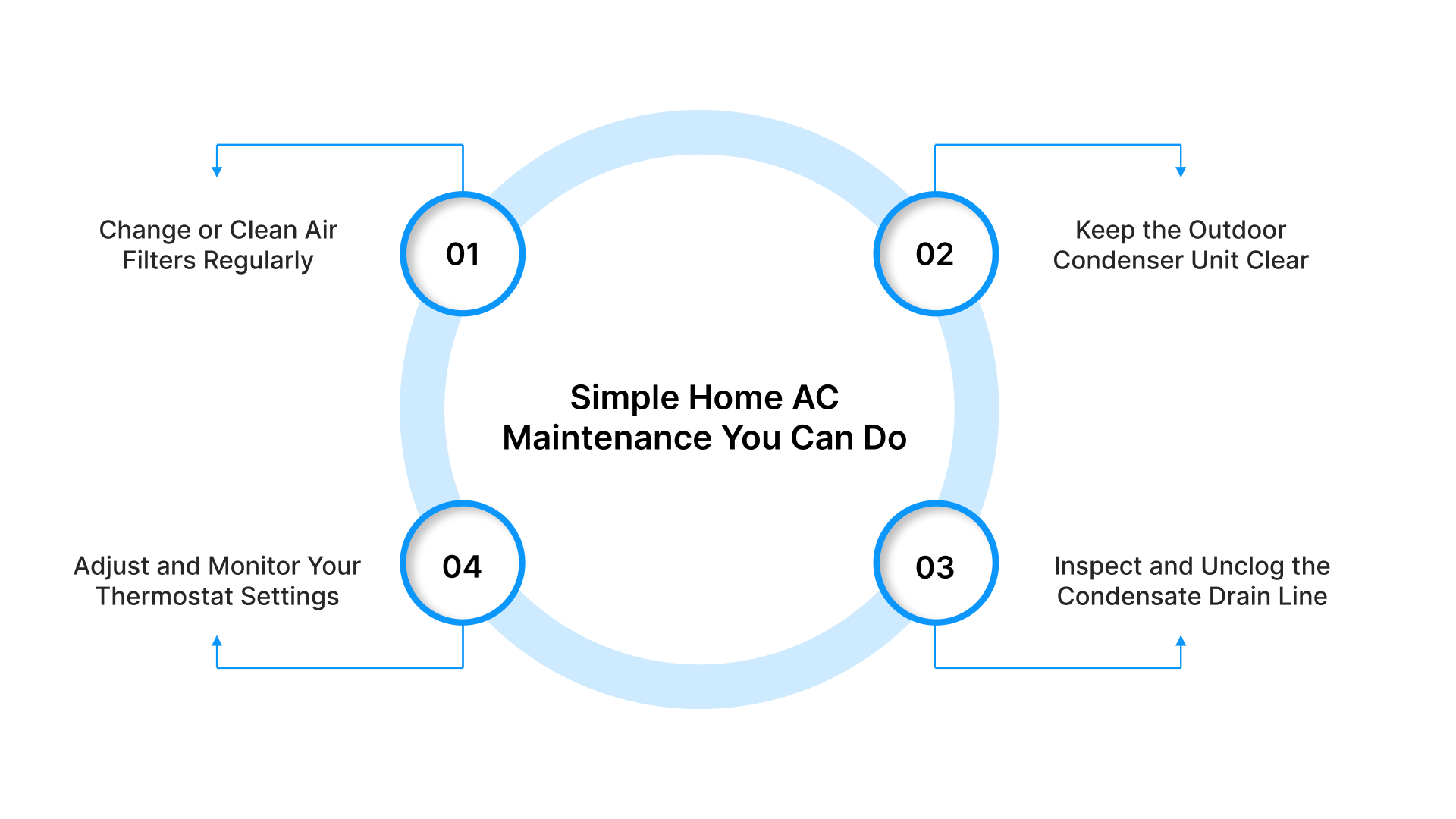
1. Change or Clean Air Filters Regularly (The Most Critical Step)
The air filter is the most overlooked component in home AC system maintenance, yet it has the single largest impact on efficiency and air quality.
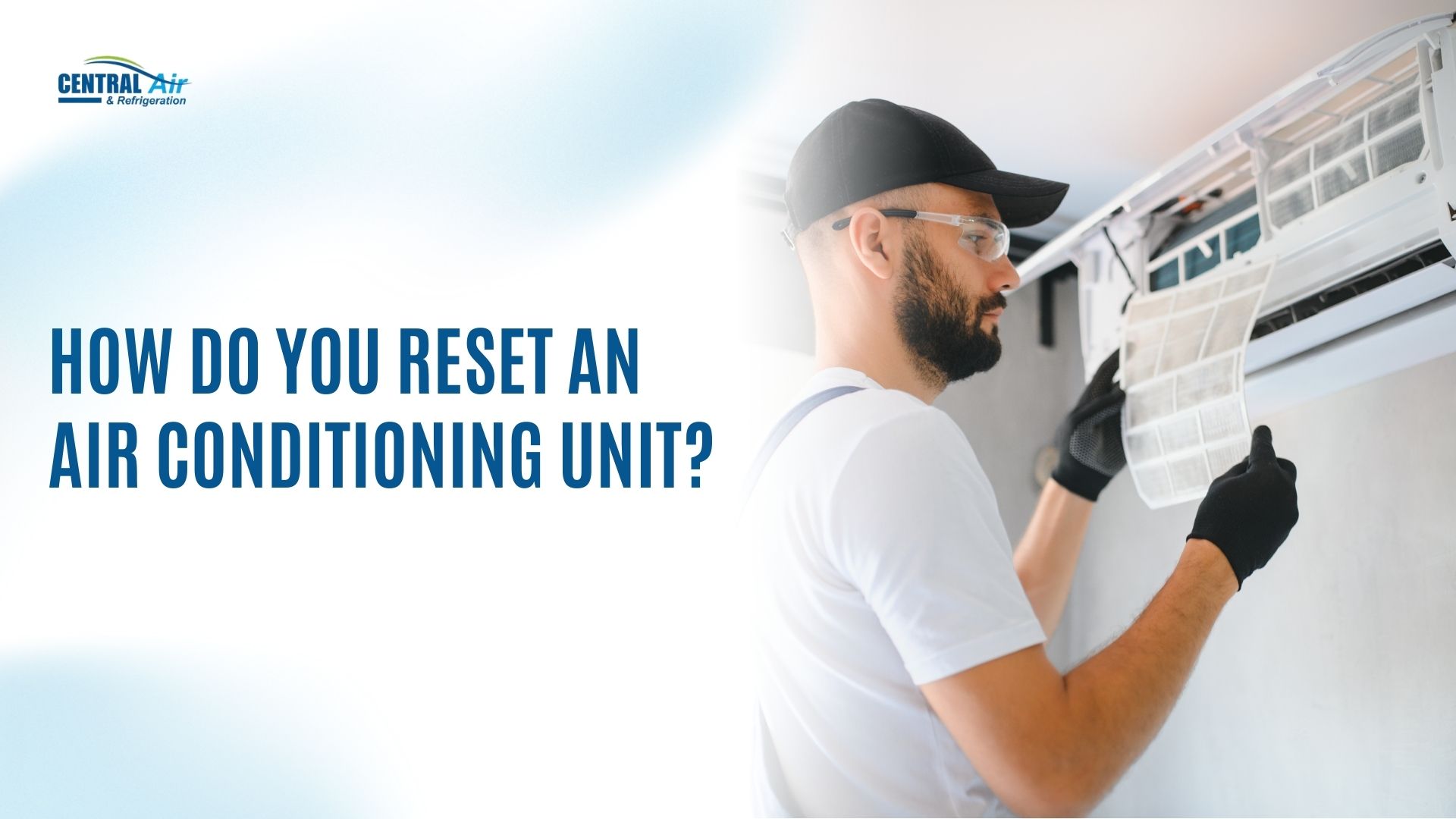
Why It Matters: The filter stops dust, pollen, and debris from entering the evaporator coil. When a filter is clogged, it severely restricts airflow across the coil. This blockage forces the blower fan to pull air harder, increasing energy use and dramatically reducing cooling capacity.
The Schedule: For most residential units, filters should be checked monthly and replaced every 1–3 months. If you have pets, high traffic, or residents with allergies, increase the frequency to monthly changes. This simple AC routine maintenance task ensures maximum airflow and efficiency.
The Right Filter: Use the correct MERV rating for your system. While higher MERV ratings filter smaller particles, they can also restrict airflow more. Consult your unit's manual or a Central Air & Refrigeration technician if unsure.
2. Keep the Outdoor Condenser Unit Clear
The outdoor maintenance on ac unit involves keeping the condenser free from obstructions. This unit is where your heat pump releases the heat pulled from your home. If it can't breathe, it can't cool.
Clear the Perimeter: Ensure there is at least two feet of clear space around the entire central AC unit. Trim back shrubs, trees, tall grass, and remove any debris like leaves, pine needles, or lawn clippings that collect near the fins.
Straighten Bent Fins: The aluminum fins surrounding the outdoor coil are fragile and easily bent by debris or cleaning. If bent, they restrict airflow. You can carefully use a fin comb (available at most hardware stores) to gently straighten them, improving the heat exchange efficiency of your refrigerated air conditioner maintenance.
Hose Down the Unit: Carefully use a garden hose to rinse dirt and dust from the outside of the condenser fins. Always spray down and out, not directly into the top of the unit, and ensure the power is off at the disconnect switch before cleaning.
3. Inspect and Unclog the Condensate Drain Line
As your AC system cools, it removes humidity, creating condensation that drains away through a small pipe (the condensate line or drain). A blockage can cause severe problems.
Identify the Problem: A blocked drain line can cause water to back up, leading to leaks that damage walls and ceilings, or, for many newer systems, trigger a safety switch that shuts down the entire AC system. This is a common cause of unexpected failure.
DIY Flush: Locate the access port near your indoor unit (often a P-trap or a T-shaped vent pipe). You can pour a mixture of vinegar or mild bleach (about 1 cup) mixed with water down the line to kill mold and algae buildup. Wait 30 minutes, then flush with fresh water.
This is a crucial step in preventing emergency repairs and is part of good AC unit yearly maintenance.
4. Adjust and Monitor Your Thermostat Settings
Your thermostat is the brain of your central AC system maintenance.
Go Programmable or Smart: If you haven't already, upgrade to a programmable or smart thermostat. This allows you to automatically adjust the temperature based on your schedule (e.g., warmer when you are away at work) without sacrificing comfort. This small investment leads to significant savings on cooling costs.
Set Realistic Temperatures: The most efficient setting for energy saving is usually around 78°F when you are home. Avoid dropping the temperature drastically, as this only forces the system into an inefficient, prolonged cooling cycle.
Professional Service: Scheduled Air Conditioning Maintenance Essentials
While DIY tasks keep the exterior clean and the air flowing, there are highly technical components requiring the expertise, tools, and regulatory knowledge of a certified HVAC technician. This is what defines true AC routine maintenance.
5. Why Annual AC Maintenance is Non-Negotiable
A professional tune-up, ideally performed in the early spring before the intense heat begins, is the most effective way to ensure longevity and efficiency.
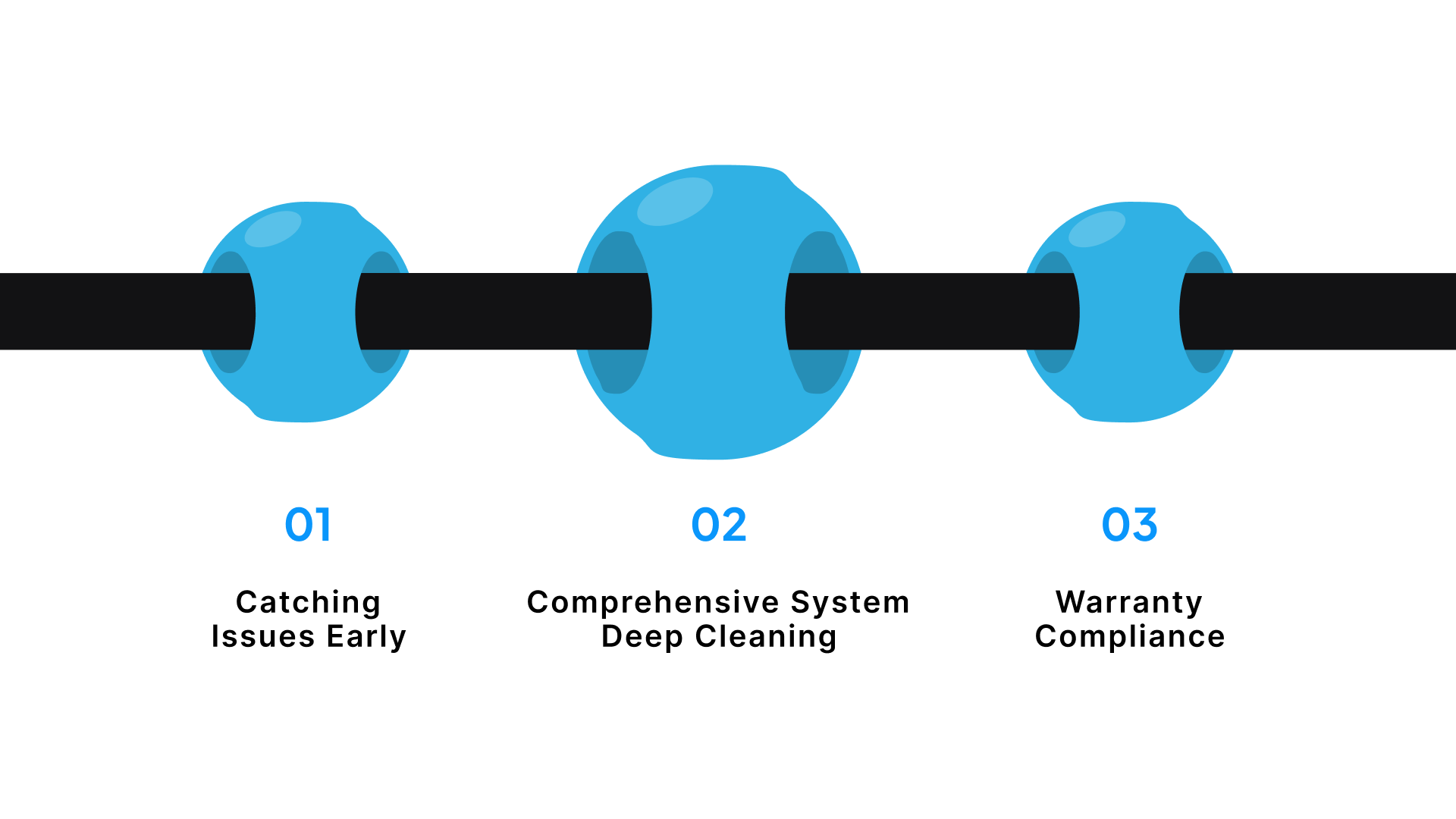
Catching Issues Early: Technicians check components that are difficult or dangerous for a homeowner to access, identifying small issues like loose wires, minor leaks, or failing start components before they lead to expensive breakdowns. This AC preventive maintenance saves money and prevents emergency calls.
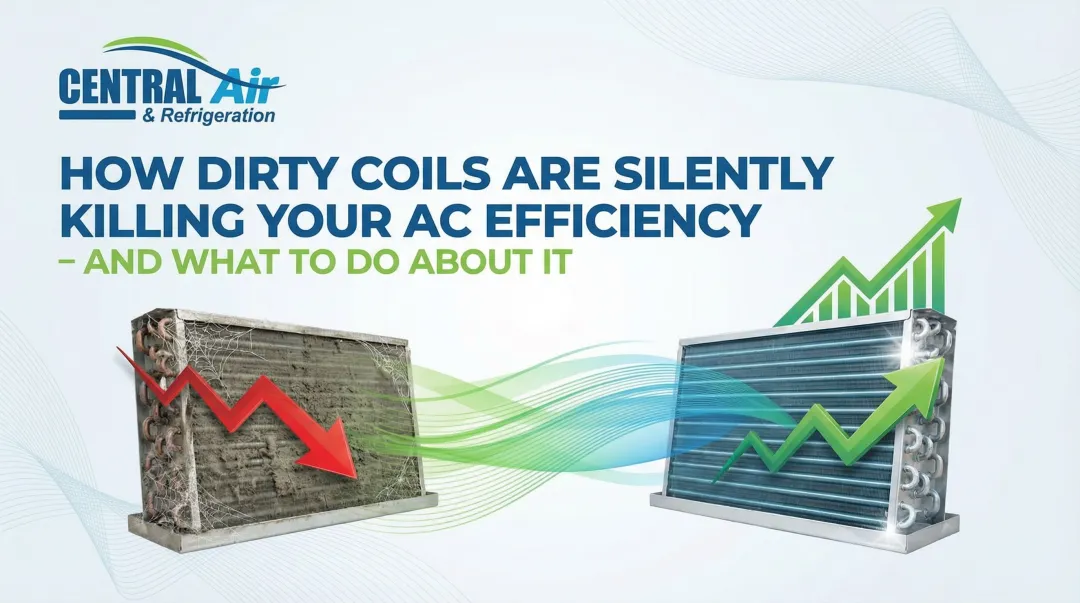
Comprehensive System Deep Cleaning: Professionals use specialized chemicals and tools to clean the evaporator coil (the indoor coil). This coil is hidden and often accumulates mold and dirt, which severely restricts cooling capacity. Cleaning the evaporator coil is one of the most important aspects of what is AC maintenance.
Warranty Compliance: Many manufacturer warranties require proof of annual AC maintenance by a licensed professional. Skipping this service could void your warranty, leaving you liable for the full cost of a major component failure.
6. Monitoring and Managing Refrigerant Levels
Refrigerant, often incorrectly called "Freon," is the chemical that absorbs and releases heat in your system.
Low Refrigerant is a Leak: Your AC system maintenance does not include "topping off" refrigerant. If your system is low on refrigerant, it means there is a leak that must be found and repaired. Simply adding more refrigerant is an illegal and temporary fix that violates environmental laws.
Impact on Performance: Low refrigerant causes the system to cool poorly and forces the compressor to run hotter and longer, significantly shortening its lifespan. The technician will measure the pressures and temperatures of the refrigerant lines, an essential part of AC unit maintenance, and look for signs of a leak.
7. Electrical Safety and Component Inspection
The electrical components are complex and contain high-voltage wiring, making this a strictly professional part of central AC unit maintenance.
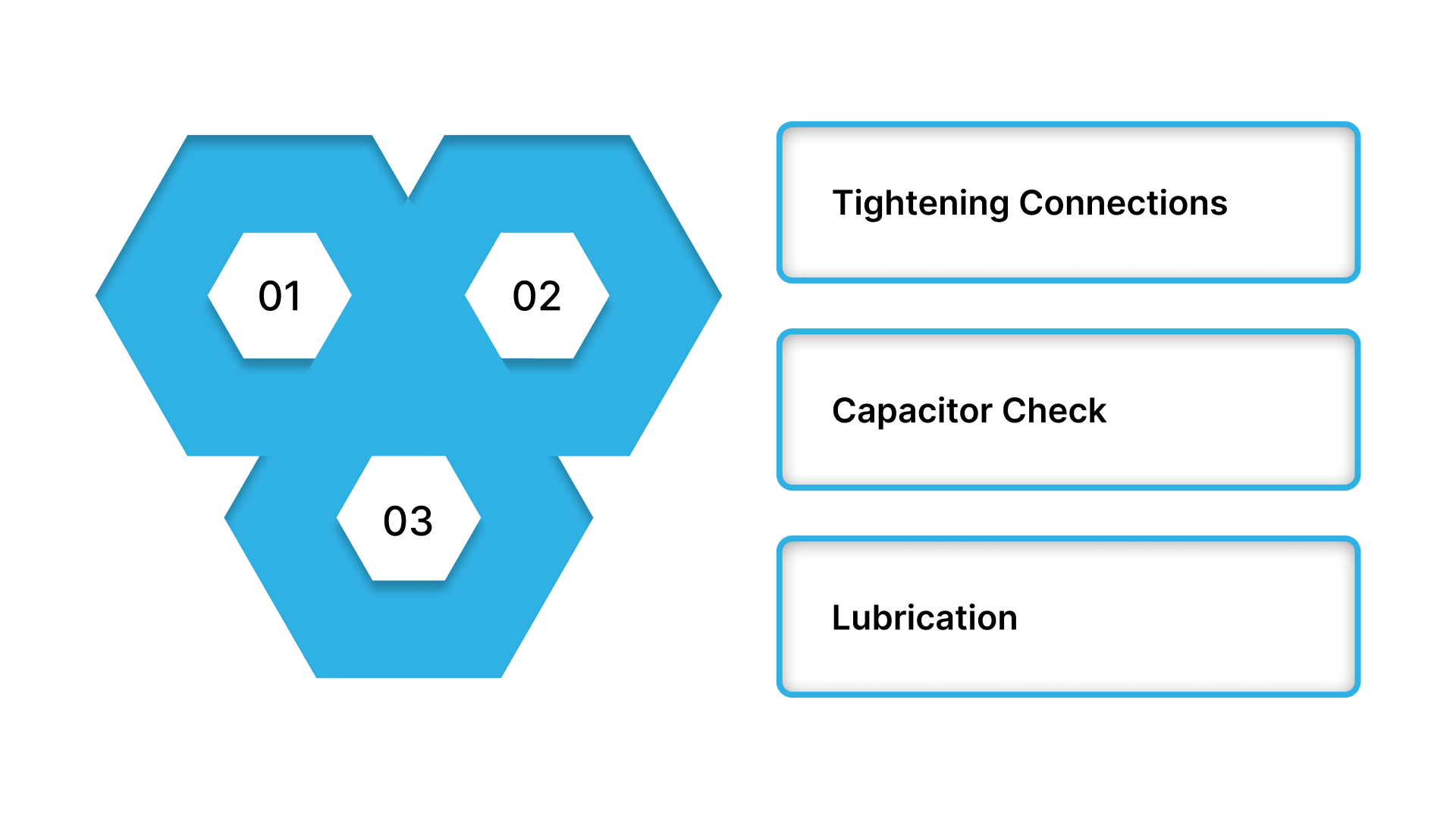
Tightening Connections: Technicians check and tighten all electrical connections. Loose connections can lead to resistance, creating heat that can melt wiring or cause system failure.
Capacitor Check: The capacitor stores energy needed to start the compressor and fan motors. A failing capacitor is a very common cause of an AC unit suddenly stopping. Technicians use a multimeter to measure the capacitor's microfarads (MFDs) and replace it if it’s weak, preventing a component failure. This is critical for AC compressor maintenance.
Lubrication: Older units may have motor bearings that require lubrication. The technician will ensure all moving parts are properly lubricated to reduce friction, wear, and power consumption.
8. Ductwork Inspection and Sealing
The maintenance of refrigeration and air conditioning extends beyond the internal and external units to the air distribution system.
The Energy Thief: Leaky ductwork can waste up to 30% of your cooling energy by pulling hot, humid air from attics or crawlspaces and distributing it into your cooled living areas. In Texas, this severely compromises efficiency.
Professional Inspection: During central AC maintenance, technicians can perform a visual check or, if necessary, recommend a duct leakage test. They will look for tears and poorly sealed joints, then seal them using metal-backed tape or specialized mastic sealant, maximizing the benefit of your home AC unit maintenance.
Conclusion
The high cost of replacing a heat pump or central AC system means that investing in consistent, scheduled maintenance is the most financially sound decision you can make. The combination of regular homeowner tasks (filters and clearing debris) and professional AC annual maintenance (coil cleaning, electrical checks, and leak monitoring) is the only way to ensure optimal energy efficiency and maximum equipment lifespan.
Don't let the Bryan-College Station heat catch you off guard. Trust the local experts at Central Air & Refrigeration to provide the comprehensive, reliable scheduled air conditioning maintenance that keeps your home or business perfectly comfortable.
Frequently Asked Questions (FAQs)
Q1. What is AC maintenance, and why is it so important?
AC maintenance is the routine inspection, cleaning, and tuning of your air conditioning system. It's important because it restores lost efficiency (often caused by dirt), prevents major breakdowns, lowers your utility bills, and satisfies warranty requirements, saving you money in the long run.
Q2. How often should I schedule professional air conditioner maintenance?
For optimal performance and longevity, you should schedule professional AC annual maintenance once a year, ideally in the early spring before the cooling season begins. This ensures the unit is ready for the intense heat and humidity.
Q3. Can I clean the coils on my central AC unit myself?
You can safely clean the outdoor condenser coils by rinsing them with a garden hose after shutting off the power. However, the indoor evaporator coil requires specialized tools, cleaners, and expertise to access and clean thoroughly. This crucial step should be left to a professional during your AC routine maintenance.
Q4. What is the average lifespan of an AC unit if I perform regular maintenance on the AC system?
With consistent, high-quality scheduled air conditioning maintenance, most modern central ac systems can last between 15 and 20 years. Neglecting maintenance, however, often shortens the lifespan to 10–12 years due to excessive strain on the compressor.
Q5. What is the sound of a bad capacitor, and what does it do?
A bad capacitor may cause the AC unit to click repeatedly without starting, or the outdoor fan or compressor may try to start and immediately shut off. The capacitor stores the energy needed to kickstart the unit's motors. A technician must test its capacity during AC system maintenance.
Q6. Does a clogged filter affect my electricity bill?
Yes, dramatically. A clogged filter restricts airflow, forcing the blower motor and the compressor to run longer and work harder to achieve the thermostat setting. This inefficient operation directly results in an increase in your monthly electricity bill.