Replacing or installing both your furnace and AC is more than a comfort upgrade; it’s a major decision that affects your home’s energy bills, reliability, and long-term peace of mind.
For many homeowners, signs like repeated breakdowns, rising utility bills, or uneven temperatures across rooms signal that the existing system may no longer meet the home’s needs.
Because heating and cooling often account for more than half of a home’s energy use, making the right choice now can mean lower running costs and fewer surprise repairs later.
If you’re trying to figure out what a furnace-and-AC replacement really costs and what actually drives the price, this guide breaks it down simply so you can plan with confidence and avoid surprise expenses.
Key Takeaways
Bundling often reduces total cost. Replacing the furnace + AC together typically lowers labor hours and avoids duplicated installation work.
System size and efficiency drive price. Capacity, SEER2/AFUE ratings, and equipment type have the biggest impact on total investment.
Home requirements matter. Duct condition, electrical capacity, ventilation needs, and installation access all influence cost.
Compatibility is key. Mismatched systems (new AC + old furnace or vice versa) reduce efficiency and shorten equipment life.
The quality of installation affects long-term cost. A properly sized, well-installed paired system runs more efficiently, lasts longer, and avoids repeat repairs.
Why Should You Replace the Furnace and AC Together?
Replacing both systems at the same time offers clear advantages for comfort, energy use, and long-term planning. While you can replace each unit separately, many homeowners choose a dual replacement because it delivers better performance and avoids repeated installation work.
Here’s when replacing both systems together becomes the smarter choice:
Your Systems Are Approaching the End of Their Lifespan
AC units typically last 10–15 years, and furnaces slightly longer. When both systems are installed at the same time, they often reach the replacement stage within the same window. Upgrading them together helps avoid another major project and supports more predictable comfort during peak heating or cooling seasons.
You Want a Matched, Higher-Efficiency Setup
Modern high-efficiency ACs depend on the furnace’s blower motor to deliver proper airflow. When both systems are upgraded as a pair, they work at the same speed and efficiency levels. AC and Furnace replacing services here supports:
Better temperature stability
Improved humidity control
Lower energy use
Quieter operation
You Prefer a Single, Planned Installation
Dual replacement reduces scheduling disruption, simplifies installation, and consolidates labor costs. Homeowners who want long-term reliability, fewer service calls, and stable operating costs often choose to update both units in one project.
Professional installers like Central Air & Refrigeration serving the Bryan–College Station area ensure your furnace and AC are sized correctly for your home’s actual heating and cooling load. This prevents the comfort issues that come from rule-of-thumb sizing or mismatched equipment.
Once you know whether a paired replacement is right for your home, the next step is understanding the cost ranges and what affects them.
What Affects the Cost of Replacing a Furnace and AC Together?
Several core factors shape the total price of a combined furnace + AC replacement. Understanding these helps homeowners set realistic budgets and avoid surprise add-ons during installation.
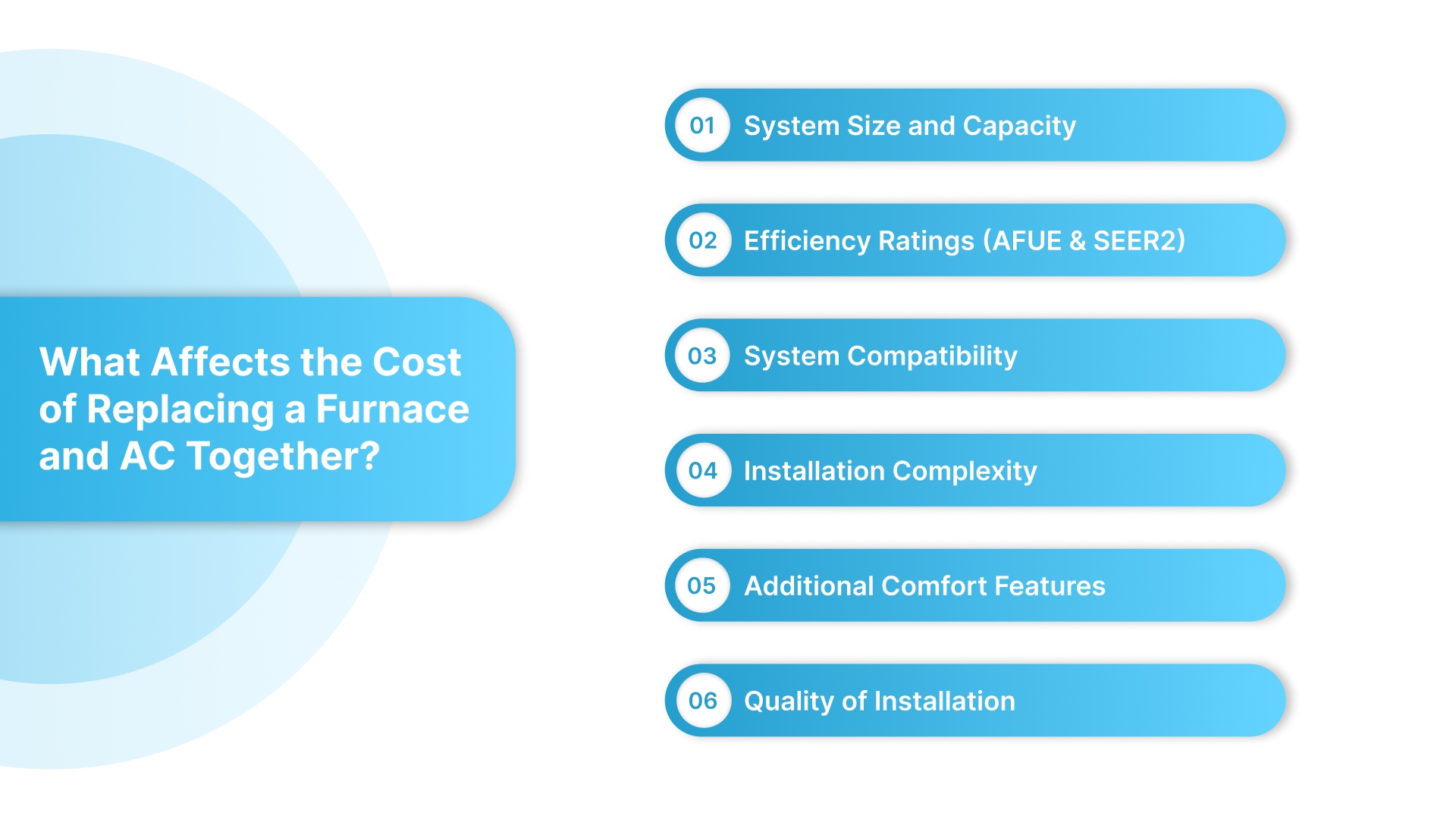
1. System Size and Capacity
Both the furnace and AC must be sized for your home’s heating and cooling load. Larger spaces or multi-story layouts need higher capacity equipment, which increases cost.
A professional load calculation will account for:
Square footage and ceiling height
Insulation quality
Window placement and sun exposure
Room layout and airflow paths
Correct sizing ensures stable temperatures and helps prevent frequent breakdowns or noisy operation.
2. Efficiency Ratings (AFUE & SEER2)
Higher efficiency systems cost more upfront but help reduce monthly utility bills.
AFUE tells you how efficiently the furnace converts fuel into heat.
SEER2 reflects the AC’s cooling efficiency under tested conditions.
Choosing the right efficiency depends on comfort needs, budget, and how many hours your equipment runs during peak seasons.
3. System Compatibility
Modern HVAC systems are designed to work as matched pairs. If the furnace blower motor can’t support the AC’s efficiency or staging level, performance drops and wear increases.
Examples:
Variable-speed ACs work best with variable-speed furnaces.
Two-stage ACs require compatible two-stage or variable furnaces.
Bundling helps avoid mismatched components and ensures both units deliver consistent comfort.
4. Installation Complexity
Every home has unique installation conditions. Costs vary when technicians must handle:
Tight attics or reduced access
Long refrigerant line routes
Venting, drainage, or electrical upgrades
Duct modifications to support proper airflow
Homes with older HVAC setups or poorly designed ductwork often need added adjustments for the new system to perform correctly.
5. Additional Comfort Features
Optional upgrades increase cost but improve long-term comfort or system control. Examples include:
Smart thermostats
Indoor air quality systems
Variable-speed blowers
Noise-reduction features
These are not required but can enhance efficiency and day-to-day comfort depending on your goals.
6. Quality of Installation
The installation company you choose affects both upfront cost and long-term reliability. Poor setup leads to airflow issues, short cycling, early component wear, and higher repair frequency.
A quality installation ensures:
Correct sizing
Proper airflow balance
Safe electrical and fuel connections
Accurate system calibration
Reliable HVAC teams review your home’s electrical capacity, installation access, and ventilation needs upfront, so your quote reflects the real scope of work, and you avoid mid-project surprises.
With the key cost drivers defined, the next step is understanding how these factors translate into actual investment ranges for a combined furnace and AC replacement.
How Much Does It Cost to Replace a Furnace and AC Together?
The total investment varies by home size, system type, and installation requirements, but most homeowners fall into predictable ranges. Understanding these ranges helps you gauge whether a quote is reasonable and what drives it higher or lower.
Typical Cost Ranges
Homeowners generally see these totals when replacing both systems at the same time:
Standard-efficiency paired system: Around $5,000–$9,000
Mid-efficiency paired system: Around $7,500–$12,500
High-efficiency paired system: Around $12,000–$18,000+
While efficiency and capacity drive most of the cost, bundling both units into one installation reduces labor hours and avoids duplicated setup work. Many homeowners also benefit from rebates or promotions available only when installing a complete system.
Average Furnace Costs by Fuel Type
Fuel type plays a major role in furnace pricing, and understanding the differences helps you plan more accurately. Each type comes with its own installation cost, maintenance needs, and long-term operating behavior.
Furnace Type | Typical Installed Cost | What to Know |
|---|---|---|
Natural Gas (80%–96% AFUE) | $3,500–$7,500 | Most common choice; balanced efficiency, strong heating output, and predictable operating costs. |
Electric Furnace | $2,800–$5,500 | Lower upfront price; may cost more to run if winters are long or temperatures drop frequently. |
Propane Furnace | $4,000–$7,500 | Similar performance to gas; fuel is usually more expensive, common in rural areas without gas lines. |
Oil Furnace | $5,500–$9,000 | Higher installation and maintenance costs; more common in older homes. |
AFUE measures how efficiently the furnace converts fuel into usable heat.
Local HVAC expertise matters here. Homes and small businesses in the Bryan–College Station region often have unique installation challenges, from older ranch-style duct systems to modern commercial refrigeration and cooling layouts. Central Air & Refrigeration helps prevent mid-project surprises and ensures the system is installed to handle Central Texas climate demands.
Fuel type sets the baseline, but your home’s heating load is what ultimately determines the furnace size you’ll need.
Furnace Cost by Home Size
Furnace pricing is also shaped by your home’s square footage and the heating output (BTUs) required to maintain consistent comfort.
Home Size (sq ft) | Recommended Furnace Size (BTU) | Installed Cost Range |
|---|---|---|
800–1,200 sq ft | 40,000–60,000 BTU | $3,200–$5,000 |
1,200–2,000 sq ft | 60,000–90,000 BTU | $3,800–$6,500 |
2,000–3,000+ sq ft | 90,000–120,000 BTU | $5,500–$7,500 |
Proper sizing is essential:
Oversized systems short-cycle, waste energy, and wear out faster.
Undersized systems run constantly and still struggle to keep the home warm.
With furnace pricing covered, the next step is understanding how these numbers change once the AC is included as part of a full system replacement.
Cost Breakdown: Furnace and AC Replacement
When both systems are replaced as a bundle, the total cost includes equipment, labor, and any home updates needed to support the installation. Most homeowners fall in the mid-range unless major duct or electrical work is involved.
Cost Factor | Typical Impact on Total Cost |
|---|---|
Equipment (furnace + AC) | 40%–60% |
Labor | 30%–50% |
Permits & Inspections | $100–$500 |
Ductwork Modifications | $500–$3,000 (if required) |
Efficiency Upgrades | Adds $500–$2,500 |
Total Installed Cost (Typical)
Full furnace + AC replacement: $5,000–$15,000
Most homeowners fall around: ~$8,000
Costs rise with higher efficiency ratings, larger home sizes, and installations in tight or difficult-to-access areas.
What Affects Where You Land in the Range
Your total cost depends on a combination of home and system requirements, such as:
Size of the furnace (BTU output) and AC (tonnage)
The efficiency ratings you select
Any ductwork repair or resizing
Electrical, venting, or drainage adjustments
Equipment type (single-stage, two-stage, or variable-speed)
Installation access (attic, crawl space, tight closets)
These variables determine not only upfront cost but also long-term operating expense and comfort levels.
The next step is choosing equipment types and efficiency levels that work well together and support stable comfort year-round.
Choosing the Right Furnace and AC Pair
Once you understand the cost ranges, the next step is selecting a system pair that fits your home’s comfort needs, layout, and long-term operating goals. The goal isn’t to choose the “most advanced” equipment; it’s to choose the right combination that works together without driving unnecessary cost.
System Types and Their Impact on Cost
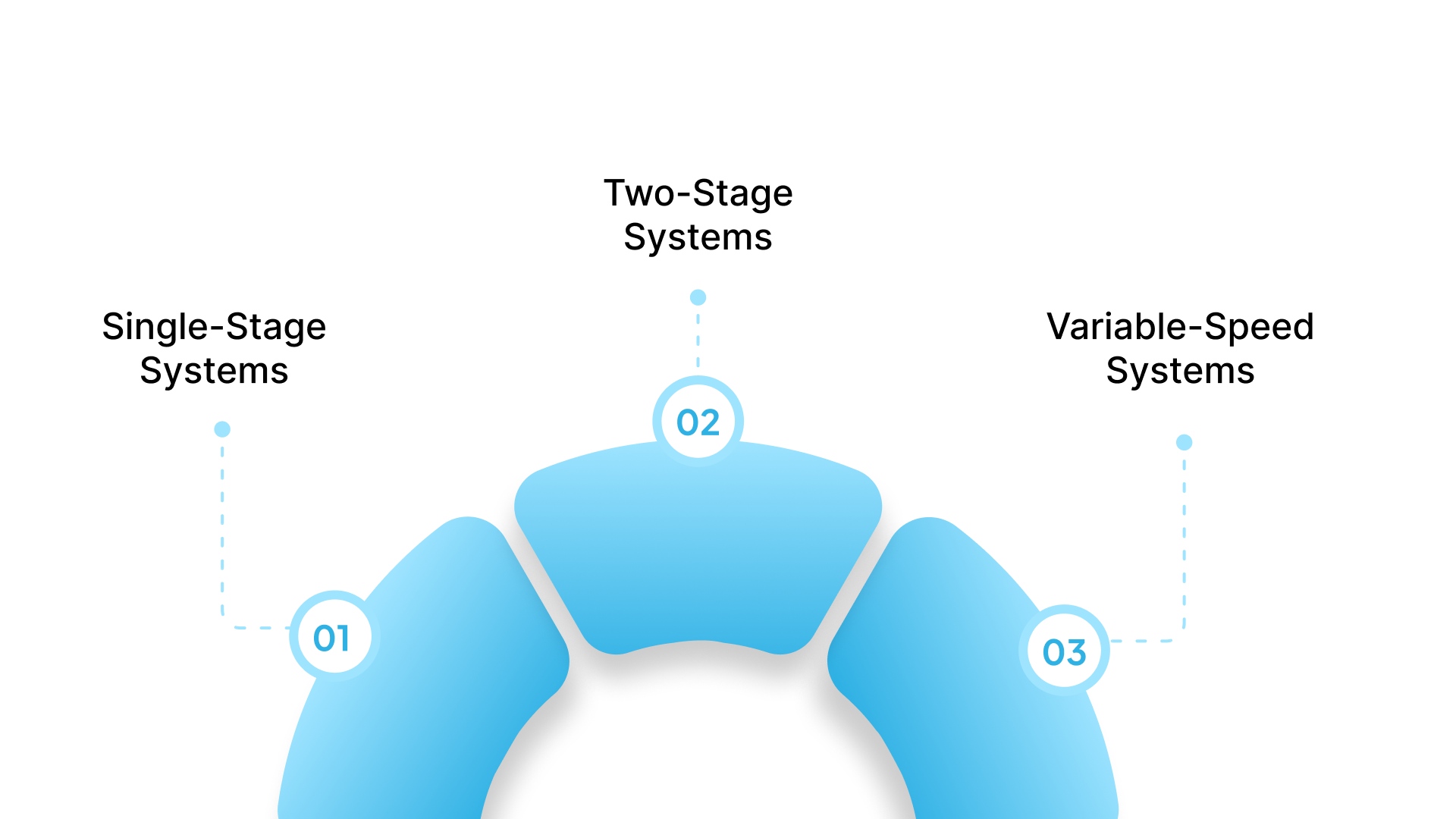
Different system types affect both performance and installation complexity:
Single-Stage Systems
Operate at full capacity when running.
Lower upfront cost
Basic comfort control
Suitable for smaller or well-insulated homes
Two-Stage Systems
Operate at a low and high stage.
Smoother temperature control
Better humidity management
Higher upfront cost but better comfort in variable climates
Variable-Speed Systems
Adjust output continuously based on demand.
Most consistent comfort
Quiet operation
Highest efficiency and longest run cycles
Best for homes with uneven temperatures or long cooling/heating seasons
Your furnace and AC must be compatible across these staging levels to avoid airflow issues or efficiency loss.
Matching Furnace and AC Efficiency
Modern HVAC systems are designed as matched pairs. Mixing old and new staging or efficiency levels can lead to problems such as:
Reduced airflow
Short cycling
Higher energy use
More frequent repairs
A matched pair ensures both systems operate at the speeds and airflow rates they were built for, especially important for variable-speed and high-efficiency equipment.
Consider Your Home’s Heating and Cooling Behavior
Your system choice should align with how your home gains heat in summer and loses heat in winter. Consider:
Long AC run times in hotter months
Cold spots or hot rooms
Large windows or sun-heavy exposure
Multi-story air distribution challenges
A professional technician can evaluate airflow patterns and recommend a pairing designed to minimize uneven temperatures.
Think About Long-Term Operating Costs
Efficiency affects your monthly bills, not just your installation budget. Higher efficiency isn’t always necessary, but for homes with high heating or cooling hours, it often pays off over time.
With quotes in hand, the next step is avoiding common mistakes that drive up long-term costs.
Common Mistakes to Avoid
Avoiding these mistakes can prevent comfort issues, unexpected expenses, and early equipment failures.
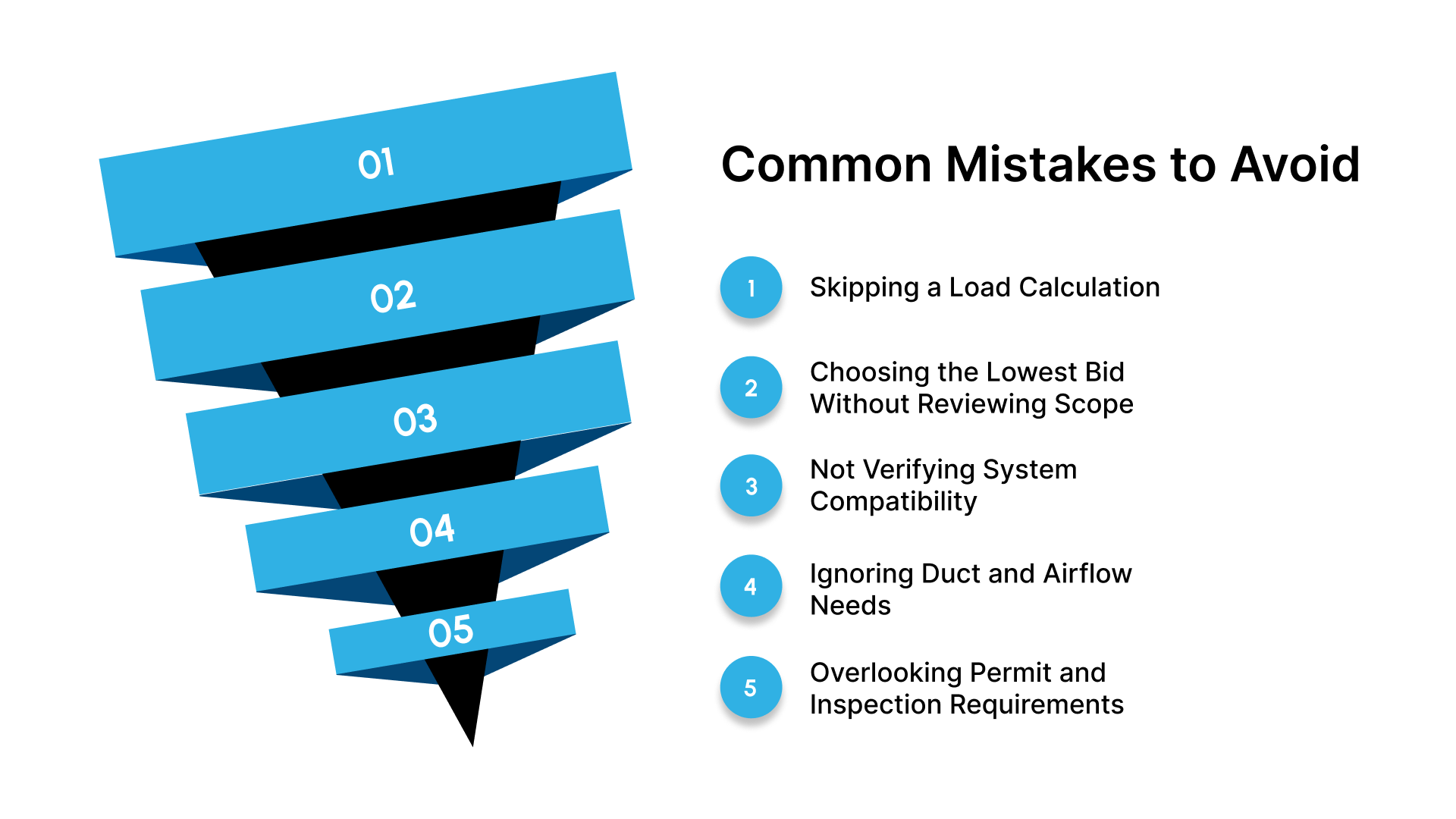
Skipping a Load Calculation
Sizing based on guesswork leads to oversized or undersized systems, which cause short cycling, long run times, and uneven temperatures.
Choosing the Lowest Bid Without Reviewing the Scope
Low prices often signal missing ductwork, mismatched equipment, or incomplete labor. Cheap installs cost more later.
Not Verifying System Compatibility
Your furnace and AC must match in staging, airflow, and blower requirements. Mismatch leads to poor comfort and higher bills.
Ignoring Duct and Airflow Needs
Even the best system can’t perform well with restricted airflow. Have ducts inspected before installation.
Overlooking Permit and Inspection Requirements
Skipping permits can lead to safety issues, insurance problems, and complications during home resale.
The right contractor prevents these issues from the start. Here's how Central Air & Refrigeration supports a smooth, accurate installation.
How Central Air & Refrigeration Makes Your Replacement Simpler
Replacing both systems is a major investment. The outcome depends on correct sizing, proper installation, and long-term support. Central Air & Refrigeration helps homeowners and businesses throughout the Bryan–College Station area, providing solutions tailored to Texas climate conditions and a wide range of cooling and refrigeration needs. Whether you’re upgrading a home HVAC system or managing comfort requirements for a commercial space, our team helps you make confident decisions without guesswork.
What You Can Expect
In-home load calculation to size both systems correctly
Duct and airflow inspection to identify restrictions before installation
Clear, transparent quotes with itemized equipment and labor
Recommendations based on real usage, not upselling
Professional installation that prioritizes reliability and comfort
Maintenance plan options to protect performance and reduce repair risk
Conclusion
Replacing a furnace and AC together is a major home decision, but it becomes far simpler when you understand the cost ranges, the factors that influence pricing, and how to evaluate a properly matched system. When both units reach the end of their lifespan around the same time, a bundled replacement can reduce installation hours, improve efficiency, and give you a stable, predictable setup for years ahead.
If you’re preparing to replace your heating and cooling system, Central Air & Refrigeration can walk you through every step. Our team reviews your home’s layout, performs a full load calculation, checks duct condition, and provides a clear proposal tailored to your comfort goals and daily usage.
Plan early, avoid emergency decisions, and set your home up for efficient year-round comfort. Schedule your in-home system evaluation and get a transparent furnace + AC replacement quote. Contact us today.
FAQs
1. Is it cheaper to replace the furnace and AC together?
Often yes. Bundled installation reduces labor time, avoids repeating duct or electrical work, and helps ensure both units operate as a matched system.
2. Can I replace only the AC or furnace?
You can, but mismatched systems may lead to airflow issues, short cycling, and higher energy use. Your technician can evaluate whether single-unit replacement is practical.
3. How long does combined replacement take?
Most homes take one full day. Homes with duct repairs, attic access limits, or electrical upgrades may require additional time.
4. Do both systems need to be at the same efficiency level?
Efficiencies don’t need to match exactly, but staging and blower requirements must align. This protects performance and prevents wasted energy.
5. What size system do I need?
Size depends on insulation, layout, windows, and room loads. A Manual J calculation is the only accurate way to determine capacity.