Heat pumps are fast becoming the go-to heating and cooling solution for many American homes. In fact, in 2024, heat pump sales outpaced gas furnaces across the U.S. by over 32%, signaling a major shift in how households manage temperature all year round.
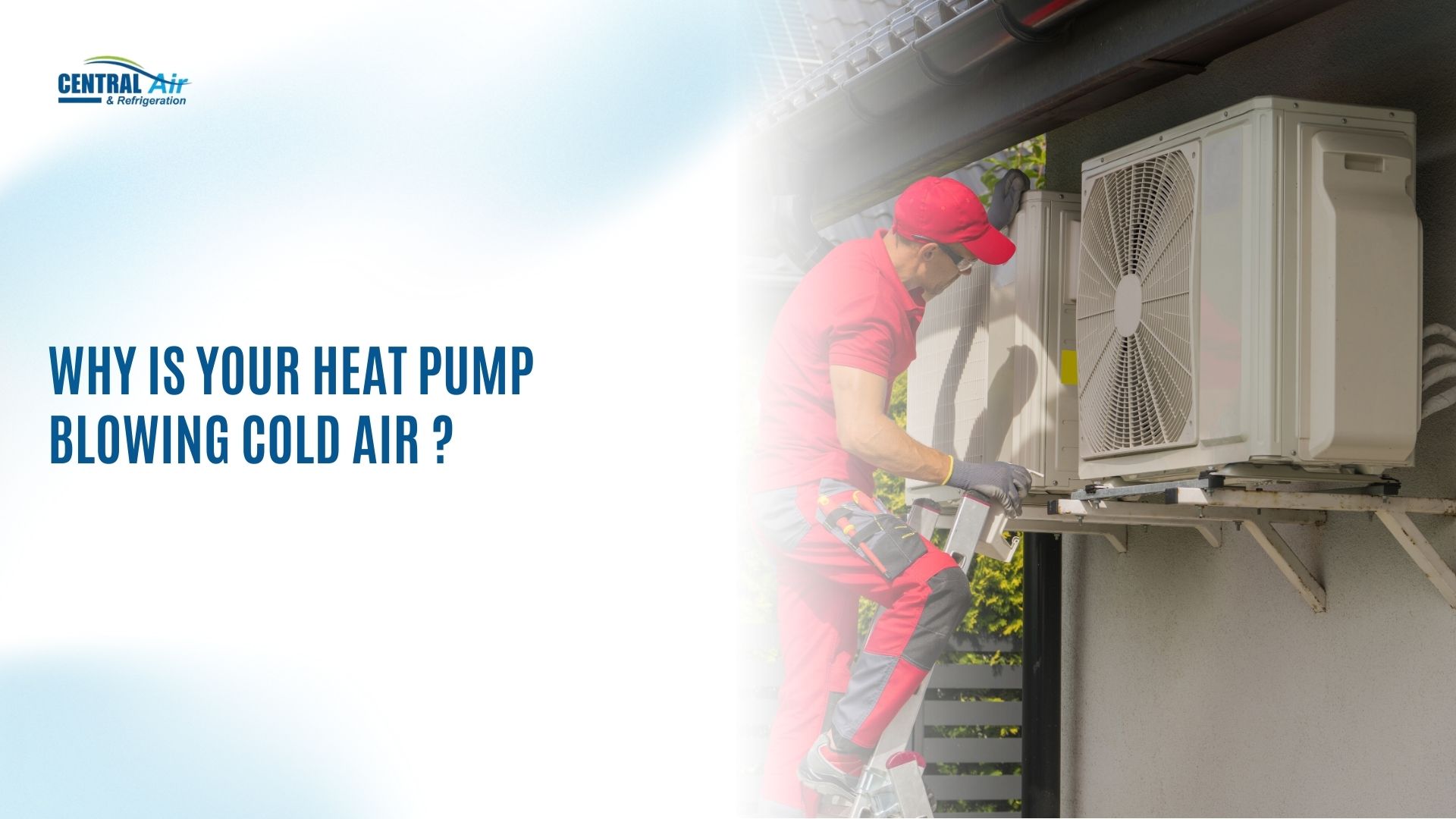
That widespread adoption comes with a catch: when something goes wrong, the impact is immediate. With so many systems now in use, millions of homeowners and small-business operators may one day ask the same question you’re asking now: “Why is my heat pump blowing cold air when it should be heating?”
This article is meant to cut through the confusion. We’ll walk you through 15 of the most common causes for this problem, from simple filter issues to deeper mechanical failures. Know exactly how to check, fix, or know when to call in a pro.
Key Takeaways:
Adoption Surge: Heat pump sales grew 32% higher than gas furnaces in 2024, meaning more households now face common cold-air issues as usage scales nationwide.
Airflow Failures: Clogged filters, dirty coils, and blocked outdoor units cause most cold-air complaints, as restricted airflow stops the system from delivering warm air.
Refrigerant Loss: Low refrigerant from leaks leads to constant run-time, ice buildup, and weak heat output, a problem that always requires professional repair.
Control System Faults: Thermostat errors, faulty sensors, and stuck reversing valves are the main reasons a heat pump gets stuck in cooling mode, even when heat is selected.
Maintenance Impact: Routine tune-ups prevent the majority of heating failures, catching airflow, refrigerant, coil, and electrical issues early.
Professional maintenance makes the biggest difference:
Central Air & Refrigeration offers the tune-ups, seasonal checks, and diagnostics that catch early heat-pump issues before they turn into expensive repairs.
How a Heat Pump Should Work (Quick Primer)
A heat pump moves heat rather than making it. In heating mode, it pulls thermal energy from outdoor air (or the ground) and moves that heat inside via a closed refrigerant loop.
The system uses four main components: evaporator, compressor, condenser, and expansion device. Plus a reversing valve to switch between heating and cooling. This basic refrigerant cycle is what makes heat pumps efficient for year-round HVAC.
Below are the core, fact-based functions you should expect from a properly operating heat pump.
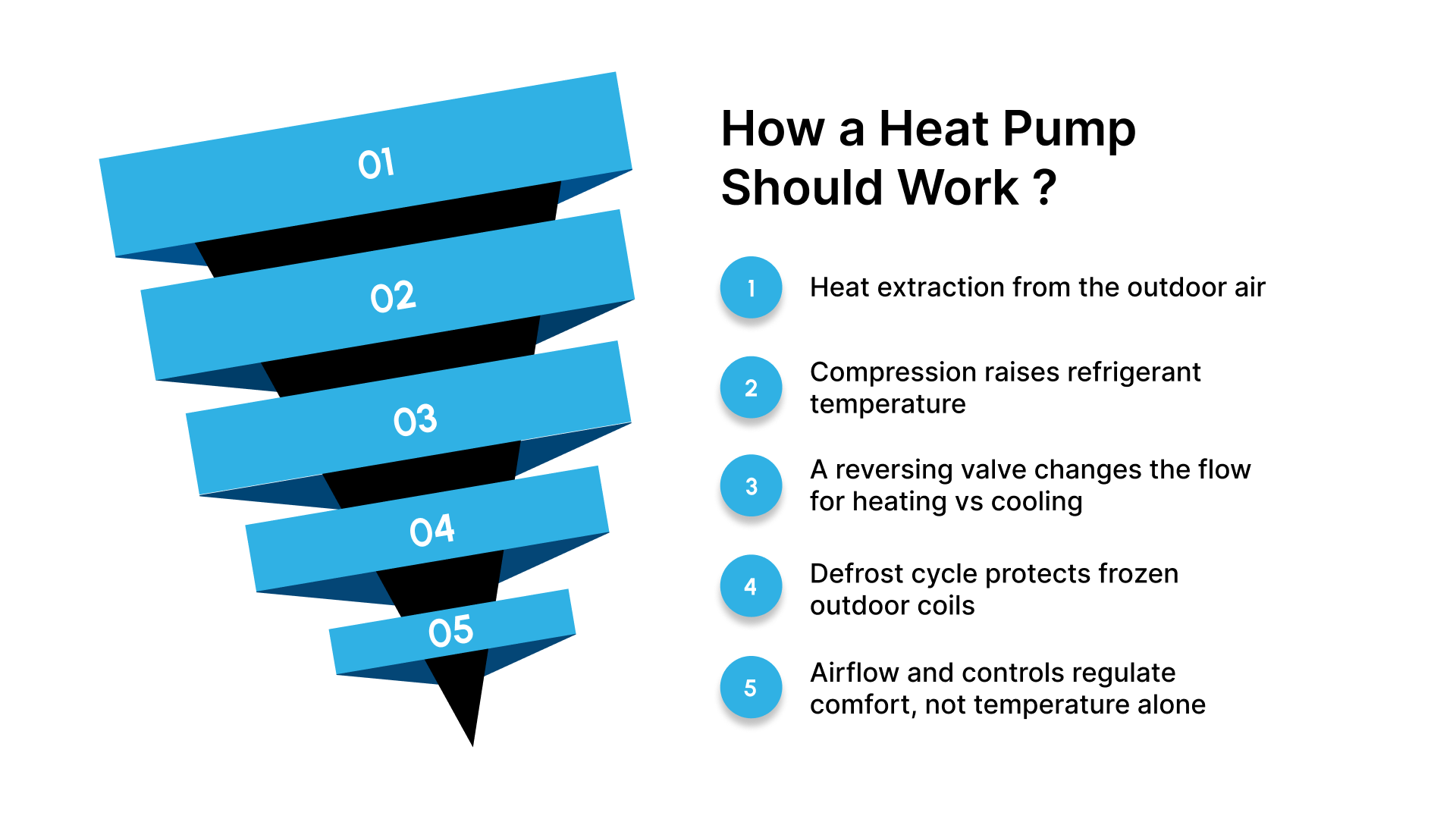
Heat extraction from the outdoor air: In heating mode, the outdoor coil acts as the evaporator, absorbing ambient heat into the refrigerant before it is compressed. This is how a heat pump gains energy from air that may feel cold to us.
Compression raises refrigerant temperature: The compressor increases refrigerant pressure and temperature so the refrigerant can release usable heat indoors at the indoor coil. This step is essential to deliver warmer air than the outdoor source.
A reversing valve changes the flow for heating vs cooling: A reversing valve swaps which coil acts as evaporator or condenser, allowing the same hardware to either heat or cool a space. Faults here are a common cause of a heat pump that stays in cooling mode.
Defrost cycle protects frozen outdoor coils: When outdoor coils ice up, the heat pump periodically goes into a defrost routine that temporarily reverses operation to melt frost. Brief bursts of cooler air during defrost are normal; persistent cold output outside a defrost period is not.
Airflow and controls regulate comfort, not temperature alone: The system relies on correct airflow, calibrated sensors, and control logic to maintain steady indoor temperatures. Poor airflow or miscalibrated controls can make a properly charged system still feel cold.
Now that the normal heating cycle is clear, it becomes much easier to pinpoint why the air coming out feels cold.
The 15 Common Reasons Heat Pumps Blow Cold Air in Heat Mode
Heat pump use continues to surge across the U.S., with residential air-source units making up over 90% of the national heat pump market in 2024. With so many systems in daily use, cold-air issues are becoming increasingly common and often misunderstood.
To make troubleshooting easier, here are 15 of the most frequent reasons a heat pump may blow cold air in heat mode and what each issue typically points to.
Heat Pump Operating in Defrost Mode
When it’s cold and damp outside, your heat pump can build up frost on the outdoor coil. To clear it, the system automatically switches into defrost mode, which can make the air inside feel cooler for a short time.
Warning Signs:
The air suddenly feels cooler for a few minutes
The outdoor fan pauses, and you see a bit of steam
Heating stops briefly, then picks back up on its own
How It’s Fixed:
In most cases, you don’t need to do anything; the system resets after the frost melts. Just make sure the outdoor unit isn’t blocked by ice or debris. If the defrost cycle keeps happening over and over, it’s time to have a technician check the coils, sensors, or refrigerant levels.
Air Filter Clogged and Blocking Warm Air
Your heat pump pulls air through a filter before circulating it through your home. When that filter gets clogged with dust and buildup, the system can’t move enough air over the indoor coil, which means it can’t deliver warm air the way it should. Restricted airflow is one of the most common causes of weak or cold-feeling heat from a heat pump.
Warning Signs:
Air coming from the vents feels weak or barely warm
Some rooms warm up, others stay chilly
You hear the system running, but the temperature barely changes
How It’s Fixed:
Most of the time, this one’s simple: replace or clean the filter to restore proper airflow. If the system still blows cold air after you’ve changed the filter, a technician may need to check the blower motor, indoor coil, or ductwork. This is to ensure nothing else is restricting airflow.
Low Refrigerant Levels Due to a Leak
Your heat pump needs the right amount of refrigerant to absorb heat outside and move it indoors. When there’s a leak, the system can’t transfer enough heat, so it runs normally but blows cool or barely warm air.
Warning Signs:
Constant run time with little warmth
Ice on the outdoor coil or lines
Hissing or bubbling near the unit
Higher energy bills with poorer heating
How It’s Fixed:
Refrigerant leaks require a licensed technician. A pro will find the leak, repair it, and recharge the system so it can pull in and deliver heat properly again.
Reversing Valve Stuck in Cooling Mode
The reversing valve is the part of your heat pump that switches the system between heating and cooling. If it gets stuck or fails electrically, the unit can’t shift into heat mode, even if the thermostat is set correctly, so it continues delivering cool air.
Warning Signs:
Cold air blowing in the heat mode
The system runs, but never raises the temperature
Occasional clicking but no mode change
How It’s Fixed:
A reversing valve issue needs a technician. They’ll test the solenoid, check electrical signals, and replace the valve if it’s mechanically stuck or failed.
Outdoor Unit Blocked or Covered in Ice
Your heat pump needs steady airflow around the outdoor unit to absorb heat. When the unit gets buried in leaves, snow, debris, or heavy ice, it can’t pull in enough air; so the system struggles and ends up blowing cold air inside.
Warning Signs:
Weak or cool airflow indoors
Visible ice or frost on the outdoor unit
The outdoor fan stops or slows unexpectedly
Louder-than-usual or strained fan noise
How It’s Fixed:
Clear any snow, leaves, or debris and keep 2–3 feet of space around the unit. If thick ice keeps forming, a technician should inspect the defrost cycle, coils, or refrigerant levels.
Thermostat Settings or Calibration Off
The thermostat regulates when the heat pump enters heating mode, how long it runs, and the temperature it maintains. If settings are off, calibration drifts, or signals misfire, the system may stay in cooling mode, run the fan without heat, or miss the set temperature, causing cooler-than-expected air.
Warning Signs:
Heat mode not selected or fan set to “On”
The room temperature doesn’t match the thermostat reading
The system runs, but only produces cool or lukewarm air
New thermostat installation followed by heating issues
How It’s Fixed:
Start by confirming mode, fan, and temperature settings, and replace batteries if needed. For calibration errors, wiring problems, or compatibility issues, a technician can recalibrate the thermostat, correct control wiring, or update the device for proper communication.
Blower or Fan Motor Failing to Move Air
The blower or fan motor pushes air across the indoor coil so warm air can circulate through the home. When the motor weakens, overheats, or fails electrically, airflow drops sharply. Without enough air moving over the coil, the system can feel like it’s blowing cold or barely warm air.
Warning Signs:
Weak airflow from vents
Hot or humming motor sounds
The system is running longer than usual
Frequent on/off cycling
How It’s Fixed:
A technician typically checks the motor, capacitor, and electrical connections, replacing worn components to restore airflow.
Outdoor Coil Frozen Beyond Normal Defrost
The outdoor coil can accumulate frost in cold, humid weather, but a heat pump’s defrost cycle normally melts it. When ice keeps building past that cycle, the system can’t absorb heat properly, causing cold air indoors.
Warning Signs:
Thick ice covering the coil
The outdoor fan is slowing down or stopping
Steam appearing repeatedly
The system is struggling to warm the space
How It’s Fixed:
A technician checks for airflow issues, sensor faults, refrigerant problems, or defrost cycle failures and clears the ice safely.
Electrical Component Failing Inside Unit
Heat pumps depend on electrical components such as capacitors, contactors, relays, and control boards. When one fails, the system may run without heating, cycle off early, or struggle to start, which often feels like cold air from the vents.
Warning Signs:
Clicking or buzzing sounds
Breaker trips
The system won’t start or shuts off quickly
How It’s Fixed:
A technician identifies and replaces the faulty component to restore proper heating.
Heat Pump Undersized for the Space
An undersized heat pump doesn’t have enough capacity to heat the entire space, especially during colder weather. The system may run nonstop trying to reach the set temperature, but it never produces enough warm air, making it feel like it’s blowing cold.
Warning Signs:
Constant run time
Uneven or weak heating
The temperature never reaches the set point
How It’s Fixed:
Proper sizing starts with a load calculation. Once the required capacity is clear, upgrading to the correct unit or adding supplemental heat ensures the system can meet the home’s demand without constant strain.
Ductwork Leaks or Airflow Restrictions
Leaky, blocked, or poorly designed ductwork can prevent warm air from reaching parts of the home. When heated air escapes into attics, crawl spaces, or walls, or when ducts are crushed or clogged, the system appears to blow cold air even though the heat pump is working.
Warning Signs:
Some rooms stay cold
Weak airflow from vents
Whistling or rattling sounds
How It’s Fixed:
A technician seals leaks, clears blockages, or redesigns damaged duct sections to restore proper airflow.
Dirty Coils Reducing Heat Transfer
Both the indoor and outdoor coils need clean surfaces to absorb and release heat. When they’re coated with dust, grime, or outdoor debris, the heat pump can’t transfer enough warmth into the home. The system may run normally, but still blow cooler air because the coils can’t do their job efficiently.
Warning Signs:
Longer heating cycles
Lukewarm airflow
Higher energy bills
How It’s Fixed:
Cleaning the coils and restoring clear airflow usually resolves the issue and brings heating performance back to normal.
Faulty Sensor Sending Wrong Signals
Heat pumps rely on temperature sensors (thermistors) to track indoor and outdoor conditions. If a sensor slips out of place, gets dirty, or starts malfunctioning, it can send inaccurate readings. The system may think it has reached the right temperature or misjudge coil conditions, causing it to blow cooler air than expected.
Warning Signs:
System cycles at the wrong times
Temperature swings or uneven heating
Heat mode is engaging but not warming
How It’s Fixed:
Correcting or replacing the faulty sensor brings accurate temperature control back and allows the system to heat properly again.
System Stuck in Cooling Mode Error
Heat pumps switch between heating and cooling using control signals and the reversing valve. If those signals are disrupted by wiring faults, control board issues, or valve problems, the system may stay in cooling mode even when the thermostat is set to heat. This results in cold air from the vents.
Warning Signs:
Cold air in heat mode
No temperature increase
Clicking without a mode change
How It’s Fixed:
Restoring proper control signals or correcting wiring allows the system to switch back into heating mode normally.
Aging System Losing Heating Capacity
As a heat pump gets older, key components like the compressor, fan motor, sensors, and coils naturally wear down. Efficiency drops, heat transfer weakens, and the system struggles to keep up with demand. Even if everything is technically “working,” the unit may no longer produce enough warmth, making the air feel cool.
Warning Signs:
Longer run times
Frequent small issues
Noticeably weaker heating
How It’s Fixed:
Restoring performance may involve targeted repairs, but when multiple parts are wearing out, upgrading to a newer, more efficient system typically delivers better and more consistent heating.
Looking at these issues side by side, a pattern starts to emerge: most of them don’t start big. They start small, often long before you notice cold air. That’s where regular maintenance makes a real difference.
Why Regular Heat Pump Maintenance Matters
Heat pumps don’t fail overnight; they lose efficiency gradually. A slightly dirty filter, a small refrigerant imbalance, or mild coil buildup can quietly drive up energy use and weaken heating long before you notice. Regular maintenance is what stops those slow, hidden losses from turning into higher bills, unreliable heat, and early system failure.
That’s exactly where Central Air & Refrigeration steps in, handling the tune-ups, seasonal checks, and diagnostics that catch problems before they become expensive.
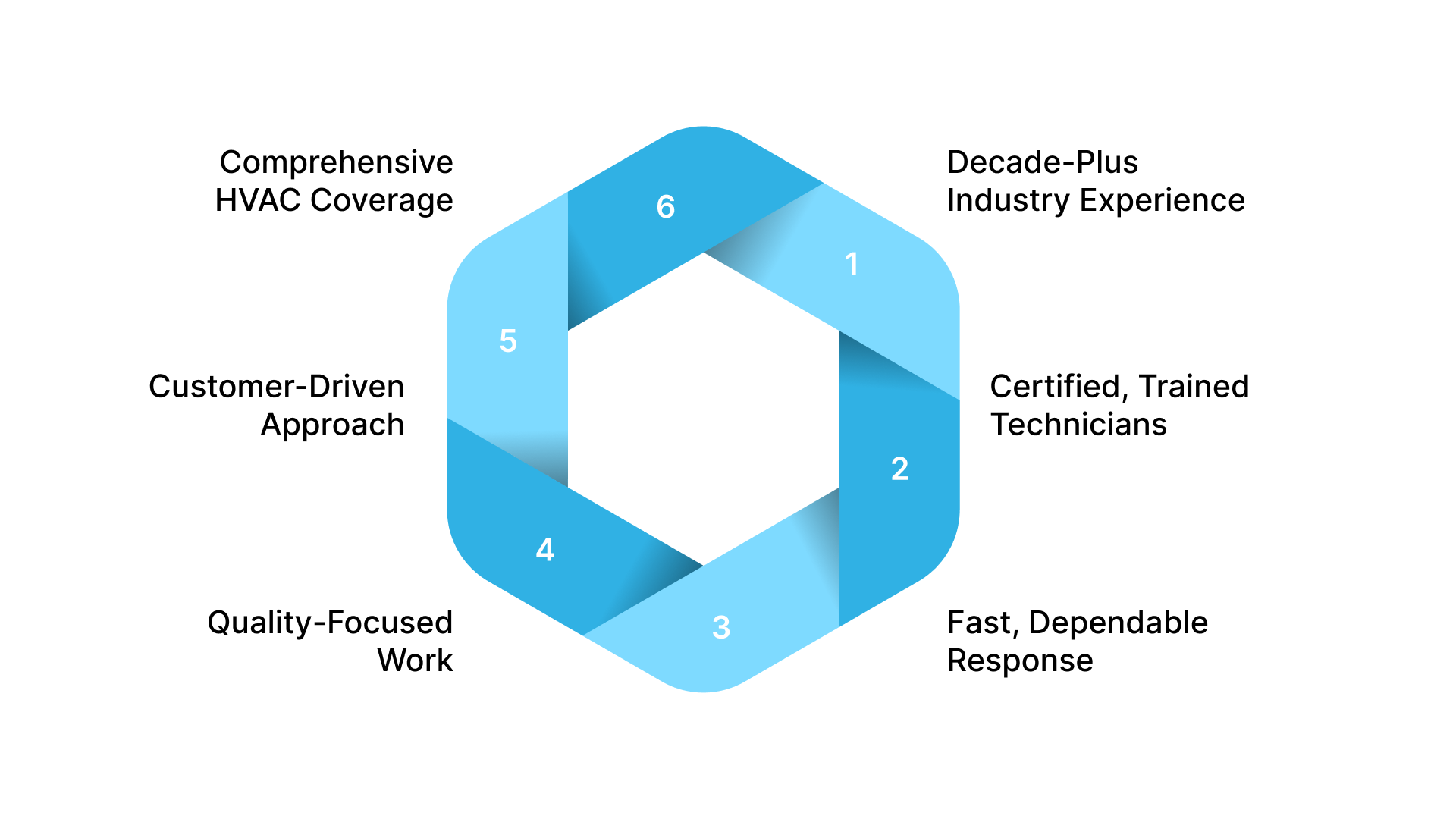
For heat-pump maintenance that stays consistent and reliable, a few qualities set this service apart:
Decade-Plus Industry Experience: Over 10 years of hands-on HVAC work across residential, commercial, and refrigeration systems.
Certified, Trained Technicians: Licensed professionals trained in current HVAC standards, repair methods, and modern heat-pump technologies.
Fast, Dependable Response: Quick turnaround times and reliable scheduling for both routine maintenance and urgent system issues.
Quality-Focused Work: Service centered on accuracy, long-term performance, and preventing repeat problems.
Customer-Driven Approach: A commitment to delivering complete satisfaction and building long-term service relationships.
Comprehensive HVAC Coverage: Support for heating, cooling, and refrigeration systems, allowing consistent care across all equipment types.
Conclusion
A heat pump blowing cold air can disrupt comfort fast, but understanding the root causes makes the path forward much clearer. The difference between a system that struggles and one that stays steady often comes down to timely care and the right hands maintaining it.
Central Air & Refrigeration offers that steady hand; a team built around consistent service, thorough diagnostics, and maintenance practices that keep heating dependable season after season. When a heat pump starts showing early signs of strain, having a trusted local partner makes all the difference in avoiding bigger, costlier issues down the road.
Reach out anytime to stay ahead of problems and keep the heat pump performing at its best!
FAQs
Why would a heat pump blow cold air instead of heating?
A heat pump can push out cold air when airflow is restricted, refrigerant levels drop, the reversing valve malfunctions, coils freeze, or the thermostat sends incorrect signals. Even a basic filter issue can cause the system to lose heating capacity.How can someone tell if a heat pump is low on refrigerant?
Persistent cold air, unusually long run times, ice on the outdoor coil or refrigerant lines, and higher energy bills are common signs. Refrigerant loss is not normal and indicates a leak.Does a heat pump need maintenance to prevent heating problems?
Yes. Annual maintenance helps prevent reduced airflow, coil buildup, sensor faults, electrical issues, and defrost failures, five of the leading causes of cold-air complaints in heat pumps.Can extremely cold outdoor temperatures make a heat pump feel like it’s not heating?
Colder outdoor air reduces the amount of heat available for the system to absorb. During temperature drops, the heat pump may struggle to reach set temperatures or rely more heavily on backup heat.When should a professional be called for a heat pump that keeps blowing cold air?
Professional help is recommended when the system blows cold air continuously or fails to switch out of cooling mode. Assistance is also needed if the unit forms ice that doesn’t melt or shows signs of electrical or refrigerant issues after basic checks.