Heating systems play a major role in overall comfort and energy use, whether you are running a home, restaurant, office, rental unit, or commercial building. According to the U.S. Energy Information Administration (EIA), space heating makes up 42% of total residential energy consumption, and commercial buildings see similar demand depending on square footage and occupancy.
Because heating is such a significant operational cost, choosing the right system, whether heat pump or a furnace, impacts comfort, energy bills, equipment lifespan, and long-term maintenance.
This guide provides a clear, technical comparison of heat pumps and furnaces, including operation, cost, maintenance, lifespan, energy usage, and climate suitability.
To begin, let’s look at how each system works and what sets them apart.
Key Takeaways
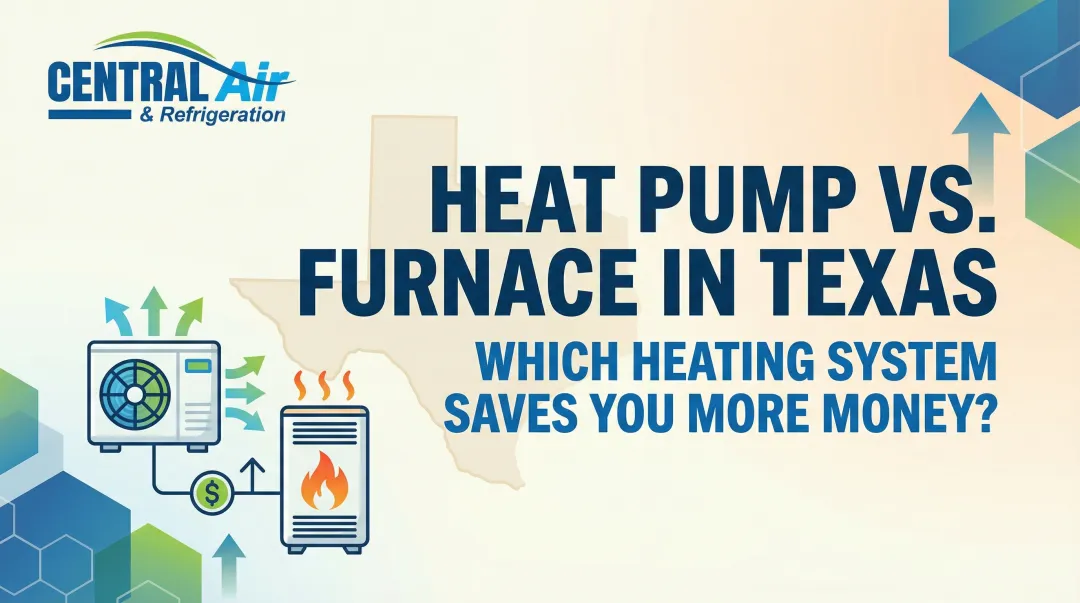
Heat pumps move heat, furnaces generate it—making heat pumps more efficient in mild climates and furnaces more powerful in freezing weather.
Efficiency differs: Heat pumps reach up to 300% efficiency, while high-efficiency furnaces operate at 95–98% AFUE.
Climate determines the winner: Heat pumps are ideal for southern and coastal regions; furnaces excel in cold, northern climates.
Costs vary: Heat pumps cost more upfront but reduce long-term operating costs; furnaces are cheaper to install and repair.
Lifespan & maintenance: Heat pumps last 12–15 years with year-round upkeep; furnaces typically last 15–20+ years with seasonal service.
Need help choosing? Central Air & Refrigeration provides climate-specific, budget-friendly recommendations for homes, rentals, restaurants, and commercial properties.
How Heat Pumps and Furnaces Work
Understanding how each system operates makes it easier to choose the right option for your property, whether residential or commercial.
How a Heat Pump Works
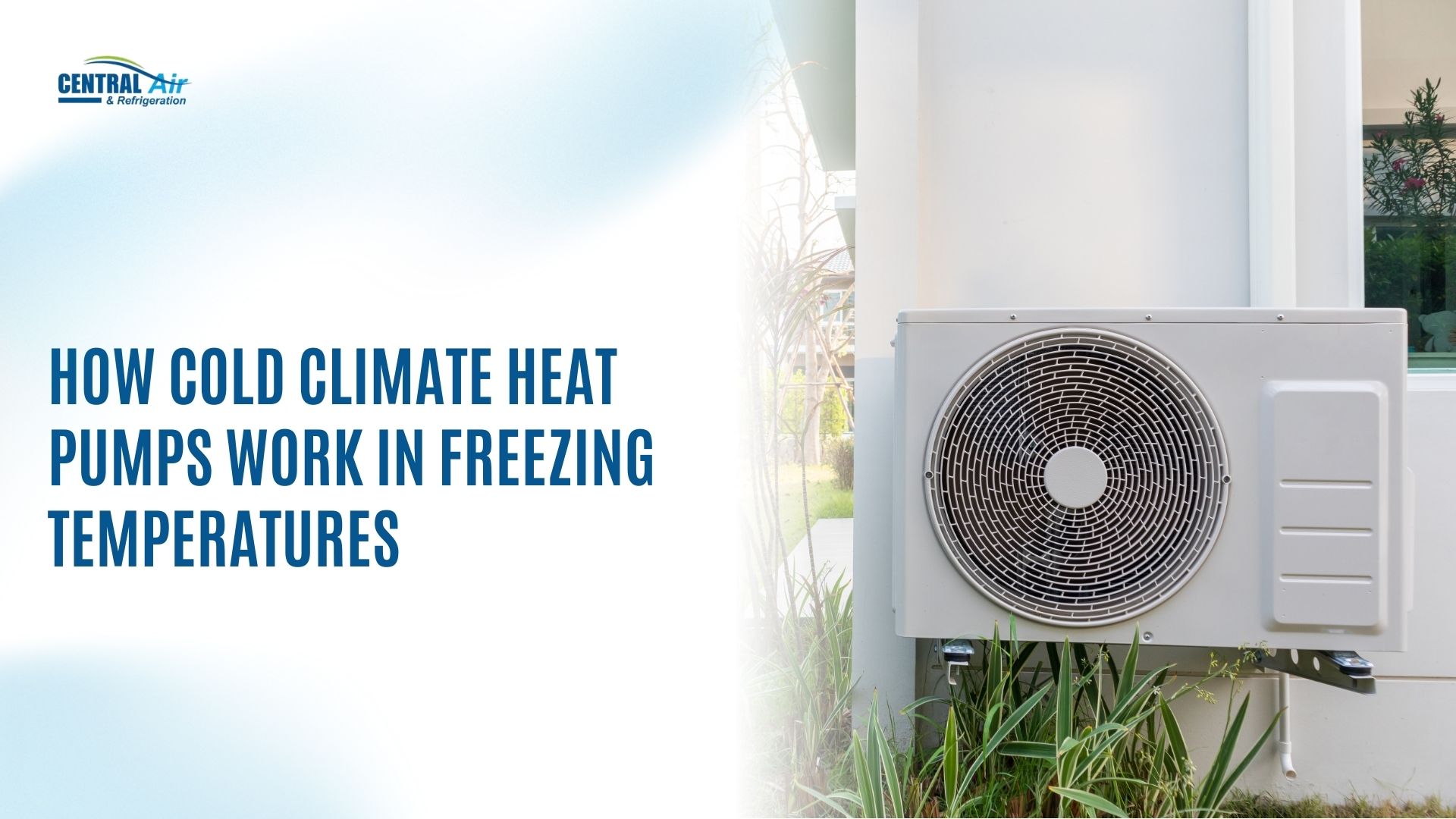
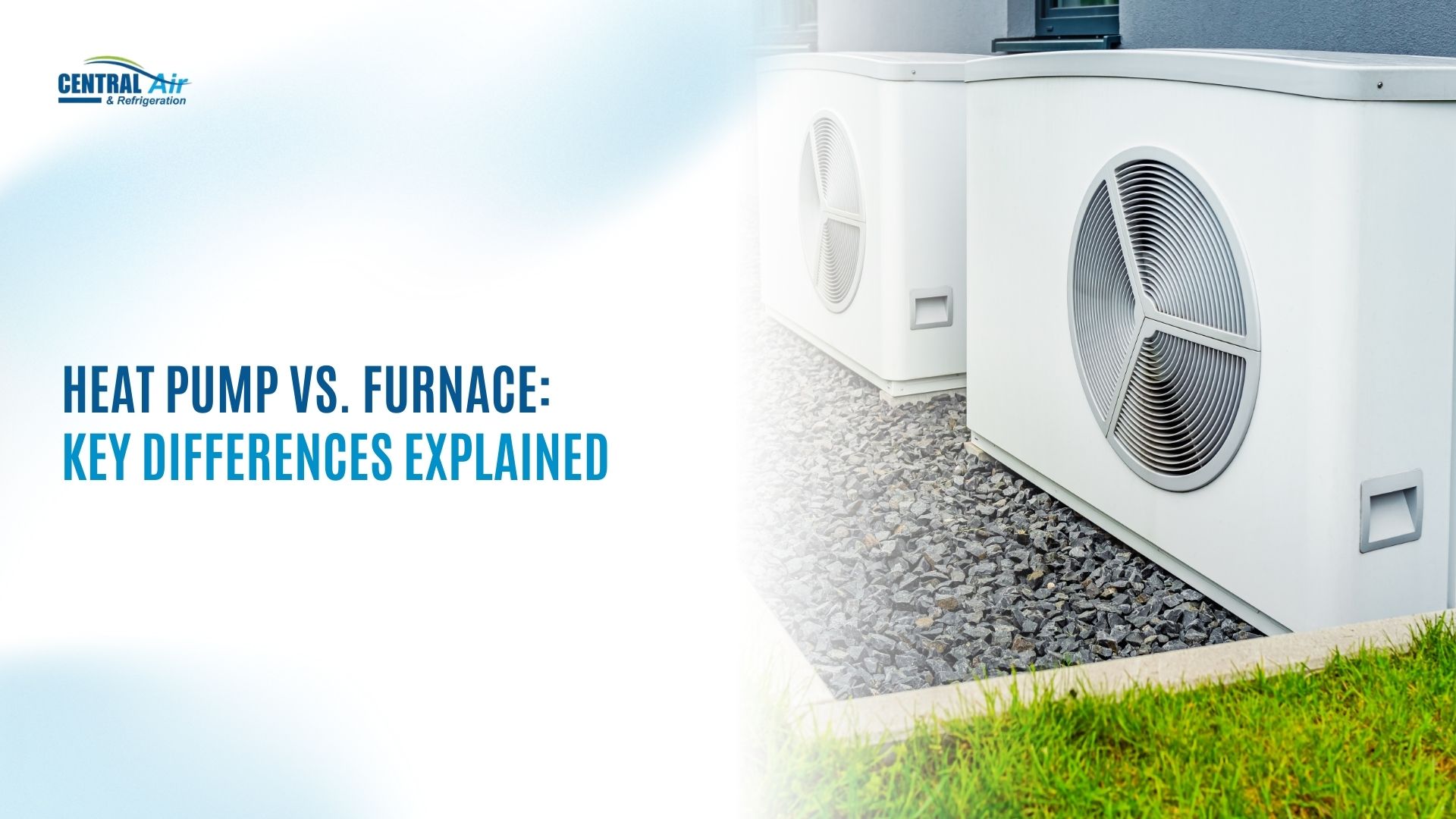
A heat pump works by moving heat from one place to another rather than generating it. It extracts heat from the outdoor air and transfers it indoors using electricity and a refrigerant cycle. Because the system can reverse this process, it functions as both a heater and an air conditioner.
Heat pumps are most efficient in mild to moderate climates where outdoor temperatures stay above freezing. Instead of producing high-temperature blasts, they deliver steady, even heating that feels consistent throughout the property.
How a Furnace Works
A furnace generates heat through combustion or electric resistance. Gas and oil models burn natural gas, propane, or heating oil, while electric furnaces use heated coils to warm the air.
Furnaces produce high-temperature air quickly, making them ideal for cold climates that require strong, reliable heating output. They provide immediate warmth with high BTU production and are known for their fast, powerful performance during very cold weather.
Now that the basics are clear, let’s compare key performance differences that matter most for homeowners.
Heat Pump vs. Furnace: Key Differences That Impact Your Property
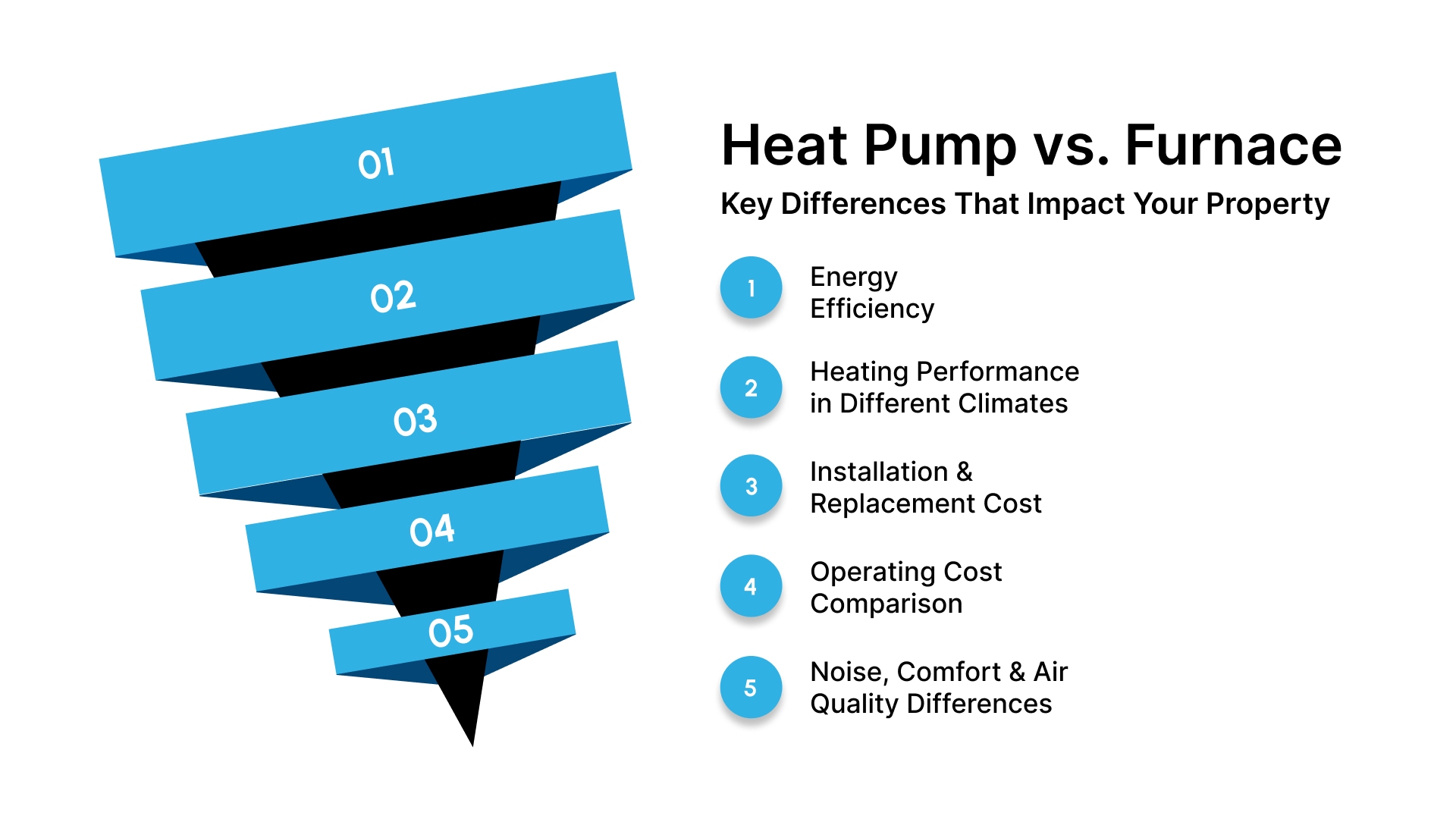
Choosing the right heating system depends on how each option performs in real-world conditions. Below is a breakdown of the differences that matter most for comfort, efficiency, and long-term cost.
Energy Efficiency
Heat pumps are among the most energy-efficient heating systems available.
Heat pumps can deliver up to 300% efficiency, producing up to three times more heat than the electricity they consume.
Gas furnaces typically range from 80%–98% AFUE, meaning 80–98% of the fuel becomes usable heat.
Electric furnaces have the lowest efficiency, often resulting in much higher utility bills.
Heating Performance in Different Climates
Different systems perform better depending on outside temperatures.
Heat pumps provide excellent performance in mild-to-moderate winters, common across southern and coastal U.S. regions.
Gas and propane furnaces excel in freezing temperatures, especially below 25°F, where they deliver rapid, high-BTU heat.
Cold-climate heat pumps continue to improve, but in severe winters, they still benefit from a backup heat source.
Installation & Replacement Cost
Upfront pricing varies widely depending on system type and home requirements.
Heat pumps usually cost more to install but can replace both the furnace and air conditioner, offering long-term savings.
Furnaces have lower initial costs, and repairs are generally more affordable.
Operating Cost Comparison
Your utility rates determine which system is cheaper to run.
Heat pumps rely on electricity, so the operating cost varies by region and utility pricing.
Furnaces depend on natural gas, which is often cheaper in many U.S. states—but pricing can fluctuate based on local supply.
Noise, Comfort & Air Quality Differences
Comfort experience differs between systems.
Heat pumps run longer, quieter cycles, providing more consistent, even heating.
Furnaces run short, strong cycles, delivering hotter air but causing more noticeable temperature swings.
Heat pumps improve indoor air quality since they don't burn fuel or produce combustion byproducts.
Heat Pump vs. Furnace: A Comparison Table
Category | Heat Pump | Furnace |
|---|---|---|
Energy Efficiency | Up to 300% efficiency (produces 3× more heat than electricity consumed). | Gas furnaces: 80%–98% AFUE. Electric furnaces: lowest efficiency.Gas furnaces: 80%–98% AFUE. Electric furnaces: lowest efficiency. |
Climate Performance | Best for mild–moderate winters. Struggles below 25°F (unless cold-climate model). | Best for freezing temperatures and heavy winter seasons. |
Installation & Replacement Cost | Higher upfront cost but replaces both AC + furnace. | Lower upfront cost; easier repairs. |
Operating Costs | Runs on electricity; cost varies by utility rates. | Runs on natural gas or electricity; gas pricing heavily influences cost. |
Comfort & Noise Levels | Longer, gentler cycles and more even heating. Quiet operation. | Short, powerful heating blasts. Louder than heat pumps. |
Air Quality Differences | Circulates air more frequently → better humidity control. | Can dry out indoor air; may need humidifier add-ons. |
Which System Is Better for Your Climate and Budget?
Choosing between a heat pump and a furnace depends on various factors. Your climate, usage patterns, and budget determine which system delivers the best comfort and cost-efficiency.
Best Choice for Mild or Warm Climates
A heat pump is the ideal option for regions with mild winters such as the Southeast, South, and coastal states.
It provides efficient heating and replaces the need for a separate air conditioner.
Best Choice for Freezing or Snow-Prone Areas
A gas furnace or a dual-fuel system (heat pump + furnace) is best for regions with extended sub-freezing temperatures.
Furnaces maintain strong heating output even in extreme cold.
Best for Lower Upfront Costs
A furnace is the more budget-friendly choice when installation cost is the priority.
Furnace repairs are also generally cheaper compared to heat pumps.
Best for Lower Long-Term Operating Costs
A heat pump can significantly reduce energy bills in areas with favorable electricity rates.
Because it moves heat instead of generating it, seasonal operating costs are often lower.
Not sure which heating system fits your home or business? Our specialists compare performance, cost, and efficiency based on your climate & property layout to help you make a smart, long-term decision. Book your heating system evaluation today.
Next, let’s compare long-term maintenance needs, repair costs, and expected lifespan for both systems.
Maintenance, Lifespan & Repair Differences
A heat pump and furnace differ not only in how they operate but also in how often they need service, how long they last, and what you can expect to spend on repairs. This table gives a clear, side-by-side comparison for you:
Feature | Heat Pump | Furnace (Gas or Electric) |
Maintenance Requirements | Requires year-round servicing because it operates in both cooling and heating seasons | Needs seasonal maintenance, mainly focused on burners, combustion safety, and heat exchangers |
Expected Lifespan | 12–15 years, depending on climate and usage | 15–20+ years, with gas furnaces lasting longest |
Repair Costs | Generally higher repair costs due to more moving parts (reversing valve, defrost board, refrigerant components) | Typically lower repair costs because systems are simpler and parts are cheaper |
Beyond cost and performance, understanding efficiency ratings helps you compare long-term operating expenses.
Heat Pump vs Furnace: Efficiency Ratings Explained
Heating efficiency directly affects monthly bills, long-term operating costs, equipment strain, and comfort levels across homes and commercial buildings. Heat pumps and furnaces are rated using different metrics, but understanding these ratings helps you choose the system that offers the best performance for your climate, business type, and budget.
Heat Pump Efficiency Ratings
Heat pumps carry two efficiency measurements because they handle both cooling AND heating:
1. SEER / SEER2—Cooling Efficiency
What it means:
SEER2 measures how efficiently a heat pump cools over an entire season. A higher SEER2 number equals lower summer cooling costs, which is crucial for:
Homes in hot climates like Texas
Restaurants and retail spaces that run AC all day
Offices and commercial buildings with high occupancy
High-efficiency heat pumps:
✔ 15–20 SEER2 (modern Energy Star models)
Real-world impact: A 20 SEER2 heat pump can cut cooling costs by 20–40% compared to older 10–14 SEER systems.
2. HSPF / HSPF2—Heating Efficiency
What it means:
HSPF2 tells you how much usable heat a heat pump provides per unit of electricity consumed.
High-efficiency heat pumps:
✔ 8.1–10 HSPF2
Why it matters:
In mild or moderate winters, heat pumps deliver 2–4× more heat per kWh than electric furnaces.
For commercial spaces with long heating hours, this can translate to thousands in annual energy savings.
Furnace Efficiency Ratings
Furnaces use one metric:
AFUE—Annual Fuel Utilization Efficiency
AFUE measures how much of the fuel you buy is converted into usable heat.
80% AFUE furnace: 80% becomes heat, 20% is wasted
98% AFUE furnace: only 2% energy loss
High-efficiency furnaces:
✔ 95–98% AFUE
Why it matters:
Homeowners: Lower wasted fuel = lower winter gas bills
Restaurants: Immediate, high-BTU heat helps maintain comfort on cold days
Property managers: Higher AFUE units reduce tenant complaints + utility overages
Commercial buildings: More predictable heating costs during peak seasons
Value Breakdown: Which Efficiency Rating Saves More Money?
Heat Pump Wins When:
You live or operate in a mild or warm climate (like Texas, Alabama, Florida, Carolinas)
Electricity rates are reasonable
You want one system for both heating and cooling
You manage a business with long operating hours → lower operating cost per hour
Furnace Wins When:
Your property is in a cold or snow-prone region
Natural gas is affordable in your area
You need fast, powerful heat output (restaurants, warehouses, older homes with poor insulation)
You want lower upfront cost and longer lifespan
How Central Air & Refrigeration Helps You Choose the Right System
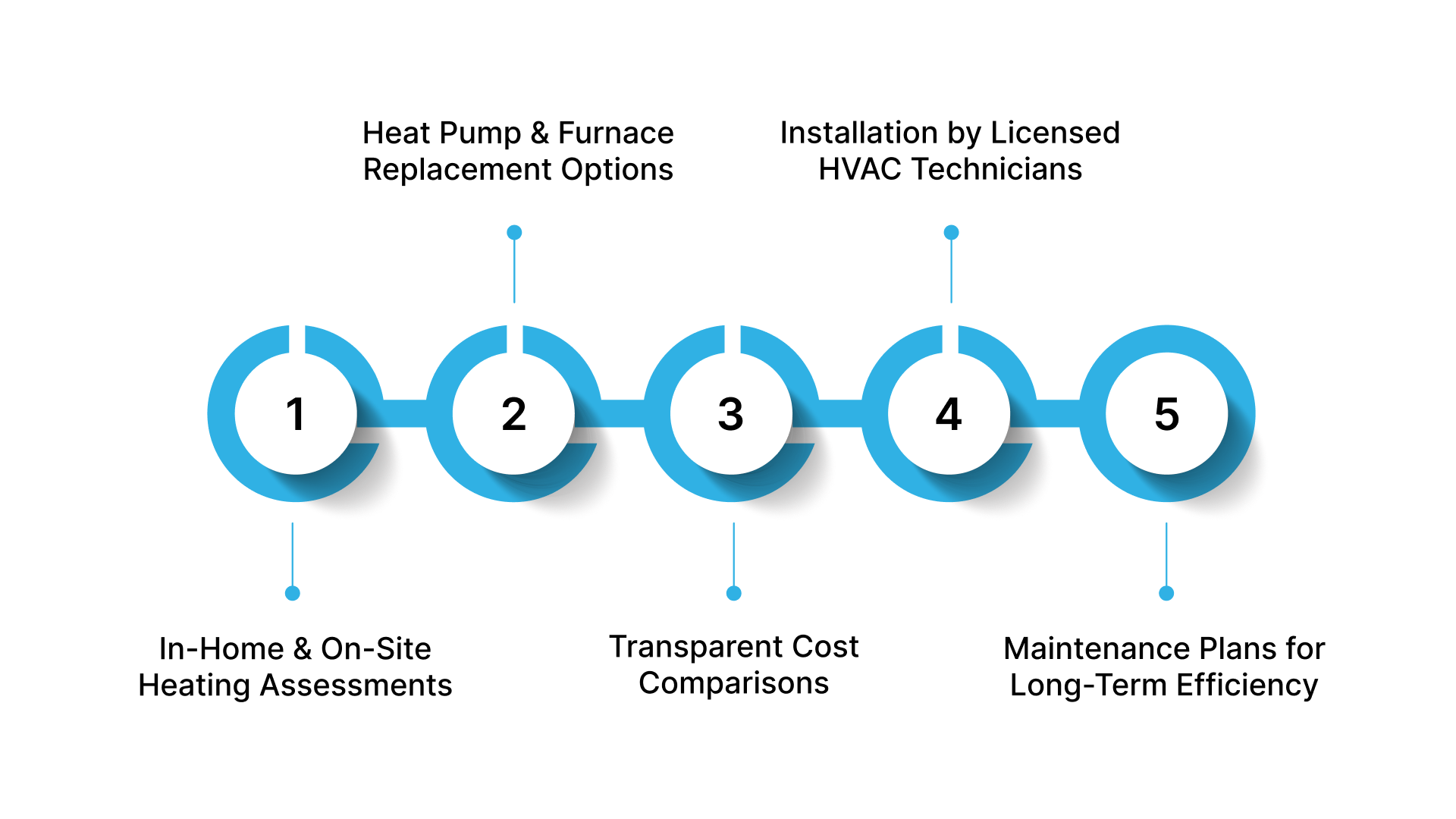
Choosing between a heat pump and a furnace isn’t always straightforward, and that’s where expert evaluation matters. Central Air & Refrigeration helps you make informed, cost-smart decisions based on climate, property design, and long-term budget.
In-Home & On-Site Heating Assessments
Certified technicians evaluate insulation, ductwork, climate demands, and your current system to determine which heating option delivers the best performance for your home.
Heat Pump & Furnace Replacement Options
Whether you prefer all-electric comfort or high-power furnace heating, Central Air & Refrigeration offers a full range of ENERGY STAR® heat pumps, gas furnaces, and hybrid systems.
Transparent Cost Comparisons
You get clear, side-by-side comparisons showing installation costs, monthly operating expenses, and long-term savings—no surprises, no upselling.
Installation by Licensed HVAC Technicians
Every installation follows strict manufacturer guidelines to ensure safety, warranty compliance, and peak system efficiency from day one.
Maintenance Plans for Long-Term Efficiency
Protect your investment with scheduled tune-ups that keep your system operating efficiently through Texas temperature swings.
Whether you are considering a high-efficiency heat pump or a furnace, our Texas-trained team evaluates your home, climate, and comfort needs to guide you toward the best choice. Schedule your consultation today.
Conclusion
Choosing between a heat pump and a furnace ultimately comes down to climate, comfort needs, and long-term operating costs. Heat pumps are ideal for mild or warm climates, offering efficient year-round heating and cooling. Furnaces excel in colder regions, delivering fast heating with a longer lifespan. For homeowners in mixed climates, dual-fuel systems provide the best of both: maximizing comfort while reducing energy costs.
Before investing in a new system, consider your local weather, utility rates, installation budget, and how long you plan to stay in your home. The right system will deliver reliable comfort, lower bills, and consistent performance for years.
Book your heat pump or furnace inspection with Central Air & Refrigeration. Beat seasonal demand—schedule your installation before peak winter or summer hits.
Frequently Asked Questions
What is the main difference between a heat pump and a furnace?
A heat pump transfers heat from one place to another, while a furnace generates heat through combustion or electric resistance.
Is a heat pump more efficient than a furnace?
Heat pumps are generally more energy-efficient in mild climates because they move heat instead of producing it. Furnaces may be more cost-effective in regions with colder temperatures.
Do heat pumps work in cold weather?
Yes, heat pumps operate in cold weather, but their efficiency drops once temperatures fall below about 25°F unless you’re using a cold-climate heat pump or pairing the system with a backup furnace.
Which lasts longer, a heat pump or a furnace?
Furnaces typically offer a longer lifespan of 15–20 years, while most heat pumps last between 12–15 years because they operate year-round.
Is a heat pump cheaper to run than a gas furnace?
It depends on local utility rates. In areas where electricity is affordable and winters are mild, heat pumps are often cheaper to operate than gas furnaces.