Introduction
Most homeowners only think about their air conditioner when it stops working. But by the time a system fails, dirty coils have been silently reducing efficiency and inflating energy bills for months—or even years—with no obvious warning signs.
Both evaporator and condenser coils handle the heat exchange that cools your home. When they become coated with grime, the system has to overcompensate—consuming more energy and shortening the equipment's lifespan.
In Bryan, TX, that problem compounds fast. The combination of extreme heat, persistent humidity, and high pollen counts creates harsh conditions for AC coils year-round. Local pollen counts have reached 670 grains per cubic meter—classified as "Very High"—and the area stays muggy for roughly 6.5 months each year. That environment accelerates both dirt buildup and biological growth on coils. This guide explains what's happening inside your unit, how to spot the signs, and what to do before the damage adds up.
Key Takeaways
- Dirty evaporator and condenser coils block heat transfer, forcing your AC to work harder and consume up to 30% more energy
- Warning signs include warm airflow, rising electricity bills, ice buildup, musty odors, and constant system operation
- Ignoring dirty coils leads to compressor failure and full system breakdown; repairs cost far more than a simple preventive cleaning
- Professional coil cleaning once a year (typically in spring) and monthly filter changes during cooling season are essential
- Getting a professional inspection before Bryan's peak summer heat arrives keeps your system running efficiently when it matters most
What Are AC Coils and Why Do They Get Dirty?
Your air conditioning system relies on two sets of coils to cool your home effectively. The evaporator coil sits inside your home's air handler and absorbs heat from indoor air. The condenser coil is located in the outdoor unit and releases that absorbed heat to the outside environment. Both coils must transfer heat efficiently for the system to cool properly—when either becomes dirty, the entire cooling process suffers.
How Dirt Accumulates on AC Coils
Dirt accumulation is a natural byproduct of normal AC operation, not necessarily a sign of neglect.
Indoor evaporator coils tend to collect dust, pet dander, cooking grease, and pollen that slips past air filters. Outdoor condenser coils face a different mix:
- Grass clippings from lawn maintenance
- Cottonwood seeds and tree debris
- Seasonal pollen and allergens
- Insects attracted to the warm unit
- Dirt and dust kicked up by wind
In Bryan, TX's humid climate, moisture accelerates this buildup significantly. When humidity condenses on coil surfaces, it acts like glue, causing particles to stick rather than pass through. This same moisture creates ideal conditions for mold and biofilm formation on evaporator coils, compounding the efficiency problem.
Given Bryan's heat and humidity, coils don't stay clean for long. Scheduled preventive maintenance catches buildup before it turns into a costly efficiency problem—rather than waiting for the system to show symptoms first.
How Dirty Coils Silently Kill Your AC Efficiency
The Physics of Heat Transfer Disruption
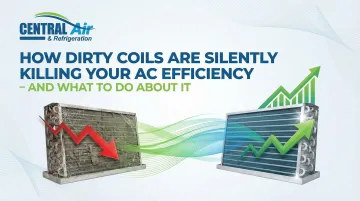
AC coils function through direct contact between metal fins and air flowing across them. When a layer of grime coats these fins, it acts as insulation, preventing proper heat exchange. The refrigerant inside the coils can't absorb or release heat effectively, forcing the entire system to work harder.
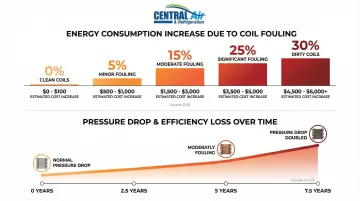
Research from the American Council for an Energy-Efficient Economy shows that typical residential coils double their pressure drop in approximately 7.5 years due to normal fouling. More critically, the Department of Energy states that a dirty evaporator coil can increase energy consumption by 30% or more—translating to hundreds of dollars in wasted electricity annually for the average household.
Compressor Stress and Extended Run Times
When coils can't transfer heat efficiently, the compressor—your AC's most expensive component—must run longer cycles to satisfy the thermostat setting. This extended operation has direct consequences:
- Increased electricity consumption as the compressor draws power for longer periods
- Higher mechanical wear on compressor components designed for intermittent operation
- Elevated operating temperatures that accelerate lubricant breakdown
- Shortened equipment lifespan as the compressor operates under continuous stress
Industry data suggests dirty coils can increase compressor run time by up to 35% — placing continuous stress on a component designed for intermittent cycling.
Refrigerant Pressure Imbalances
Dirty coils disrupt the carefully balanced refrigerant pressures your system needs to operate safely:
| Coil Type | Problem | Pressure Effect | System Consequence |
|---|---|---|---|
| Evaporator | Blocked airflow | Low suction pressure | Refrigerant stays too cold, causing ice formation that further blocks airflow |
| Condenser | Restricted heat release | High head pressure | Refrigerant stays too hot, triggering high-pressure safety shutoffs |
Either scenario forces the compressor to operate outside its design parameters — and repeated exposure to those conditions shortens its life dramatically, often ending in full unit replacement.
The Real Cost of Inefficiency
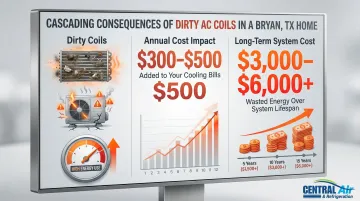
The mechanical stress described above has a direct dollar figure attached to it. For a typical Bryan, TX home running AC from April through October, a 30% efficiency loss from dirty coils could add $300–$500 or more to annual cooling costs. Over a system's expected lifespan, this represents thousands of dollars in wasted energy—far exceeding what regular professional maintenance would cost.
Warning Signs Your AC Coils Are Dirty
Most homeowners never see their coils, so detecting problems requires recognizing the symptoms dirty coils produce. These five signs are the most reliable early indicators.
Warm or Weak Airflow from Vents
When evaporator coils can't absorb heat effectively due to dirt buildup, air coming from your vents feels warmer than it should—even when the thermostat is set to a low temperature. You might also notice reduced airflow volume, as dirt restricts air movement through the coil fins.
This differs from refrigerant leaks (which cause gradual warming over time) or blower motor issues (which typically produce unusual noises).
Rising Electricity Bills with No Obvious Cause
A system compensating for reduced heat exchange draws considerably more power. If your energy bills are climbing month-over-month without changes in usage habits, dirty coils are a likely culprit. Compare your current bills to the same months in previous years—a 15-30% increase without corresponding temperature changes suggests efficiency loss from dirty coils.
Ice Buildup on the Indoor Unit or Refrigerant Lines
When the evaporator coil can't absorb enough heat, refrigerant temperatures drop too low, causing moisture on the coil to freeze. Homeowners may observe:
- Frost or ice on copper refrigerant lines leading to the outdoor unit
- Ice accumulation on the air handler cabinet
- Water pooling around the indoor unit as ice melts
- Reduced or no airflow from vents
Running your AC with ice present worsens the problem and risks liquid refrigerant flooding back into the compressor, causing permanent damage.
Musty or Stale Odors When the AC Runs
Warm, damp coil surfaces encourage mold and mildew to take hold. When the system runs, it pushes those contaminants and their odors through your ductwork and into living spaces.
For anyone in the household dealing with allergies, asthma, or respiratory sensitivities, this is more than an unpleasant smell—it's a real indoor air quality problem.
The AC Runs Constantly Without Reaching the Set Temperature
A system struggling with dirty coils can't meet thermostat demands. The unit runs continuously without ever reaching the target temperature—never shutting off, never cycling properly.
That's both a comfort problem and a serious energy drain. Compressors aren't built to run under sustained load like this, and the wear adds up fast.
What Happens If You Ignore Dirty Coils
The Escalation Path to System Failure
What begins as a 5-15% efficiency loss progressively worsens into refrigerant pressure imbalances, frozen coil events, and eventually compressor failure. The financial stakes are significant:
- Professional coil cleaning: $100-$400 for thorough service
- AC compressor replacement: $800-$2,300 on average
- Complete system replacement: $6,000-$14,000+ when neglect leads to total failure
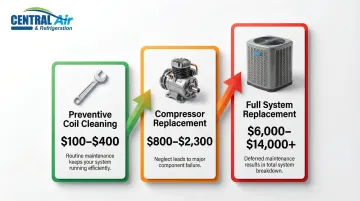
A $200 coil cleaning versus a $2,000+ compressor repair is a straightforward trade-off—one most homeowners only appreciate after the fact.
Indoor Air Quality Consequences
Persistent mold growth on dirty evaporator coils sends allergens and spores directly into your living spaces. The EPA warns that mold exposure poses particular risks for occupants with allergies, asthma, or respiratory sensitivities. For families with vulnerable members—or businesses serving sensitive populations like medical facilities and restaurants—this health risk adds urgency to regular coil maintenance.
Equipment Lifespan Impact
ASHRAE data indicates properly maintained residential air conditioners have a median service life of 15 years. In Texas's harsh climate, well-maintained systems can realistically reach 15-20 years.
Neglecting maintenance—particularly coil cleaning—cuts that lifespan to 8-10 years. That's up to a decade of useful life lost, and a full replacement bill arriving years ahead of schedule.
How to Clean and Prevent Dirty AC Coils
Coil maintenance works on two tracks: routine DIY habits that prevent buildup, and periodic professional service that handles what a garden hose can't. Both matter — skipping either shortens your system's life.
Change Air Filters Regularly
Your air filter is the first line of defense against evaporator coil fouling. A clogged filter allows more particulate matter to reach the coil, accelerating dirt buildup.
Filter change frequency:
- Every 1–3 months under standard conditions (varies by filter type)
- Every 1–2 months if you have pets
- Monthly for allergy sufferers, paired with a higher-MERV filter
- Monthly checks from March through May during Bryan's pollen season
The Department of Energy recommends checking filters monthly during the cooling season. Higher-MERV filters trap finer particles but also create higher pressure drops—verify your system can handle the increased resistance before upgrading.
Keep the Outdoor Condenser Unit Clear
Homeowners can perform basic condenser maintenance safely:
DIY maintenance steps:
- Clear grass clippings, leaves, and debris from around the unit weekly
- Maintain at least 2 feet of clearance on all sides
- Trim back vegetation that encroaches on the unit
- Gently rinse condenser fins with a garden hose (spray from inside out, not directly into fins)
When to call a professional:
- Fins are visibly bent or damaged
- Coils are heavily clogged with compacted dirt
- You notice oil residue or mold coating the coils
- High-pressure washing is needed (never use a pressure washer yourself—it bends delicate fins)
Schedule Professional Coil Cleaning Annually
Professional coil cleaning covers steps most homeowners can't safely tackle on their own.
What professional service includes:
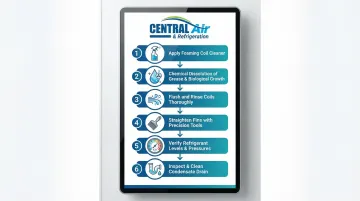
- Application of specialized foaming coil cleaner that penetrates deep into fin packs
- Safe chemical dissolution of grease, biological growth, and compacted dirt
- Thorough flushing and rinsing of cleaning agents
- Fin straightening with proper tools to restore airflow patterns
- Refrigerant level verification and pressure checks
- Condensate drain inspection and cleaning
If you're in Bryan, TX, scheduling your annual tune-up with Central Air & Refrigeration before summer peaks is a smart move. Their certified technicians clean both coils and inspect the full system — catching small problems before they become expensive ones.
Tips for Long-Term Coil Health
- Check the area around your indoor air handler quarterly for dust accumulation and vacuum nearby vents
- After any ice formation event, switch to "fan only" mode to thaw, then call a technician before resuming cooling
- During high-pollen or high-humidity seasons, increase inspection frequency rather than waiting for annual service
- Keep a simple log of filter change dates and unusual symptoms (odors, sounds, warm air) to help technicians diagnose problems faster
Frequently Asked Questions
What are the symptoms of dirty AC coils?
The most common signs include warm air from vents, unexplained increases in energy bills, ice formation on the unit or refrigerant lines, musty odors when the system runs, and the AC running continuously without reaching the thermostat setting.
How much does it cost to get AC coils cleaned?
Professional AC coil cleaning typically costs between $100 and $400, though heavily fouled evaporator coils requiring extensive labor can cost up to $700. Cost varies by region, system size, coil accessibility, and buildup severity.
Is cleaning AC coils worth it?
Professional coil cleaning restores efficiency, reduces energy bills by up to 25%, and extends system lifespan. Ignoring dirty coils leads to compressor failure and system replacement — costs that far exceed what routine maintenance would have run.
How often should AC coils be cleaned?
Most HVAC professionals recommend professional coil cleaning at least once annually, typically in spring before peak cooling season begins. In dusty, high-pollen, or high-humidity environments like Bryan, TX, twice-yearly cleaning (spring and fall) keeps coils performing year-round.
Can I clean AC coils myself?
Homeowners can safely rinse outdoor condenser coil exteriors with gentle garden hose spray and should replace filters regularly. However, deep evaporator coil cleaning requires professional tools, coil-safe chemical cleaners, and system access that risks damaging delicate fins or electrical components if attempted without proper training.
What happens if dirty AC coils are not cleaned?
Neglected dirty coils cause progressive damage: reduced efficiency stresses the compressor, refrigerant pressure imbalances develop, ice builds up on the unit, and eventually the compressor fails. Compressor replacement costs $800–$2,300, far more than routine coil maintenance would have cost.
Don't let dirty coils silently drain your wallet and shorten your AC's life. Contact Central Air & Refrigeration at (979) 324-6791 to schedule your professional coil cleaning and comprehensive system inspection. Their certified technicians serve Bryan, TX with upfront pricing, fast turnaround, and a decade of experience handling Texas heat.