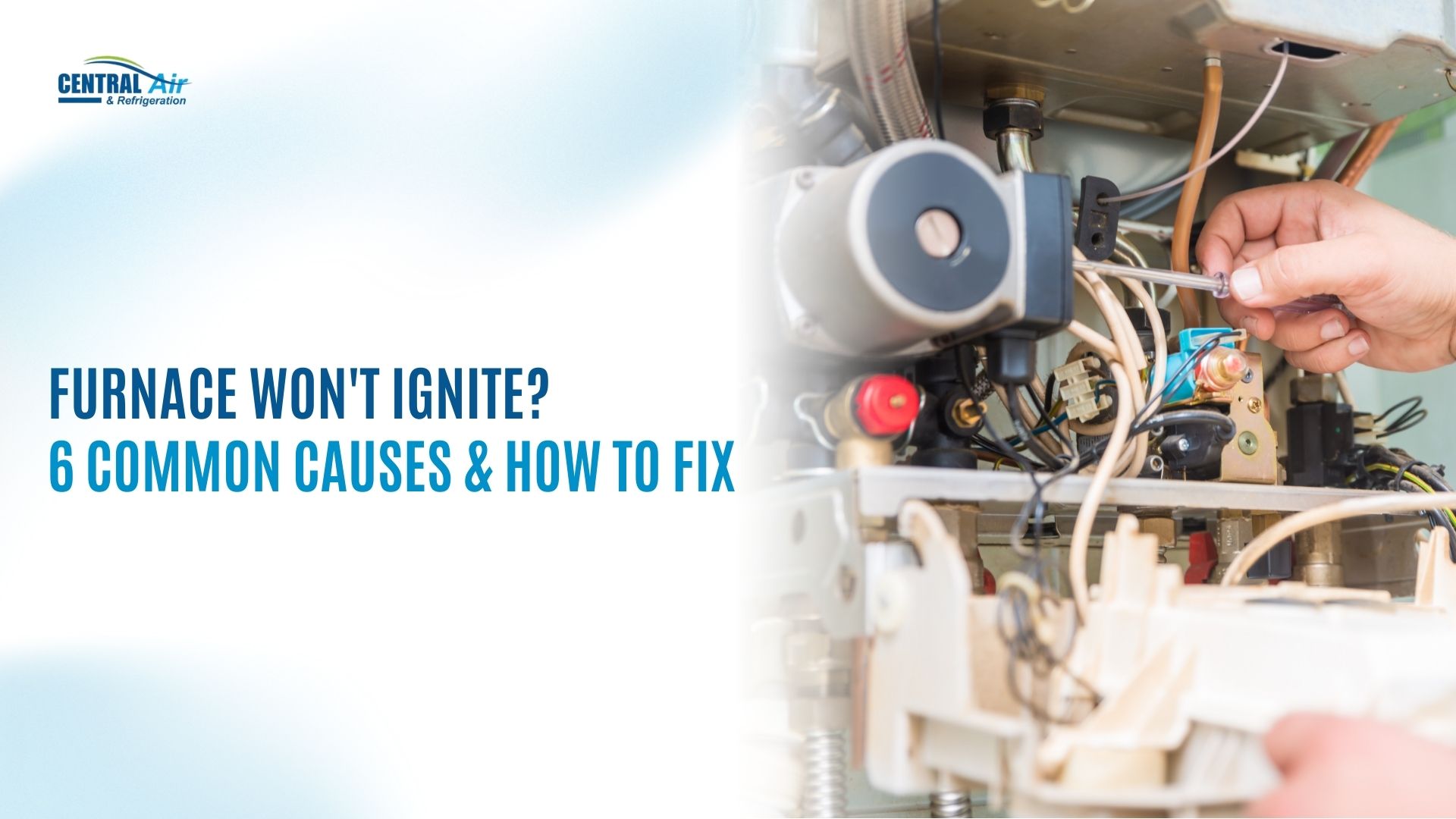
If your furnace won’t ignite, it’s not just an inconvenience; it can be a sign of a bigger issue. Many older furnaces operate at only 56–70% efficiency, while modern units can reach up to 98.5%, as per the U.S. Department of Energy, making ignition failures more than just a discomfort but also an opportunity to improve energy efficiency and reduce costs.
When a furnace fails to light, it often points to common causes like a faulty thermostat, gas supply issues, or a worn-out ignitor. Fortunately, many of these problems are easy to diagnose and fix with a little troubleshooting.
In this guide, we’ll walk you through the most common reasons your furnace won’t ignite, simple steps to resolve the issue, and when to call a professional for a safe and lasting solution.
Key Takeaways
Check Thermostat Settings: Set the thermostat to "Heat" mode and make sure the temperature is higher than the room temperature. Replace dead batteries if needed.
Inspect Flame Sensor or Ignitor: Clean the flame sensor or replace the ignitor if it is dirty or damaged, as it is crucial for ignition.
Verify Gas Supply: Make sure the gas valve is open, and the gas line isn’t blocked. Low gas pressure or interruptions can prevent ignition.
Clear Venting System Blockages: A strong draft or clogged vent can prevent proper combustion. Clear vents, exhaust flues, and check the draft inducer motor.
Replace Clogged Air Filter: A dirty air filter can restrict airflow and cause the furnace to overheat, preventing ignition. Replace or clean the filter regularly.
How a Furnace Ignition System Works?
When you know the main steps and components involved in turning on your furnace, you can easily spot where things might go wrong. That helps you, as a homeowner, to distinguish between a simple fix you might try yourself, like a clogged air filter, vs a deeper issue like a failed ignitor.
When you call for heat, the furnace goes through a series of checks and steps to start the heating process:
Thermostat Call for Heat: When the thermostat detects that the room temperature is below the set point, it sends a signal to the furnace to start heating.
Ignition: In modern furnaces, an electronic ignitor (or hot-surface ignitor) heats up and ignites the gas. In older furnaces, a standing pilot light does the job.
Flame Sensing: A flame sensor detects whether the burners are igniting properly and keeps the gas flow running.
Heating: Once the burners are lit, the furnace heats the air, which is then circulated through your home by the blower.
Understanding this process helps you identify where things may go wrong when your furnace won’t ignite, and prepares you for the next sections on common causes and fixes.
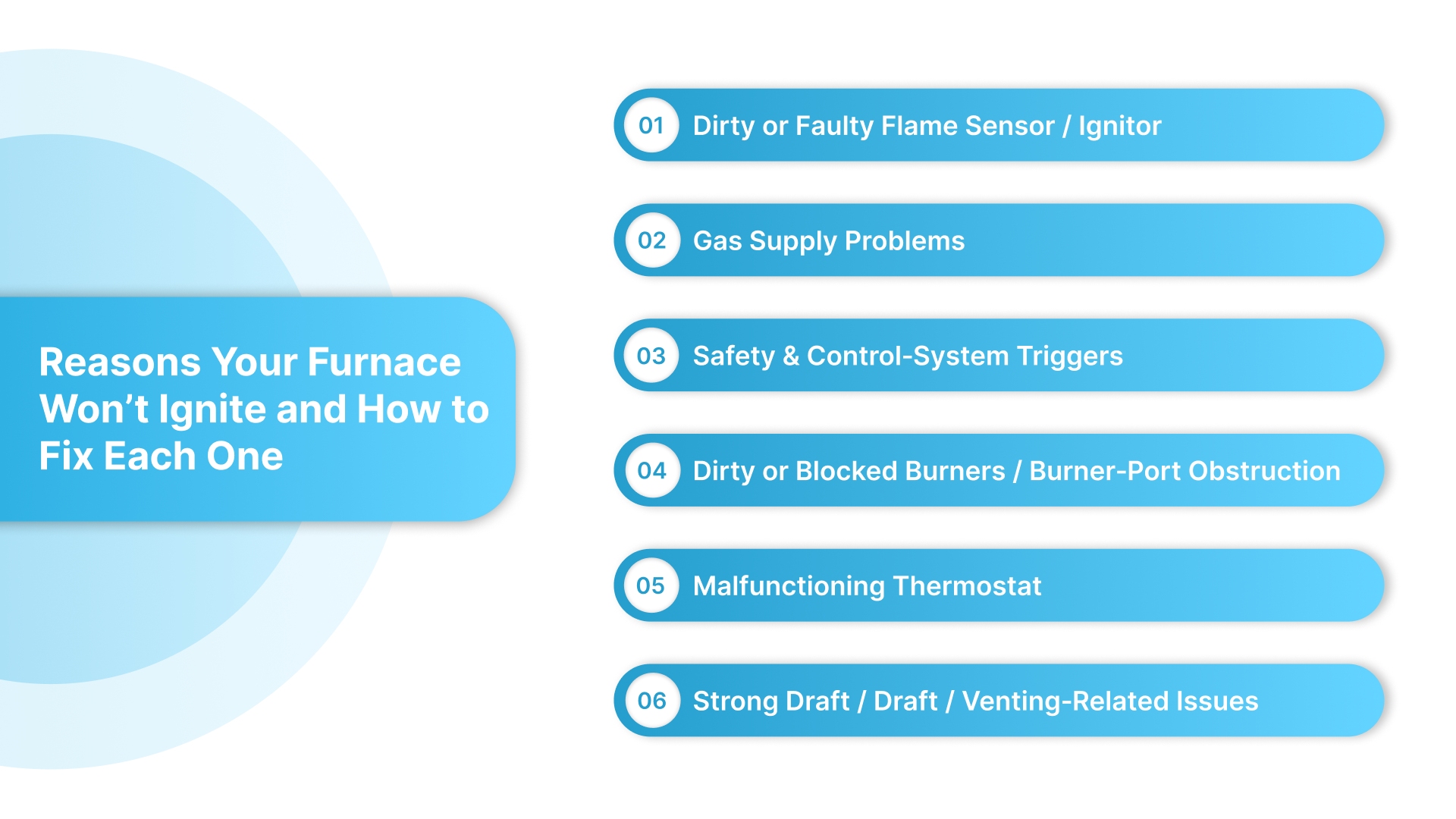
Top 6 Reasons Your Furnace Won’t Ignite and How to Fix Each One
When the weather turns cold, many homeowners encounter furnace problems that were hidden during the warmer months. If your furnace won’t ignite, there are a few easy troubleshooting steps you can try yourself to get it up and running.
First of all, do a simple 5-Step furnace check, if your furnace won't ignite
Is the thermostat set to heat?
Are the furnace power switch and circuit breaker on?
Is the gas valve open?
Is the air filter clean and clear?
Is the pilot light on (if applicable)?
Still see issues? Then let's dive deeper into the common causes and how to fix them.
Cause 1: Dirty or Faulty Flame Sensor / Ignitor
The flame sensor is a safety component of your furnace that doesn’t release gas unless it detects an active flame. It works by detecting the electrical current created when a flame is present. Over time, the sensor accumulates dirt, dust, and carbon deposits, which prevents the sensor from properly detecting the flame, causing the furnace’s safety mechanism to shut off the gas flow.
In modern furnaces, instead of a pilot light, the hot-surface ignitor (HSI) is a common electronic component used to ignite gas. The HSI can also become faulty after years of use. A broken or cracked ignitor can prevent the furnace from lighting entirely, leading to no heat.
How to fix it?
Flame Sensor Cleaning: If the flame sensor is dirty, turn off the gas and power supply, and remove the sensor carefully. Gently clean the metal rod with fine sandpaper or emery cloth to remove carbon buildup.
Flame Sensor Replacement: If cleaning doesn’t work or if the sensor is physically damaged, it may need to be replaced.
Ignitor Replacement: For modern systems with a hot-surface ignitor, if the ignitor is cracked or damaged, it will need to be replaced. Ignitors are sensitive components that can crack or fail after multiple heating cycles.
Cause 2: Gas Supply Problems (Valve Closed, Blocked Line, or Low Pressure)
A furnace depends on natural gas to operate, and any disruption in the gas supply chain can result in ignition failure. Here are common reasons for gas-related issues:
Gas Valve Shut-off: The gas valve may be accidentally turned off during maintenance or service. When this happens, the furnace has no fuel to ignite, even if all other components are working correctly.
Clogged Gas Line: Over time, debris, dirt, or corrosion can accumulate in the gas line, especially in older systems, causing partial or complete blockages.
Low Gas Pressure: Gas supply pressure can fluctuate during high-demand seasons (e.g, winter). If the gas pressure is too low, the furnace will fail to ignite, as it needs a certain amount of pressure to produce a stable flame. This can be caused by issues with the utility company’s supply or by an aging regulator on your furnace itself.
Each of these issues can cause a furnace to fail during ignition, and since the gas supply is critical for ignition, any interruption will prevent the furnace from lighting, leading to safety hazards.
How to fix it?
Gas Valve Check: Always check if the gas valve is fully open. The valve should be parallel with the pipe when open. If the valve is off, turn it on and check if the furnace ignites.
Gas Line Inspection: If you suspect a gas line blockage, consult a licensed HVAC technician like Central Air and Refrigeration at Bryan, Texas, with 10+ years of experience. They can check for leaks or blockages in the line using special tools to keep the gas flow freely to your furnace.
Low Gas Pressure: If low pressure is the issue, the gas company or a professional technician should test the gas line pressure using a manometer.
Cause 3: Safety & Control‑System Triggers: Limit Switch, Pressure Switch, or Other Safety Interlocks
Modern furnaces have built-in safety controls (e.g., limit switches, pressure switches, draft/inducer fans, control board interlocks) that monitor conditions like temperature inside the furnace, correct venting/airflow, and exhaust gas removal. If any safety condition fails, such as overheating (from blocked airflow), improper vent draft, blocked exhaust, or inducer failure, the furnace will refuse to ignite or shut down even if ignition succeeds.
For example, if the blower or inducer fan is faulty (or its capacitor fails), the furnace may initiate ignition but then detect a lack of proper airflow or venting.
How to fix it?
Ensure vents, flue/chimney, and exhaust paths are clear and unobstructed. Blocked vents or closed access panels can trigger safety shutdowns.
If airflow and vents are clear but the furnace still won’t fire, call a licensed HVAC technician. They will check components such as the draft inducer fan, pressure switch, limit switch, blower motor, and control board interlocks.
Cause 4: Dirty or Blocked Burners / Burner‑Port Obstruction
Gas burners deliver the flame that heats the air for your home. Over time, burner ports can accumulate rust, dust, soot, or debris, or even corrode in older systems. If burner ports are partially or fully blocked, gas flow and combustion become uneven or impossible.
Even if the ignitor works and gas is supplied, the burner won’t light or sustain flame. This is common when moisture, rust, or residue builds up after long inactivity or irregular maintenance.
How to fix it?
Turn off the furnace and gas supply. Open access to the burner chamber, inspect for heavy rust, soot, or visible blockage, and gently clean burner surfaces and ports using a soft brush, compressed air, or per manufacturer instructions.
If burners are severely corroded, warped, or damaged, it’s safer to replace them, as worn burners may never ignite properly and pose safety risks.
Cause 5: Malfunctioning Thermostat
The thermostat is the control center for the heating system. It sends the “call for heat” signal to the furnace when the indoor temperature falls below the set point. If the thermostat is faulty, misprogrammed, or unpowered, it may fail to send that signal, so the furnace never begins its ignition sequence.
Common thermostat problems that block ignition include dead batteries, wiring issues or loose connections, incorrect mode/settings (e.g., set to “cool” or “off” instead of “heat”), or sensor/calibration malfunction (thermostat misreads room temperature)
How to fix it?
Verify thermostat settings first. Ensure it is set to “Heat” mode (not Off or Cool), and that the set temperature is higher than the current room temperature.
Replace thermostat batteries (if applicable). If power is low or batteries are dead, the thermostat may not send the ignition command. Many models silently fail without an obvious alert.
Inspect thermostat wiring and power supply. Loose or damaged wires between the thermostat and furnace can break the signal. If wiring looks frayed or disconnected, or if the furnace circuit breaker is tripped, correct that.
Test or replace the thermostat if it is old or malfunctioning. If, after correct settings and wiring inspection, the furnace still doesn’t respond to thermostat commands, the thermostat itself may have failed internally.
Cause 6: Strong Draft / Draft / Venting‑Related Issues
In modern furnaces, the system relies on a controlled induction of fresh air and exhaust of combustion gases. A "draft", either due to wind, pressure differences, or an overly strong venting suction, can disrupt the carefully balanced mix of gas and air required for ignition. If the air‑to‑fuel ratio or pressure inside the combustion chamber is off, the furnace may refuse to ignite or immediately shut off.
For furnaces that use a standing pilot light (rather than electronic ignition), a strong draft, e.g., from an open basement window, attic, or unfair venting layout, might blow out the pilot flame or prevent it from igniting properly.
How to fix it?
Inspect venting/flue/exhaust path: Ensure that the flue, vent pipes, or exhaust chimneys are clear of blockages. A blocked flue can distort pressure conditions, causing the pressure‑switch or draft‑inducer safety mechanism to prevent ignition.
Check the draft inducer / exhaust fan: In modern furnaces with a draft‑inducer motor, make sure the fan actually runs when the furnace starts. If the inducer motor fails or if its airflow is hampered, the furnace may not proceed to ignition.
Verify proper combustion‑air supply/pressure balance: In some homes, negative pressure (e.g., due to other exhaust fans, tight building envelope, or high external wind) can create back‑draft conditions. Ensure that there’s an adequate fresh‑air supply for combustion and exhaust.
For older pilot‑light furnaces, check for drafts near the furnace area: Air currents from open windows can blow out the pilot or prevent ignition. Sealing or redirecting airflow, or installing draft‑guards, can help.
Why Choose Central Air & Refrigeration: Expert HVAC & Refrigeration Services?
When you partner with Central Air & Refrigeration, you get more than just a “call‑out” technician. Our team has years of hands-on experience diagnosing issues, performing installations for residential and commercial HVAC systems, including AC units, furnaces, and commercial refrigeration equipment in Bryan and College Station, Texas.
Here are the key services offered by our technician:
Air conditioning system repair, installation, and ongoing maintenance (residential & commercial)
Furnace installation, maintenance, and heat pump services, ideal for homes needing reliable heating or energy‑efficient seasonal switching
HVAC system installation and servicing for homes and small businesses, for balanced heating, cooling, airflow, and indoor comfort
Commercial refrigeration services, including installation, repair, and maintenance of coolers, freezers, walk‑in units, and cold‑storage systems for restaurants.
Ventilation and indoor‑air‑quality services for proper airflow, safe venting, and efficient system performance.
Conclusion
Dealing with a furnace that won’t ignite can be frustrating, especially when the temperature starts to drop. However, by following the troubleshooting steps we’ve outlined, you can identify and fix common causes like thermostat issues, gas supply interruptions, or dirty components. If your furnace still isn’t working after trying these fixes, reach out to a trusted HVAC technician to avoid further complications.
At Central Air & Refrigeration, we specialize in providing reliable HVAC and refrigeration services in Bryan and College Station, Texas. Contact us today for fast and professional service!
FAQs
Can I manually ignite my gas furnace?
It’s not recommended to manually ignite your gas furnace due to safety risks. Modern furnaces have electronic ignitors or pilot lights designed to ignite automatically. If it's not working, it’s best to call a professional.
How do I force my furnace to start?
Check the thermostat, power supply, and gas valve to ensure they’re properly set. If these are fine, reset the system or check for a tripped circuit breaker. If the furnace still won’t start, professional assistance may be required.
What is the most expensive part to fix on a furnace?
The most expensive part to fix on a furnace is typically the heat exchanger. It’s a crucial component for heat transfer, and if it fails, it often requires a costly replacement.
Is it cheaper to fix a furnace or replace it?
It depends on the age and condition of the furnace. Repairing a furnace can be cheaper if it's under 10 years old and the issue is minor. However, if repairs are frequent or the furnace is over 15 years old, replacement might be more cost-effective.
What is the average lifespan of a furnace?
The average lifespan of a furnace is around 15–20 years with proper maintenance. After this period, efficiency typically decreases, and repairs become more frequent, signaling it might be time for a replacement.