More than half of all home energy use in the U.S. goes to heating and cooling. This means that keeping your furnace in top shape is one of the most effective ways to reduce energy costs and improve efficiency.
A well-maintained furnace not only helps reduce strain during peak heating months, but it also ensures that your home remains comfortable year-round, without the risk of breakdowns when you need it most.
Maintaining your furnace is key to extending its lifespan, boosting indoor air quality, enhancing system efficiency, and providing reliable heating during those cold winter nights. Regular maintenance helps catch potential issues before they become costly repairs, ultimately keeping your home safe and your energy bills low.
Key Takeaways
HVAC furnace maintenance is essential for efficiency, comfort, and preventing winter breakdowns; nearly half of home energy consumption comes from heating and cooling.
Regular filter changes, clear vents, clean surrounding area, and thermostat checks help maintain airflow and reduce energy waste.
Professional tune-ups once per year ensure safe combustion, clean internal components, tight electrical connections, and optimal furnace performance.
Warning signs like uneven heating, strange noises, short-cycling, higher bills, or gas odors indicate immediate professional attention is needed.
Older furnaces, homes with pets, smokers, or high dust levels require more frequent filter changes and mid-season checks to maintain efficiency.
A trusted HVAC contractor provides pre-season tune-ups, emergency support, safety checks, documentation, and expert advice on upgrades or replacements.
Central Air & Refrigeration helps homeowners stay winter-ready with expert furnace inspections, cleaning, tune-ups, and repair services tailored to Texas homes.
Why Furnace Maintenance Matters
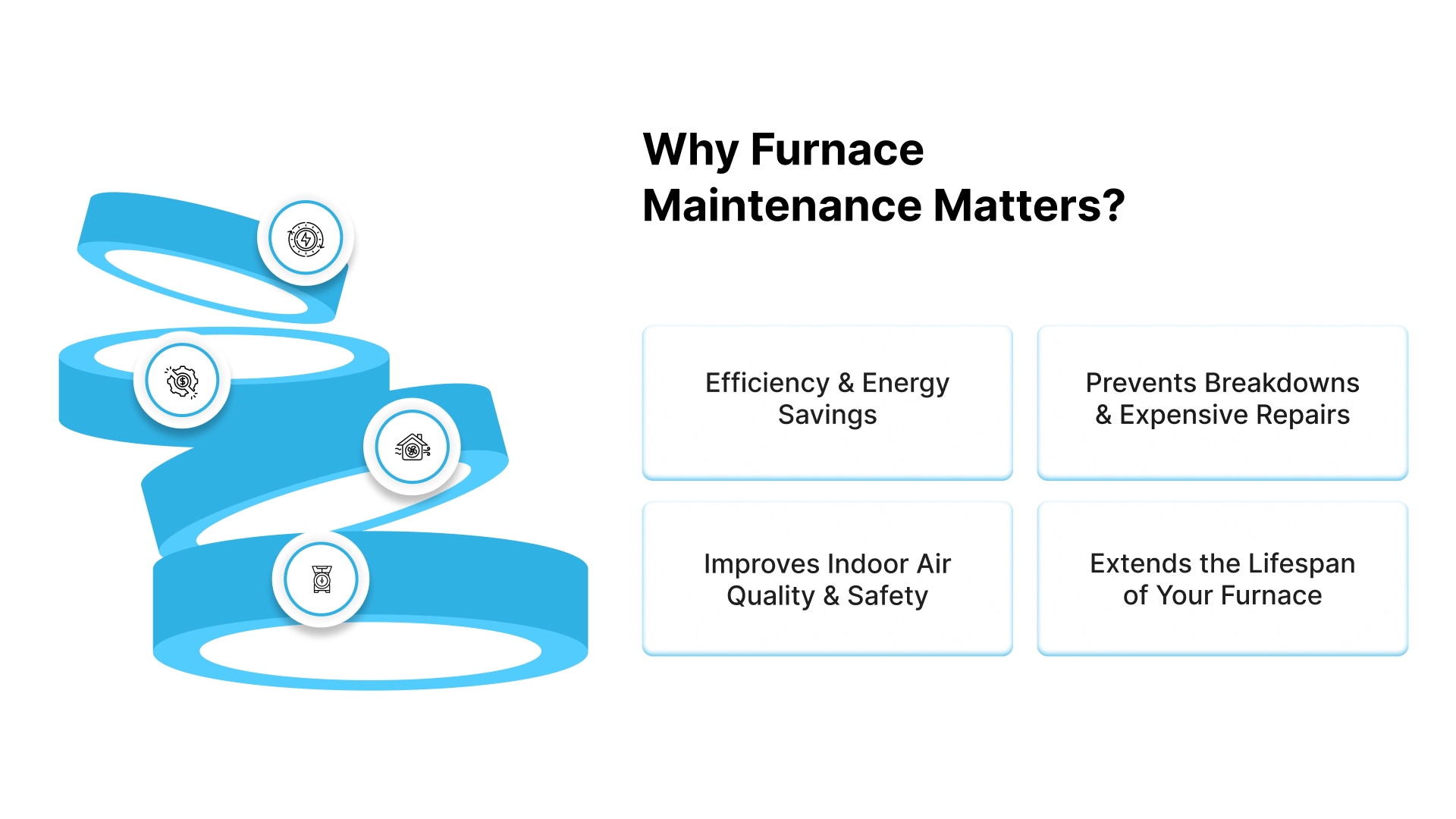
Regular furnace maintenance is essential for ensuring your heating system performs at its best. Neglecting maintenance can lead to a variety of problems, from increased energy costs to complete system failures. Here's why furnace maintenance should be a priority for every homeowner
.
Efficiency & Energy Savings
Dirty filters, clogged air vents, and worn-out components make your furnace work harder, leading to increased energy consumption. This means higher gas or electricity bills.
Regular maintenance ensures your furnace operates at its maximum efficiency, reducing unnecessary energy usage and lowering your utility bills. Keeping your furnace running close to its designed efficiency (AFUE rating) helps you save money in the long run and supports a greener home.
Prevents Breakdowns & Expensive Repairs
Furnaces that are left unchecked can develop serious issues over time. Common components like the blower motor, flame sensors, and heat exchanger can fail if not properly maintained. This can lead to unexpected breakdowns, often during the coldest nights, when you need heat the most.
Regular inspections allow technicians to catch problems early, preventing emergency repairs and saving you from higher costs down the line.
Improves Indoor Air Quality & Safety
A well-maintained furnace helps improve your home's air quality. Clean filters and ducts reduce the circulation of dust, allergens, and pollutants, making your indoor environment healthier. For gas or propane-powered furnaces, safety is a significant concern.
Regular inspections ensure that the furnace is combusting fuel safely and that the venting system is working properly, reducing the risk of dangerous carbon monoxide leaks.
Extends the Lifespan of Your Furnace
Furnaces are a major investment, and regular maintenance can significantly extend their lifespan. Just like maintaining a car, cleaning, lubricating, and inspecting parts helps reduce wear and tear.
Well-maintained systems can last longer than neglected ones, often beyond the typical service life of 10–15 years, saving you from premature replacement costs.
With these clear benefits in mind, let’s explore a practical furnace maintenance checklist to keep your system in top shape.
The Essential Furnace Maintenance Checklist For Homeowners
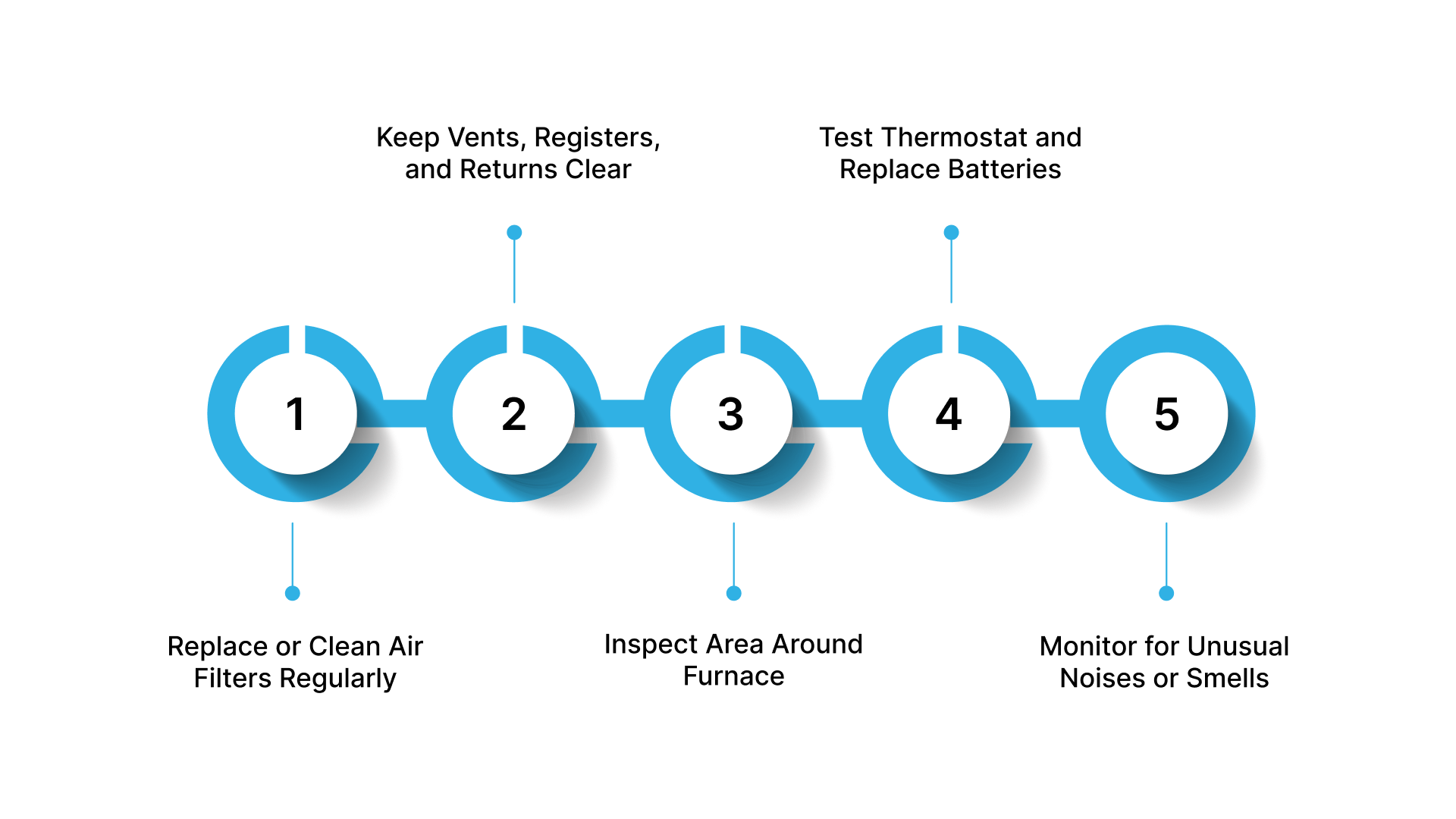
Regular furnace maintenance helps ensure your system runs efficiently, avoids costly breakdowns, and improves your home’s comfort. Here’s a simple checklist to guide you through the key tasks to perform.
Replace or Clean Air Filters Regularly
Check your furnace filters at least once a month during the heating season. Replace or clean them every 1–3 months, depending on factors like pet ownership, dust levels, and how frequently the system runs. Dirty filters restrict airflow, reducing system efficiency and increasing energy bills.
Keep Vents, Registers, and Returns Clear
Vacuum or dust vents and registers to ensure unobstructed airflow. Avoid blocking vents with furniture, rugs, or curtains. Proper airflow ensures even heating throughout the home and helps your furnace run efficiently, reducing strain and energy consumption.
Inspect Area Around Furnace
Ensure there’s at least a 3-foot clearance around the furnace. Remove any clutter, debris, or combustible materials, as they can interfere with airflow and compromise safety. A clean, clear area helps the furnace operate efficiently and safely.
Test Thermostat and Replace Batteries (if applicable)
Before the winter season starts, check that your thermostat is functioning properly. Ensure it responds correctly and displays the right temperature. If it runs on batteries, replace them to avoid malfunctions. Consider recalibrating the thermostat if needed for accurate temperature control.
Monitor for Unusual Noises or Smells
Listen for any strange sounds like rattling, banging, or hissing. These could be early warning signs of issues with the blower, motor, or ducts. In gas furnaces, unusual smells, like a rotten egg odor, could indicate combustion or venting problems. If you detect any unusual noises or smells, it’s important to have them checked out right away.
While these maintenance tasks can be handled by homeowners, a professional furnace tune-up once a year is still essential to keep your system in peak condition.
Whether it is a routine furnace tune-up, a mid-season performance check, or a full safety inspection, our locally owned team keeps your system operating at peak efficiency through every Texas winter. Schedule your annual furnace tune-up today.
Professional Furnace Maintenance: What a Technician Does
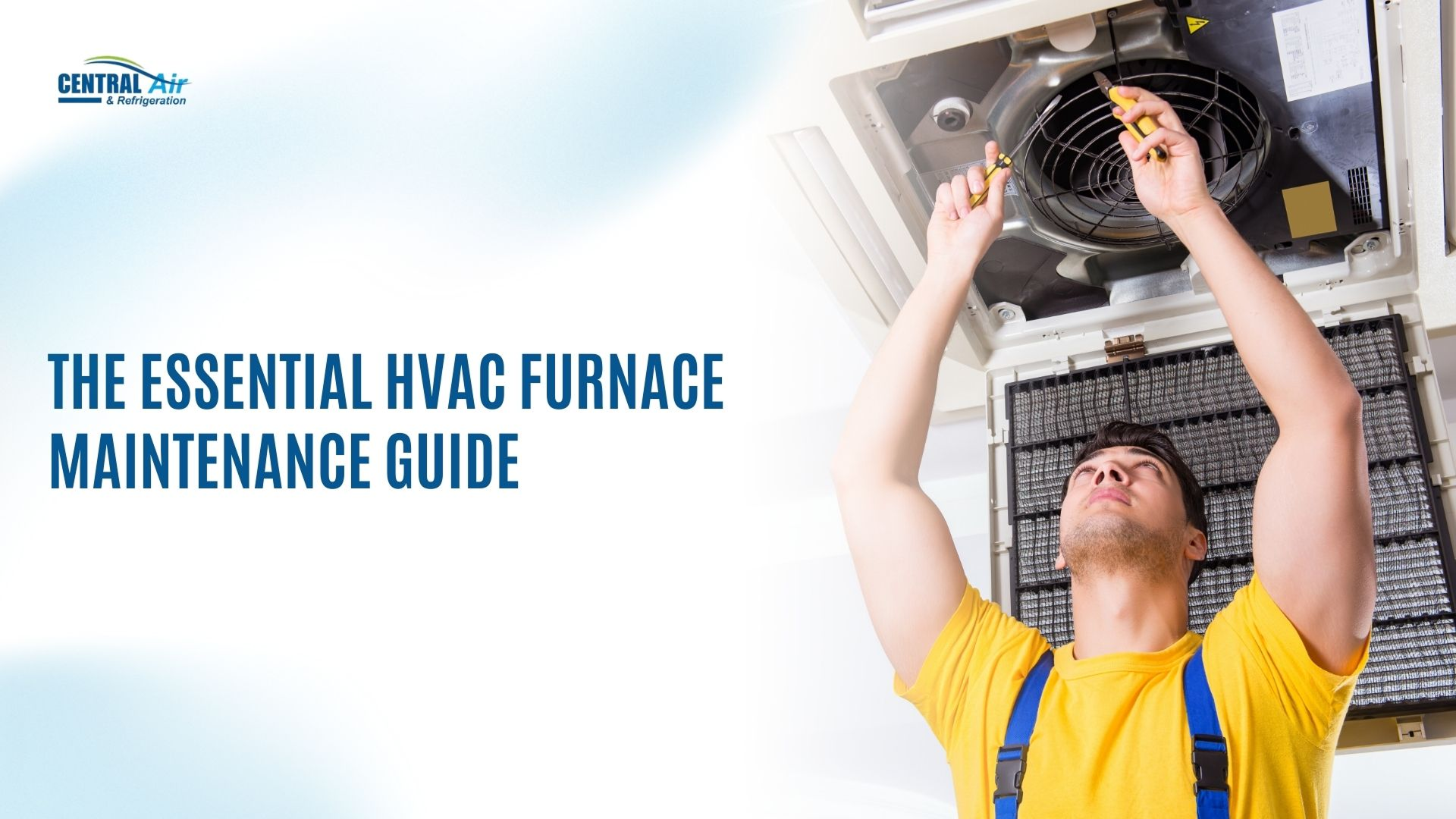
Professional maintenance ensures that your furnace operates at its best, extending its lifespan, enhancing safety, and improving energy efficiency. Here’s a breakdown of what a technician does during a comprehensive furnace service:
Clean & Inspect Internal Components (Blowers, Burners, Heat Exchanger, etc.)
A technician will remove dust and debris from critical components, clean the burners and flame sensors, and inspect the heat exchanger for cracks. This ensures safe combustion, prevents overheating, and maintains proper airflow, all of which help the system run efficiently and safely.
Check and Tighten Electrical Connections; Test Safety Controls
Loose or worn electrical connections can lead to system malfunctions or safety risks. A professional will inspect, tighten, and test all electrical components, ensuring that the furnace operates safely. Testing safety controls, like the high-limit switch, ensures the system shuts off in case of overheating, preventing potential hazards.
Lubricate Motors, Fans, Belts, and Moving Parts
Furnaces have multiple moving parts that need lubrication to function smoothly. Regular lubrication reduces friction, prevents wear, and keeps components like the fan motor and belt operating efficiently, which prolongs the system’s life and helps maintain consistent airflow.
Inspect Venting, Flue, and Exhaust System (for Gas/Propane Furnaces)
For gas or propane furnaces, a technician will inspect the venting and exhaust system to ensure proper operation. This is essential for preventing dangerous gas build-up or carbon monoxide leaks. Ensuring proper venting and exhaust is crucial for both the furnace’s efficiency and your home’s safety.
Measure System Performance & Safety Checks
A technician will test system performance, including ignition, flame quality, thermostat calibration, airflow, and emissions. Safety shut-offs will also be checked to verify that the system operates efficiently and safely. These tests help identify any issues early, preventing larger, costlier repairs.
To reap the full benefits of furnace maintenance, it is important to follow a consistent maintenance schedule.
Recommended Furnace Maintenance Schedule
Maintaining a furnace requires a combination of regular DIY checks and professional servicing. Here's a breakdown of how often you should perform each task to ensure optimal performance.
Monthly: DIY Checks During Heating Season
Every month during the heating season, homeowners should inspect the following:
Filters: Check for dirt buildup and replace or clean filters as needed to ensure proper airflow.
Vents: Ensure that vents and registers are clear of debris and not obstructed by furniture or curtains.
Thermostat: Verify that the thermostat is functioning correctly, and adjust it as necessary to maintain comfort.
Airflow: Ensure that air is circulating freely throughout the home to avoid hot or cold spots.
At Least Once Per Heating Season (or Annually): Professional Tune-Up
While regular DIY checks are essential, a professional furnace tune-up should be performed at least once per year, ideally before the heating season begins. Scheduling a tune-up in the fall ensures that your furnace is ready to operate at peak efficiency throughout the winter. An HVAC professional will clean, inspect, and test key components to prevent future breakdowns and improve system longevity.
Special Considerations: Older Systems or Heavy-Use Households
Homes with older systems or higher usage may require more frequent maintenance:
Pets: Households with pets may experience more dust and hair buildup, leading to clogged filters and reduced airflow. Consider changing filters every 1–2 months.
Smokers: Smoke can affect air quality and dirty filters, so more frequent filter changes may be necessary.
High Dust: Homes with high dust levels (due to construction, proximity to dirt roads, etc.) may need to replace filters more often and perform mid-season checkups to maintain airflow and system efficiency.
Even with a consistent maintenance schedule, it is important to stay alert for any signs that your furnace may need immediate attention.
Warning Signs Your Furnace Needs Immediate Attention
Even with regular maintenance, there are times when your furnace may need immediate attention. It's crucial to catch these issues early to avoid costly repairs and ensure safety.
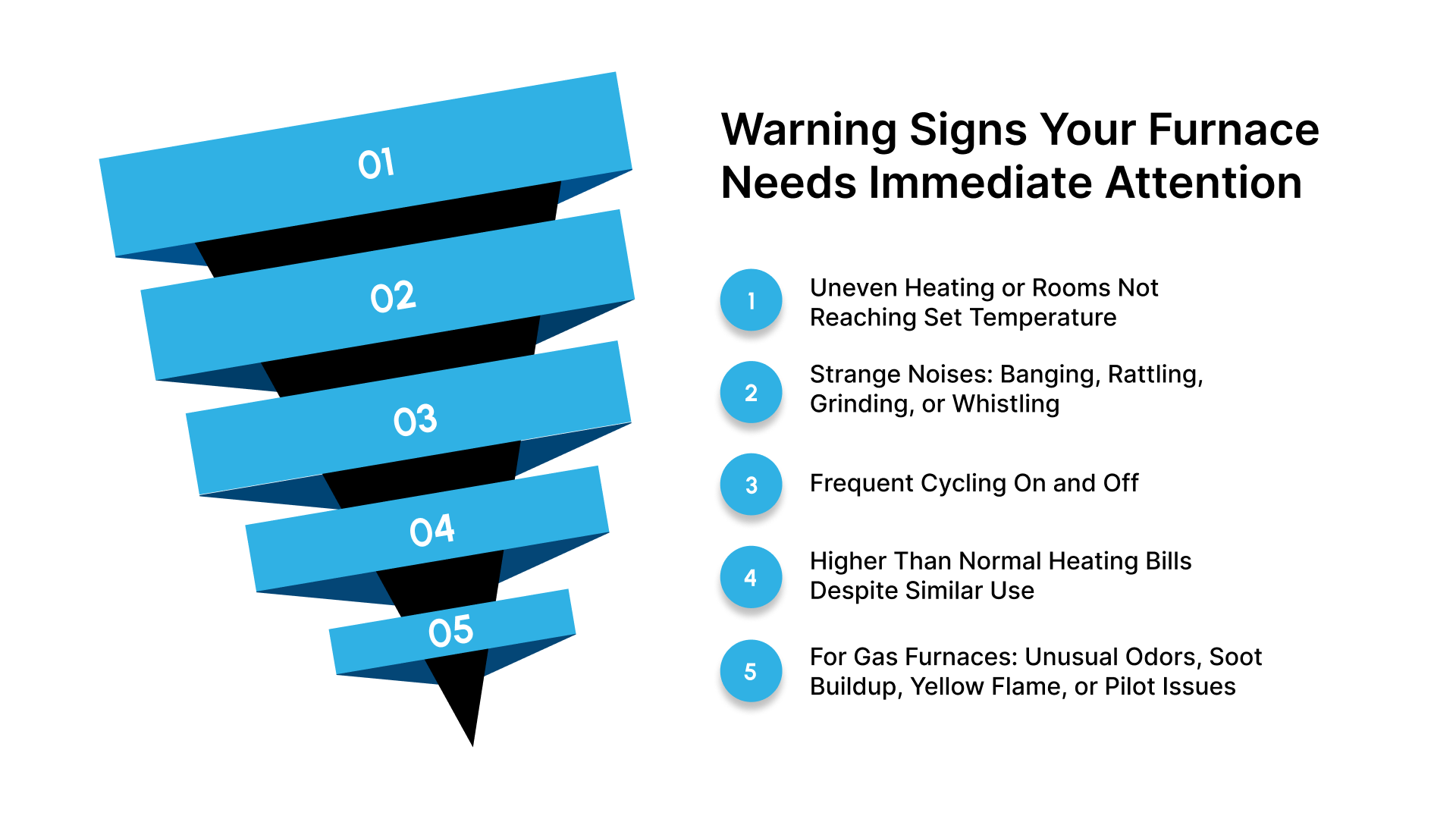
Uneven Heating or Rooms Not Reaching Set Temperature
If certain rooms or areas in your home are not getting warm enough, this could indicate airflow issues, a failing thermostat, or a problem with the heating element. Uneven heating can also signal duct leaks or blockages, requiring immediate attention to avoid energy waste.
Strange Noises: Banging, Rattling, Grinding, or Whistling
Unusual sounds coming from the furnace, such as banging, rattling, grinding, or whistling, are often signs of internal problems. These noises could indicate loose parts, debris in the blower fan, or a malfunctioning motor. Ignoring these sounds can lead to further damage.
Frequent Cycling On and Off (Short-Cycling)
If your furnace is turning on and off more often than usual, it could be short-cycling. This can occur due to an oversized unit, dirty filters, or a malfunctioning thermostat. Short-cycling puts extra strain on the system, leading to higher energy bills and potentially shortening the lifespan of the furnace.
Higher Than Normal Heating Bills Despite Similar Use
If your energy bills have spiked without any change in usage patterns, it’s likely that your furnace is working harder than it should. This could be caused by a dirty filter, poor airflow, or an inefficient system. A sudden increase in heating costs is a clear sign that your furnace needs attention.
For Gas Furnaces: Unusual Odors, Soot Buildup, Yellow Flame, or Pilot Issues
Gas furnaces can present serious safety risks if not maintained properly. Any unusual smells (especially a rotten egg or gas odor), soot buildup, a yellow pilot flame, or issues with the pilot light should be treated as potential gas leaks or combustion problems. These are safety hazards and require immediate professional intervention.
Maintenance is critical, and choosing the right professional partner can make all the difference in preventing these issues from escalating.
How a Trusted Local Contractor Can Make Furnace Maintenance Easier
When it comes to furnace maintenance, partnering with a trusted local contractor ensures that your system is well cared for year-round. Here’s how a professional service provider, like Central Air & Refrigeration, can make the entire maintenance process more efficient and stress-free.
Pre-Season Tune-Ups to Prepare for Cold Months
Scheduling a pre-season furnace tune-up ensures that your system is ready to handle the winter chill. By having a professional technician inspect and service your furnace before the heating season begins, you can avoid costly breakdowns and ensure efficient operation throughout the cold months.
Emergency Service for Unexpected Breakdowns
Even with regular maintenance, furnaces can still break down unexpectedly. In those cases, having a reliable contractor like Central Air & Refrigeration available for emergency service can minimize downtime and protect your home from discomfort. Quick responses ensure that you’re not left in the cold for too long.
Proper Cleaning, Safety Checks, and Documentation
A local contractor will provide thorough cleaning, safety checks, and detailed documentation of all maintenance performed. This not only ensures your furnace runs efficiently, but it also gives you peace of mind knowing that all necessary steps were taken to keep your system safe and in top condition.
Expert Advice on System Age, Efficiency Upgrades, and Replacement Options
As your furnace ages, you may need advice on whether it’s time for a replacement or efficiency upgrades. A trusted local HVAC provider can offer valuable insights into your system’s condition and help you choose the most cost-effective and energy-efficient options for your home.
Stay warm with reliable pre-season furnace care. Book your furnace inspection today.
Conclusion
Regular furnace maintenance is essential for ensuring your system runs efficiently, safely, and reliably. By keeping up with inspections, cleaning, and minor repairs, you can extend your furnace’s lifespan, reduce energy bills, and avoid costly breakdowns, all while maintaining a comfortable indoor environment for your home or business.
As the colder months approach, it is particularly important to schedule your furnace tune-up before the winter chill sets in. Prepping your system ahead of time will prevent uncomfortable breakdowns and improve overall system performance during the season when it’s needed most.
Don’t wait for a breakdown—get ahead of winter cold and protect your home or property with professional maintenance. Schedule your pre-winter furnace tune-up with Central Air & Refrigeration.
Contact us today.
Frequently Asked Questions (FAQ)
How often should I have my furnace serviced?
Annual professional maintenance (once per year, ideally before winter), plus DIY filter + vent checks monthly.
Can I clean my furnace myself or should a pro do it?
Basic tasks like filter changes and vent cleaning are fine DIY. Anything inside (burners, heat exchanger, wiring) should be done by a professional.
What happens if I skip furnace maintenance?
Expect reduced efficiency, higher energy bills, risk of breakdowns, shorter equipment lifespan, poor indoor air quality, and possible safety hazards for gas furnaces.
How much can I save by maintaining my furnace regularly?
Studies and HVAC guides suggest regular maintenance can improve efficiency by 5–15%, reducing energy use and lowering heating costs.
When is the best time to service a furnace?
Ideally in fall, before the heating season starts. Also worth inspecting if you notice signs like odd noises, uneven heating, or increased bills.