Introduction
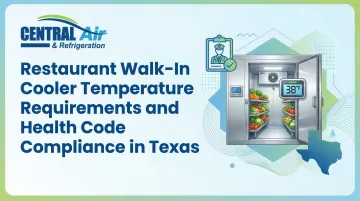
Walk-in cooler temperatures are a legal obligation that directly affects your Texas restaurant's inspection scores, operating license, and customer safety. Under Texas Food Establishment Rules (TFER), cold-holding temperatures must stay at or below 41°F for Time/Temperature Control for Safety (TCS) foods. Even a minor drift above that threshold can trigger rapid bacterial growth, immediate health violations, and costly consequences.
Texas restaurant operators face real compliance pressure. Summer heat across Bryan and the rest of the state pushes refrigeration systems hard, and health inspections arrive without warning.
A single temperature violation can result in fines up to $500 per day or forced closure. A walk-in reading 44°F may feel cold to the touch — it's still legally out of compliance and biologically dangerous.
This article breaks down the specific temperature thresholds required by Texas law, the real-world factors that cause temperature drift in commercial kitchens, how to monitor and document compliance effectively, and what's at stake when equipment fails or readings go unchecked.
Key Takeaways
- Texas restaurants must hold TCS foods at or below 41°F under TFER
- The danger zone (41°F–135°F) allows pathogens like Salmonella to double in as little as 20 minutes
- All coolers require a thermometer accurate to ±2°F positioned in the warmest area
- Door frequency, gasket wear, overloading, and Texas heat can all push cooler temps out of compliance
- Scheduled maintenance by certified technicians keeps coolers compliant and avoids costly violations
Walk-In Cooler Temperature Requirements Under Texas Law
The Texas Food Establishment Rules (TFER), administered by the Texas Department of State Health Services (DSHS), set the legal standards for restaurant refrigeration. TFER aligns with the FDA Food Code but establishes 41°F (5°C) as the enforceable cold-hold threshold—one degree warmer than the FDA's recommended 40°F. This is the temperature your walk-in must maintain, not a suggestion.
Time/Temperature Control for Safety (TCS) Foods
That 41°F threshold applies specifically to TCS foods (previously called Potentially Hazardous Foods, or PHF). These include:
- Raw and cooked meats, poultry, fish, and eggs
- Dairy products (milk, cheese, yogurt)
- Cooked rice, beans, and pasta
- Sliced melons and cut tomatoes
- Cut leafy greens and raw seed sprouts
The 6-Hour Cooling Chain Requirement
Texas law doesn't just regulate storage temperature—it governs how hot food enters cold storage. Under TFER §228.75(d)(1), cooked TCS foods must follow a strict two-stage cooling process:
- 135°F to 70°F within 2 hours
- 70°F to 41°F within an additional 4 hours (6 hours total)
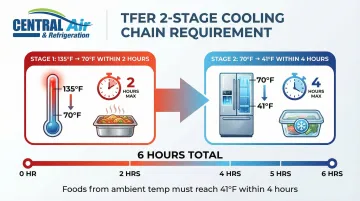
Foods prepared from ambient-temperature ingredients must reach 41°F within 4 hours. Your walk-in cooler must be capable of supporting these cooling rates without raising the ambient temperature above 41°F for other stored foods.
Date Marking and the 41°F Advantage
Temperature directly affects how long you can legally store ready-to-eat TCS foods:
- 41°F or below: Store for up to 7 days from preparation (Day 1 = prep day)
- 41°F to 45°F: Maximum storage drops to 4 days
Maintaining 41°F or below preserves the full 7-day shelf life. At 45°F, you lose three days of legally usable inventory per batch — a real cost in food waste and purchasing frequency.
Frozen Food Standards
While TFER doesn't specify a numeric temperature for frozen storage, it requires frozen food to remain "hard to the touch." Industry standard targets 0°F or below. Any product that has softened or shows signs of thawing is a violation during inspection.
Subchapter-Level Distinctions Worth Knowing
Reach-in coolers follow the same 41°F standard. A common misconception is that smaller prep-line units get a higher temperature allowance — they do not.
TFER §228.75(g) requires all open containers of ready-to-eat TCS food to be date-marked regardless of cooler type. During routine inspections, health inspectors check both the thermometer reading and date labels inside walk-ins.
The Temperature Danger Zone and Why 41°F Is the Compliance Threshold
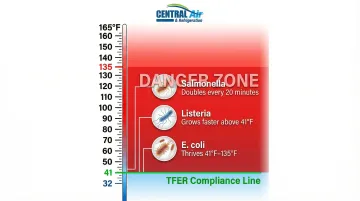
The Texas TFER danger zone spans 41°F to 135°F—the temperature range where foodborne pathogens multiply most rapidly. The 41°F lower limit reflects federal food science research establishing how quickly bacterial populations escalate once temperatures climb above refrigeration range.
How Quickly Pathogens Grow
Bacteria don't grow linearly—they grow exponentially within the danger zone:
- Salmonella can double in population in as little as 20 minutes at favorable temperatures
- Listeria monocytogenes grows measurably faster at 46°F compared to 39°F, even though both feel cold
- E. coli O157:H7 thrives in the 41°F–135°F band, with concentrations increasing rapidly under mild abuse conditions
The Invisible Failure Scenario
The most common violation occurs when food appears cold on the surface but has been sitting in a walk-in that drifted to 44–48°F over a weekend. Staff don't notice the difference by feel, but a health inspector's probe thermometer detects it immediately—and bacterial populations can double every 20–30 minutes at those temperatures, compounding across an entire weekend undetected.
Operating at 35–38°F rather than right at the 41°F limit creates a buffer that accounts for temperature spikes during busy door-open periods, heat introduced by loading warm product, and sensor calibration drift. That margin keeps you comfortably below the legal threshold when service pressure is highest.
One more distinction worth knowing: TFER requires the unit maintain an ambient air temperature capable of holding TCS food at 41°F or below, but the food product itself must be at or below 41°F—not just the surrounding air. Dense items like large cuts of meat absorb and retain heat longer than the air around them. An inspector will probe the food directly, not just read the wall thermometer.
Factors That Cause Walk-In Cooler Temperature Drift in Texas Restaurants
A walk-in that holds 38°F overnight in an empty kitchen can easily climb to 45°F or higher during a busy dinner service. In Texas's climate, that performance gap is wider than in most states. Understanding what drives temperature drift helps you prevent compliance failures before they happen.
Door Open Frequency and Duration
Every time your kitchen staff opens the walk-in door, warm, humid air rushes in. During high-volume service periods, cumulative heat load from repeated entries can raise the internal temperature by several degrees.
The refrigeration system then requires extended recovery time to bring the temperature back down. If door openings are frequent enough, the unit may never fully recover between cycles.
Gasket Integrity and Door Seal Failure
Worn or cracked door gaskets are one of the most common—and most overlooked—causes of sustained temperature elevation. Warm ambient air from a hot Texas kitchen infiltrates around a compromised seal, forcing the compressor to run longer and causing temperature creep even when the door is closed.
A visual inspection of gasket condition should be part of your weekly checklist.
Overloading and Blocked Airflow
Stacking product too densely or placing items directly against evaporator coils restricts cold air circulation, creating warm pockets inside the cooler. TFER also cites storing food under condensate lines as a violation due to cross-contamination risk, meaning proper product placement serves both temperature and hygiene compliance simultaneously.
Compressor, Refrigerant, and Coil Degradation
As refrigeration components age, the system's capacity to maintain setpoint diminishes:
- Dirty condenser coils reduce heat rejection efficiency
- Low refrigerant charge decreases cooling capacity
- Failing compressors struggle to maintain temperature under load
When ambient outdoor temperatures in Bryan spike during summer—often reaching 95°F to 100°F—these degraded components can't keep up. Commercial refrigeration systems lose approximately 6% of capacity for every 10°F increase in ambient temperature above the rated condition, making summer the highest-risk season for compliance failures.
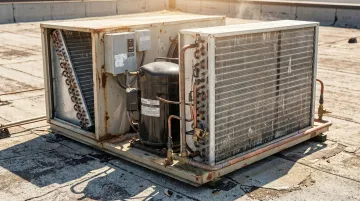
Preventive maintenance and periodic inspection by a certified refrigeration technician is the most reliable way to catch these issues before they cause a compliance failure during a health inspection. Central Air & Refrigeration provides commercial refrigeration maintenance for Bryan-area restaurants, with technicians trained to identify performance issues before they turn into violations or food loss.
Monitoring, Measuring, and Documenting Walk-In Cooler Temperature
Effective temperature monitoring is your first line of defense against violations and your best evidence of due diligence during inspections.
TFER Thermometer Requirements
TFER explicitly requires all refrigeration units to contain a thermometer accurate to ±2°F. That thermometer must be positioned in the warmest area of the cooler—typically near the door, not near the evaporator where readings run coldest and create a false sense of compliance.
Manual Temperature Logging Best Practices
Document cooler temperature at minimum three times daily:
- Opening shift
- Midday (during peak service)
- Closing shift
Each log entry should record:
- Time of reading
- Temperature
- Staff initials
While TFER doesn't require these logs to be kept on-site indefinitely, they demonstrate a pattern of compliance during inspections and help pinpoint when a temperature drift began.
Digital Data Loggers and Wireless Monitoring
Manual checks only capture a single moment. Digital data loggers and wireless monitoring systems go further by running continuously in the background. Key capabilities include:
- Records temperature around the clock with no manual effort
- Sends out-of-range alerts directly to a manager's phone
- Generates exportable logs ready for inspector review
A documented case at Cross Roads Independent School District in Texas shows how a networked controller detected a walk-in freezer failure over a weekend and sent an immediate alert. Staff responded instantly, preventing the loss of $10,000 in inventory.
What Happens When Your Walk-In Fails a Texas Health Inspection
Temperature violations carry serious consequences under Texas law, both immediate and long-term.
Violation Classification
A walk-in running above 41°F for TCS foods is classified as a Priority Item (critical violation) under TFER. This designation means it poses a direct public health risk and must be corrected immediately. Affected food must be discarded if it cannot be verified safe.
Priority Items contrast with Priority Foundation violations, which relate to equipment condition and may have a corrective action window of up to 3 calendar days.
Cascade of Consequences
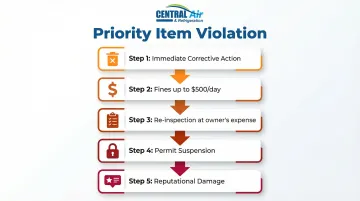
A single temperature violation triggers:
- Immediate corrective action required (discarding out-of-temp food)
- Potential fines up to $500 per day under Texas Health and Safety Code §437.0185
- Re-inspection scheduling at your expense
- Permit suspension in repeat or egregious cases
- Reputational damage from public inspection score postings and online reviews
These violations aren't isolated incidents. FDA risk factor studies consistently identify "Improper Holding/Time and Temperature" as one of the most common out-of-compliance risk factors in full-service restaurants, with non-compliance rates often exceeding 60–80% in observed inspections.
Emergency Response Protocol
When a walk-in fails during service, act immediately:
- Assess all TCS food temperatures with a calibrated probe thermometer
- Transfer food to a compliant unit if available
- Discard food that cannot be verified safe
- Call for emergency refrigeration repair
Central Air & Refrigeration provides 24/7 emergency service in Bryan, TX. Call (979) 324-6791 to reach a certified technician who can diagnose and restore a failing walk-in cooler fast.
Common Walk-In Cooler Compliance Mistakes Texas Restaurant Owners Make
These three errors appear on Texas health inspection reports more often than most operators expect.
Relying on Built-In Thermometers Without Calibration
TFER requires ±2°F accuracy, but thermometers drift over time. A unit display reading 40°F that is actually 4°F off could be holding food at 44°F—a clear violation. Verify the installed thermometer against a calibrated reference probe monthly and log each check.
Loading Hot Food Directly Into the Walk-In
Placing large containers of recently cooked product—soups, stews, large roasts—raises the ambient temperature immediately and stresses the refrigeration system. It also slows the cooling rate of other stored TCS foods already inside.
The TFER 6-hour cooling chain requirement cannot be met without rapid pre-cooling first. Use smaller, shallower containers or ice baths before the product enters the walk-in.
Ignoring Date-Marking Requirements
Inspectors treat a walk-in at 40°F that contains undated ready-to-eat TCS foods as a compliance failure regardless of the correct temperature. Date marking and temperature control are evaluated together—both must be correct for the cooler to pass inspection.
Frequently Asked Questions
What is the safe temperature for a walk-in cooler?
Under Texas TFER, walk-in coolers must maintain TCS foods at or below 41°F. Operators should target 35–38°F to build a safety buffer against door-open fluctuations and equipment variability.
What are the refrigerated storage guidelines?
TCS foods held at 41°F or below can be stored for up to 7 days with proper date marking. Proper food separation is required to prevent cross-contamination.
What are the best practices for walk-in cooler safety?
Log temperatures daily at opening, midday, and closing. Place a calibrated thermometer in the warmest part of the unit. Inspect door gaskets regularly, avoid overloading, and schedule preventive maintenance with a certified refrigeration technician.
What is the 2 2 2 rule for food?
Under Texas TFER, TCS food must cool from 135°F to 70°F within 2 hours, then from 70°F to 41°F within an additional 4 hours—a total cooling window of 6 hours. The "2 2 2" phrase is a shorthand reference to this staged cooling requirement.
Is ServSafe required in Texas?
TFER requires the Person in Charge to demonstrate food safety knowledge. Passing a department-approved Certified Food Manager exam—such as ServSafe—is the accepted method, making it effectively required for most Texas restaurant operators.
Don't wait for a failed inspection to find out your cooler is out of compliance. If your walk-in is showing temperature drift, unusual cycling, or your next health inspection is coming up, contact Central Air & Refrigeration at (979) 324-6791 for a full system evaluation. We specialize in commercial refrigeration for Bryan-area restaurants and offer preventive maintenance plans to keep your equipment compliant year-round.