
Introduction
Texas summers arrive early, stretch late, and push AC systems harder than nearly anywhere else in the country. In Bryan-College Station, where temperatures routinely exceed 95–100°F and systems run 8–10 months a year, the question of "how often should I service my AC?" has a different answer than it does for homeowners in cooler climates.
Skip service too long and you're looking at efficiency loss, climbing utility bills, and breakdowns at the worst possible time. Get the timing wrong and even a recent tune-up won't protect you through a July heat wave. This guide covers the right service frequency for Bryan-College Station homes, how your specific situation affects that schedule, and the timing mistakes that turn routine maintenance into an emergency call.
Key Takeaways
- Service your AC once a year — late winter or early spring is the right window for Bryan-College Station homeowners
- Older units, homes with pets, or heavy year-round usage benefit from twice-yearly service
- Skipping pre-summer service risks breakdowns when you need cooling most
- Delayed maintenance drains efficiency and shortens system lifespan
- If your AC shows symptoms now—weak airflow, rising bills, unusual sounds—call a technician immediately
Why AC Service Timing Matters More in Bryan-College Station
Bryan-College Station's climate isn't like most of the country. With summers that routinely hit 95–100°F and high humidity, AC systems here run 8–10 months a year rather than the national average of 4–6 months. The National Weather Service reports that the area averages 54 days per year with temperatures at or above 95°F and 15 days above 100°F. In extreme years like 2023, the region saw 75 days at or above 100°F.
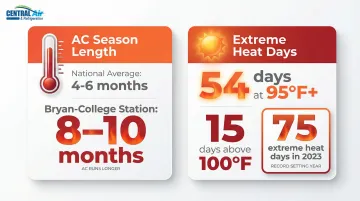
This extended cooling season means wear accumulates faster, and the stakes of a breakdown are far greater.
The Efficiency-Cost Connection
An AC that hasn't been serviced going into the Texas summer is already working harder than it should. Research shows that dirty condenser coils can increase compressor energy consumption by 30%, while fouled evaporator coils reduce airflow and degrade efficiency by 5–10%.
For Bryan-College Station homeowners, that hits directly in June–September, when electricity bills are already at their peak. With average residential electricity costs in College Station reaching $186 per month, a system that loses just 10% efficiency due to neglect could add over $200 annually to utility costs.
The Health and Safety Dimension
An AC failure in mid-July in Bryan isn't just an inconvenience—it's a genuine health risk. The CDC identifies air conditioning as the strongest protective factor against heat-related illness, particularly for elderly residents, children, and people with medical conditions. That makes proactive service timing critical, not optional.
Texas-Specific Stressors
Beyond extreme heat, Bryan-College Station systems face challenges most regions don't:
- High humidity accelerates condensate drain clogs and coil corrosion
- Long winter off-seasons mean components sit unused for months before spring startup
- Extended run times during summer place continuous stress on electrical connections and moving parts
How Often Should You Service Your AC? Scenarios for Bryan-College Station Homeowners
The general industry recommendation is once per year, but in Bryan-College Station's climate, the right answer depends on your system's age, usage pattern, and household conditions.
Based on System Age and Condition
Systems under 5–7 years old that run well typically need one annual service in early spring. These units haven't accumulated significant wear and generally maintain factory efficiency with consistent annual maintenance.
Systems over 10 years old — or those with any repair history — should be scheduled twice per year: spring and fall. ENERGY STAR notes that systems more than 10 years old should be monitored more closely, since the margin for error shrinks with age. Twice-yearly service catches wear before it becomes a failure.
Based on Household Usage and Occupancy
Homes with multiple occupants, pets, or anyone with respiratory sensitivities accumulate dust and debris faster. This leads to:
- Dirtier filters that restrict airflow
- Faster coil fouling that reduces efficiency
- More frequent condensate drain clogs
These households should plan for at least two service visits per year to maintain air quality and system efficiency. Central Air & Refrigeration offers bi-annual maintenance plans that include priority scheduling — useful when summer demand peaks and appointment windows fill fast.
Based on Seasonal and Operational Cycles
The best service windows for Bryan-College Station are:
- February through early April — Before the first major heat push, so the system is inspected, cleaned, and ready before peak demand
- October or November — Prepares the system for the shorter Texas winter and addresses any wear from summer's long run
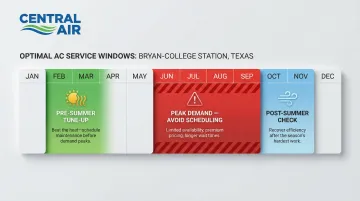
This timing keeps your AC at peak performance when you need it most, and surfaces problems before they turn into emergency calls.
Based on Warranty and Manufacturer Requirements
Many HVAC manufacturers require documented annual maintenance to keep warranties valid. Major brands like Lennox and Trane explicitly state that failure to maintain equipment by a licensed professional can void coverage on expensive components like compressors.
To protect that coverage:
- Keep records of all service visits
- Ensure technicians are certified and licensed
- Schedule service annually at minimum
- Document what was serviced and any recommendations
A skipped service year can void warranty coverage on compressor repairs — one of the costliest single-component failures in any residential AC system.
Signs It's Time to Schedule Your AC Service
Even if you're not in your normal service window, these warning signs indicate your AC needs attention now:
Watch for these performance issues first:
- Rising energy bills without changes in usage
- Rooms that don't cool evenly
- AC running longer cycles to reach the set temperature
- Warm air blowing from vents
- System struggling to maintain temperature during moderate heat
Physical condition can also reveal problems before they escalate:
- Visible ice on refrigerant lines or the indoor coil
- Water pooling near the air handler (clogged condensate drain)
- Musty or burning odors from vents
- Unusual sounds — grinding, rattling, or squealing
Some situations call for a service call even without obvious symptoms:
- More than 12 months since last service
- Recently moved into a home with unknown service history
- System coming out of a long winter idle period
- Preparing for summer after skipping spring maintenance
Any of these signs — especially heading into a Bryan summer — warrant a prompt inspection. Call Central Air & Refrigeration at (979) 324-6791 to schedule service before a minor issue becomes a major repair.
When to Avoid Scheduling AC Service
The most common timing mistake Bryan-College Station homeowners make is waiting until the system is already struggling in June or July to call for service. At that point:
- HVAC technicians are at peak demand
- Appointment wait times stretch longer
- Any discovered problem means your AC is down during the hottest period
- Emergency rates apply for urgent repairs
Scheduling service only after the AC fails during a heat wave means paying emergency rates, dealing with limited availability, and potentially going days without cooling. A spring appointment eliminates all of that.
DIY timing matters too. Attempting the following without proper tools or training can cause more harm than good:
- Cleaning evaporator or condenser coils
- Adding or adjusting refrigerant
- Clearing clogged drain lines
Leave internal service to certified technicians and stick to basic tasks — like monthly filter changes — between professional visits.
What Happens When You Skip or Delay AC Maintenance
Skipping maintenance carries measurable costs that compound over time.
Efficiency Drops Every Year You Wait
Unmaintained systems lose approximately 5% of efficiency per year. That means higher electricity bills each month with less cooling to show for it. A system that's gone three years without service could be running at 15% below its rated efficiency.
Small Problems Become Expensive Emergencies
Issues caught during a routine tune-up are cheap. Left unaddressed, those same problems compound fast:
- A worn capacitor ($150 repair) → Complete compressor failure ($1,500–$3,000)
- Low refrigerant charge ($200 fix) → Damaged compressor costing thousands
- Clogged drain line ($100 service) → Water damage to home and mold growth
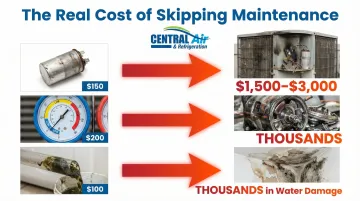
Compressor replacements—often triggered by neglected maintenance—can cost as much as half the price of a new unit.
How Maintenance Extends Equipment Life
Regular professional maintenance can extend a cooling system's operational life by 3 to 5 years. In Texas, where a new 3-ton system installation runs $8,500 to $16,500, that's a significant expense worth postponing.
If delayed maintenance has already led to a breakdown, Central Air & Refrigeration offers 24/7 emergency service to get your system running again.
Best Practices for AC Maintenance Scheduling in Bryan-College Station
Book Your Annual Tune-Up Early
Schedule your professional AC tune-up in February or March, before the spring heat ramp-up begins. This single habit is the most impactful step Bryan-College Station homeowners can take. Booking early also means avoiding the summer rush — slots fill fast once temperatures climb. Central Air & Refrigeration offers pre-season tune-ups at straightforward, flat-rate pricing.
Stay on Top of Between-Visit Maintenance
A professional tune-up does the heavy lifting, but a few simple tasks between visits protect that investment:
- Change air filters every 1–3 months (more often with pets or during high-pollen season)
- Keep the outdoor condenser unit clear of debris and vegetation
- Make sure vents throughout the home stay unobstructed
These steps maintain airflow efficiency and reduce strain on the system until your next scheduled service.
Keep a Simple Service Log
Once you've built a maintenance routine, document it. A photo of each technician's invoice is enough — note what was serviced, what was flagged, and when the next visit is due. This record supports warranty claims and helps any technician quickly understand your system's history.
Consider a Preventative Maintenance Plan
If staying on schedule feels like one more thing to manage, a maintenance plan handles it automatically. Central Air & Refrigeration's preventative plans include bi-annual visits, priority scheduling, repair discounts, and detailed maintenance reports — so you never miss a critical service window.
Frequently Asked Questions
Frequently Asked Questions
How frequently should you get your AC serviced?
Most homeowners should service once per year in early spring. Texas homeowners with older systems (10+ years), high usage, or pets should consider twice-yearly service for optimal performance and to catch age-related wear before it causes breakdowns.
Is yearly HVAC maintenance worth it?
Yes. Annual maintenance pays for itself through lower energy bills, avoided repair costs, and extended system life. In Bryan-College Station's climate, skipping service typically costs far more in emergency repairs and early replacement than any tune-up fee.
How much does a typical AC tune-up cost?
Tune-up costs vary by region and scope, but most residential AC tune-ups run between $75–$200 depending on what's included. Always ask for itemized pricing before the visit. Contact Central Air & Refrigeration at (979) 324-6791 for upfront pricing with no hidden fees.
What is the $5000 rule for HVAC?
The $5,000 rule is a guideline: multiply the repair cost by the system's age in years. If the result exceeds $5,000, replacement is likely more cost-effective than repair. For example, a 12-year-old unit needing a $600 repair (12 × $600 = $7,200) suggests replacement.
What is the 3 minute rule for air conditioners?
The 3-minute rule means waiting at least 3 minutes after turning off an AC before restarting it. This protects the compressor by allowing refrigerant pressures to equalize — especially important after power outages or manual shutoffs.