Introduction
For Bryan-College Station homeowners, air conditioning isn't a luxury—it's a necessity. When summer temperatures regularly exceed 100°F (and 2023 set a record with 75 days at or above that mark), a malfunctioning AC system quickly becomes a health and safety concern. One of the most common and costly causes of AC failure is a refrigerant leak.
Here's a critical fact many homeowners misunderstand: refrigerant doesn't "run out" like gasoline in a car. Your AC system is a closed loop—refrigerant circulates continuously and is never consumed during normal operation. If your refrigerant level is low, it means there's a leak that must be found and repaired, not just topped off.
Knowing the warning signs, understanding local repair costs, and acting quickly can be the difference between a manageable fix and a full system replacement.
Key Takeaways
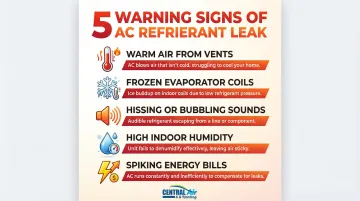
- Refrigerant leaks cause warm air from vents, frozen coils, hissing sounds, high humidity, and spiking energy bills
- Low refrigerant means there's a leak; recharging without fixing it is a temporary fix that makes the problem worse
- Running an AC with a leak risks compressor failure, turning a manageable repair into full system replacement
- Only EPA-certified technicians can legally handle refrigerant—this is not a DIY job
- Repair costs range widely — R-22 systems cost significantly more to service due to the refrigerant's phase-out and limited supply
Signs Your AC Has a Refrigerant Leak
Refrigerant is the chemical that absorbs heat from your indoor air and releases it outside. When levels drop due to a leak, this entire heat exchange process breaks down. Here's what to watch for:
Warm or Lukewarm Air from Vents
Even with your thermostat set to 68°F, the air blowing from your vents feels barely cool or room temperature. The system runs constantly but can't lower the indoor temperature effectively. This is often the first sign homeowners notice.
Frozen Evaporator Coils
A refrigerant leak can cause ice to form on your AC unit — even in the middle of a Bryan summer. When refrigerant pressure drops, the remaining refrigerant gets abnormally cold, freezing moisture directly onto the evaporator coil.
What you'll see:
- Ice buildup on the indoor unit (usually in the attic or closet where your air handler is located)
- Water pooling on the floor as ice melts
- Reduced or blocked airflow from vents
This ice formation stresses the compressor and can eventually cause complete system failure if left unaddressed.
Hissing or Bubbling Sounds
Refrigerant leaks often produce audible clues:
- Hissing sound: Gas escaping through a small crack or pinhole in copper tubing
- Gurgling or bubbling sound: A larger leak with refrigerant and oil escaping together
Where to listen: Near the indoor air handler and along any accessible refrigerant line sections running between your indoor and outdoor units.
Increased Indoor Humidity
Refrigerant doesn't just cool air — it removes moisture from it. When levels drop, your system loses its dehumidifying ability. In Bryan-College Station's already-humid climate, this is especially noticeable. The air feels muggy and sticky inside even with the AC running.
Health concern: Persistent moisture issues create ideal conditions for mold growth, which can trigger respiratory problems and allergies.
Short Cycling (Frequent On/Off)
A system low on refrigerant struggles to maintain proper pressure, triggering built-in safety shutoffs. You'll notice the unit turning on and off more frequently than normal — sometimes every few minutes rather than running steady 15-20 minute cycles.
This erratic behavior accelerates wear on the compressor and electrical components, shortening your system's lifespan.
Unexpectedly High Energy Bills
When your AC can't cool efficiently, it runs longer trying to reach the set temperature — drawing more electricity with every extra hour of runtime. Research shows that a system undercharged by just 25% can suffer a 15% reduction in efficiency and a 20% drop in cooling capacity.
Practical check: Compare your current electric bill to the same month last year. A spike of $50-100+ without explanation often points to system inefficiency.
If you're seeing one or more of these signs, the next step is getting a certified technician to inspect and diagnose the system before the damage compounds.
What Causes AC Refrigerant Leaks?
Refrigerant leaks don't happen randomly. In Bryan-College Station's heat and humidity, several specific conditions accelerate wear on refrigerant lines and coils. Here are the most common culprits:
Corrosion of Copper Lines and Coils
In humid climates like ours, metal components degrade faster. The most damaging form is formicary corrosion—a chemical reaction between copper, moisture, and organic acids from household products like cleaners, cosmetics, and paints.
How it develops:
- Microscopic pinholes form in copper tubing
- Research shows formicary corrosion causes approximately 10% of early coil failures
- Under a microscope, the corrosion resembles an ant's nest tunneling through copper walls
- Leaks start small but worsen over time
Vibration and Wear Fatigue
Your compressor runs constantly during Texas summers, creating vibration that weakens tubing walls and loosens solder joints over time.
Vulnerable points:
- U-bends in refrigerant lines
- Braze joints where copper sections connect
- Connection points between lines and coils
- Valves and fittings on the outdoor unit
Improper installation—faulty brazing, overtightened fittings, or misaligned connections—accelerates this process significantly.
Physical Damage
Accidental damage from landscaping equipment, lawn mowers, or home renovation work near the outdoor unit can cause immediate leaks. Common damage scenarios include:
- Lawn mower or trimmer strikes on exposed refrigerant lines
- Dents or scrapes to the outdoor unit during renovation work
- Bent copper tubing from shifting soil or improper unit placement
Older R-22 systems installed before 2010 face higher risk overall — age and the materials used at the time make them more prone to corrosion-related failures.
Why a Refrigerant Leak Is a Bigger Problem in Bryan-College Station
Extreme Heat Creates Health Emergencies
Bryan-College Station summers are brutal. In 2023, the area experienced 75 days with temperatures at or above 100°F—shattering the previous record. Even a few hours without effective cooling can create dangerous indoor heat conditions.
Who's most at risk:
- Young children (less effective temperature regulation)
- Elderly residents (reduced ability to sense and respond to heat)
- Pets (limited cooling mechanisms)
- Anyone with chronic health conditions
A refrigerant leak doesn't just mean discomfort—it can become a medical emergency during peak summer heat.
Health Risks from Refrigerant Exposure
Modern refrigerants (R-410A) and older refrigerants (R-22) pose health risks if leaked into enclosed spaces.
Exposure symptoms:
- Dizziness and lightheadedness
- Nausea
- Respiratory irritation
- Loss of concentration
One detail worth knowing: refrigerants are heavier than air and sink to floor level, which puts children and pets at higher exposure risk.
If you notice a strong chemical smell or sudden dizziness near your AC unit: Ventilate the home immediately, turn off the system, and move vulnerable occupants away from the indoor unit area.
Compressor Damage: The High-Stakes Consequence
When a system runs with insufficient refrigerant, the compressor lacks proper lubrication and cooling from the refrigerant itself. This leads to overheating and eventual failure.
The financial reality:
- A refrigerant leak repair might cost $250-$500
- A failed compressor replacement costs $1,300-$2,500+
- In many cases, compressor failure makes full system replacement ($4,500-$9,000) the more cost-effective option
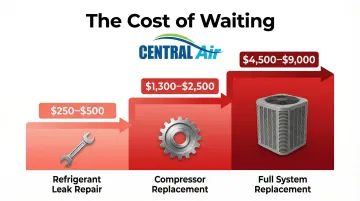
Running your compressor on low refrigerant will shorten its life fast. What starts as a $300 repair can escalate into a $5,000+ replacement decision if the problem goes ignored.
AC Refrigerant Leak Repair Costs in Bryan-College Station
Repair costs vary based on the leak's location, severity, system age, and refrigerant type. Here are realistic local cost ranges for the Brazos Valley area:
Leak Detection Costs
Professional diagnosis typically involves electronic leak detection, UV dye inspection, or nitrogen pressure testing. Standard diagnostic service runs $79–$129 locally, with advanced detection methods ranging $100–$450 depending on system complexity.
Refrigerant Recharge Costs
The cost to recharge depends on which refrigerant your system uses:
- R-410A (modern systems, post-2010): $100–$350 for a typical residential recharge — pricing has remained relatively stable
- R-22 (older systems, pre-2010): Significantly more expensive; production and import were banned as of January 1, 2020, so only recycled or stockpiled supplies remain, driving costs up sharply
Important: Recharging without fixing the leak isn't a real repair — refrigerant will escape again, and you'll face the same problem (and cost) within months.
Repair Costs by Severity
| Repair Type | Cost Range | What's Included | |-------------|------------|-----------------|\n| Minor line repair | $250-$500 | Re-brazing small section of copper tubing, replacing valve, labor + refrigerant refill | | Evaporator coil replacement | $600-$2,000 | New coil, labor, refrigerant recharge, system testing | | Condenser coil repair | $500-$1,500 | Coil repair or replacement, labor, refrigerant | | Compressor replacement | $1,300-$2,500+ | Often triggers repair-vs-replace decision |
The R-22 Decision Point
For homeowners with older systems still running on R-22, the economics often favor replacement over repair.
Here's how the numbers typically compare:
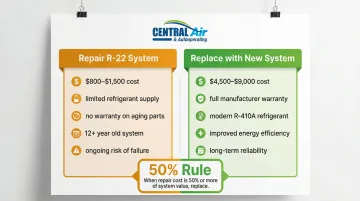
- Repairing a leak and recharging R-22 on a 12+ year old system: $800–$1,500
- Replacing with a new, efficient R-410A system with warranty: $4,500–$9,000
A widely used rule of thumb: if repair costs exceed 50% of what a replacement would cost, a new system is usually the smarter investment — especially for systems over 10 years old.
A certified technician can walk you through both options based on your system's age, current condition, and realistic remaining lifespan.
What Bryan-College Station Homeowners Should Do Next
Immediate Response Steps
If you notice signs of a refrigerant leak, take these actions immediately:
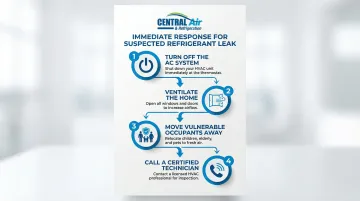
- Turn off the AC system - Continuing to run a leaking system accelerates compressor damage
- Ventilate if needed - Open windows briefly if you detect any chemical odor
- Move vulnerable occupants - Keep children, elderly, and pets away from the indoor unit area
- Avoid the outdoor unit - Don't attempt to inspect or touch refrigerant lines yourself
Document Before Calling a Technician
Help your HVAC professional diagnose faster by noting:
- When symptoms first started
- Photos of any ice buildup or staining on refrigerant lines
- Any unusual sounds (hissing, bubbling, gurgling)
- Recent service history if known
- Approximate age of your system
This information can reduce diagnostic time and potentially lower your service costs.
Why DIY Is Not an Option
Refrigerant handling is federally regulated under EPA Section 608 of the Clean Air Act. Only EPA-certified technicians can legally purchase, handle, and recharge refrigerants.
Trying to handle it yourself creates real risks:
- DIY refrigerant "top-off" kits sold online are not designed for central AC systems
- Using the wrong refrigerant type can cause severe system damage
- Improper handling violates federal environmental laws
- Leak detection and repair require professional-grade equipment
- Certified technicians are trained to safely evacuate and recharge systems
Given those risks, calling a licensed technician isn't just the safer choice — it's the only legal one.
Call Central Air & Refrigeration
Central Air & Refrigeration has been serving Bryan-College Station homeowners for over 10 years with certified HVAC technicians, transparent pricing, and emergency services when you need them most.
Here's what you get:
- Comprehensive leak detection using professional equipment
- Clear, itemized repair quotes with no hidden fees
- Line repair through full refrigerant recharge
- Fast-response emergency service available
- Honest advice on repair vs. replacement for older systems
Contact Central Air & Refrigeration at (979) 324-6791 to schedule service. Serving Bryan, College Station, and the broader Brazos Valley area with fast response times and expert refrigerant leak repair.
Frequently Asked Questions
What are the signs of low AC refrigerant?
Common symptoms include:
- Warm air blowing from vents
- Ice buildup on the evaporator coil
- Hissing or bubbling sounds near refrigerant lines
- High indoor humidity
- Rising energy bills
Together, these point to a refrigerant leak rather than a simpler issue like a dirty filter.
How much does it cost to fix a Freon leak in an AC unit?
Repair costs in the Bryan-College Station area range from $250-$500 for minor line repairs to $600-$2,000 for coil replacement. The total cost includes labor, parts, and refrigerant, with the final figure depending on leak location and severity.
How much does it cost to recharge AC refrigerant?
Recharge costs depend on refrigerant type and amount needed. R-410A recharges typically cost $100-$350, while R-22 is significantly more expensive due to the federal phase-out. Without fixing the leak first, a recharge is just a temporary patch.
How much does Freon (refrigerant) cost per pound?
R-410A runs roughly $5–$10 per pound, while R-22 can cost $50–$150+ per pound due to the 2020 federal phase-out — only recycled supplies remain available. For homeowners with older R-22 systems, ongoing refrigerant costs can quickly make replacement more cost-effective than repeated repairs.
Is refrigerant the same as AC recharge?
No. Refrigerant is the chemical (R-410A or R-22) that circulates through your AC system. A recharge is simply the process of refilling it. The two terms are often confused, but a recharge only makes sense after the leak has been located and repaired — otherwise you're just refilling a system that will leak again.