Refrigeration systems operate around the clock, 365 days a year, and never get a break. Research suggests that refrigerators and freezers can account for 14%–15% of a household’s electricity use, which makes regular preventive maintenance essential for keeping energy costs under control and ensuring reliable long-term performance.
This energy demand increases significantly in hot and humid regions, where refrigerators and freezers must work even harder to stay cold. Extended summer heat forces compressors to run longer, interior temperatures rise faster every time the door opens, and moisture and dirt accumulate more quickly on coils and components. When maintenance is neglected under these conditions, you face a combination of problems: food spoiling before its time, unexpected breakdowns, higher monthly utility bills, and a shorter equipment lifespan.
To help you stay ahead of these issues, this guide walks through what to check, how often to maintain your refrigerator, early warning signs to watch for, and when to call a professional. With the right preventive maintenance routine, you can keep your refrigeration system efficient, dependable, and ready for extreme weather.
Quick Glance
Why maintenance matters: Refrigeration systems run 24/7 and use 14–15% of home electricity. Without preventive maintenance, they lose efficiency, break down faster, and risk food spoilage—especially in hot, humid Texas climates.
Homeowner maintenance checklist: Keep temps at 37–40°F (fridge) and 0°F (freezer), clean condenser coils every 3–6 months, inspect door seals, check drain lines, maintain airflow, listen for unusual noise, and replace water filters every 6 months.
What professionals handle: Annual tune-ups include refrigerant checks, electrical testing, compressor evaluation, deep coil cleaning, thermostat calibration, and a full diagnostic report to catch failures early.
How often to service: Monthly temperature/seal checks, quarterly coil and drain cleaning, and yearly professional service—done more frequently in Texas due to heat and humidity.
Warning signs: Fast food spoilage, frost buildup, rising energy bills, burning smells near the compressor, or the refrigerator running constantly mean the system needs immediate attention.
How Central Air & Refrigeration helps: Offers local Texas climate expertise, same-day/next-day service, preventive maintenance plans, honest diagnostics, and support for all refrigerator and freezer types.
Why Refrigeration Preventive Maintenance Matters
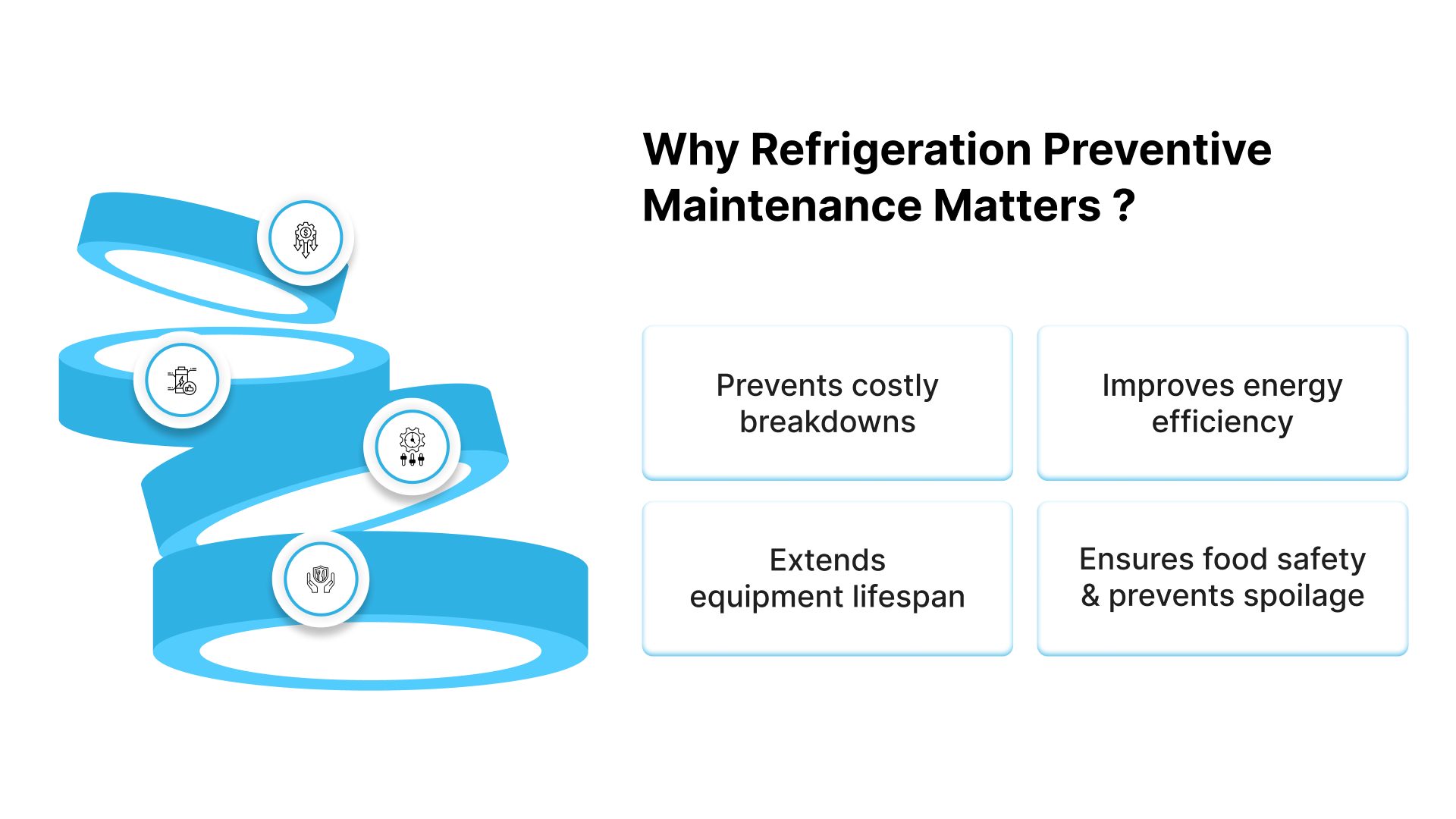
Preventive maintenance is beyond just keeping your refrigerator clean. It is also about protecting one of the most important appliances in your home from unexpected failures, rising energy costs, and food safety risks. Here is why refrigeration preventive maintenance matters:
Prevents costly breakdowns
In hot and humid climates like Bryan–College Station, the extra heat places added stress on compressors, condensers, and fan motors. When the system works harder to maintain stable temperatures, failure rates naturally increase, especially during peak summer months.
Small issues—such as dust-clogged coils, blocked vents, worn door gaskets, or insufficient airflow—may seem harmless at first, but they often lead to overheating, short cycling, or full compressor failure, which is one of the most expensive repairs.
Improves energy efficiency
A refrigerator cannot operate efficiently if its coils are dirty, airflow is restricted, or seals are leaking cool air. Dirty condenser coils alone can increase energy usage by 10–30%, driving up monthly bills without homeowners realizing it.
Routine cleaning and inspection help the system run at its intended performance level, keeping energy consumption and costs under control.
Extends equipment lifespan
Most refrigerators are designed to last 10–15 years, but systems that run harder due to poor maintenance often fail much earlier. When coils stay clean, fans operate smoothly, temperatures remain stable, and electrical components don’t overheat, the entire system experiences less wear and tear. Preventive maintenance helps maximize the useful life of the appliance, delaying expensive replacement.
Ensures food safety & prevents spoilage
Food safety is one of the biggest reasons maintenance matters. The USDA states that perishable foods must be stored at 40°F or below to prevent bacterial growth. Even minor temperature fluctuations can lead to spoilage, especially during summer when systems are more vulnerable to performance drops.
Regular maintenance helps your refrigerator maintain stable temperatures, preserving food quality and safety.
Now that the importance of refrigeration preventive maintenance is clear, here’s the detailed maintenance checklist every homeowner should follow.
The Ultimate Refrigeration Preventive Maintenance Checklist (Homeowner Edition)
A well-maintained refrigerator runs more efficiently, lasts longer, and keeps your food safe. Use this step-by-step checklist to keep your home refrigerator and freezer in top condition.
Check and record internal temperature
Keeping the correct temperature is the first line of defense against food spoilage.
Set refrigerator temperature between 37°F and 40°F
Keep freezer temperature at 0°F
Use an appliance thermometer for accuracy—the built-in dial is often inaccurate
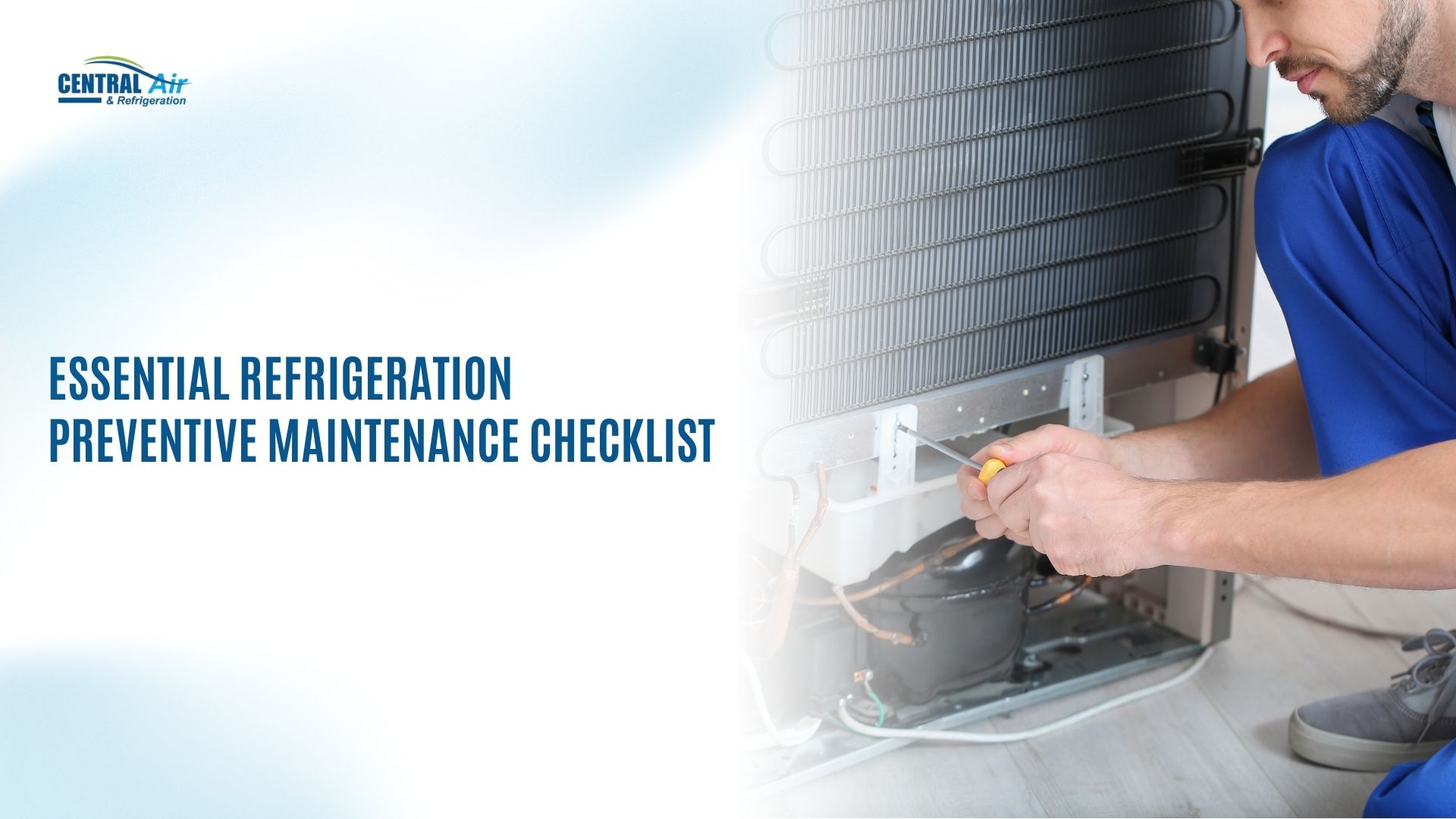
Inspect and clean condenser coils
Condenser coils remove heat from the system, and when they’re clogged, your compressor works overtime.
Dirty coils can cause overheating, short cycling, and early compressor failure
Clean coils every 3–6 months—and more frequently in hot, dusty Texas summers
Unplug the unit before cleaning using a coil brush or vacuum attachment
Inspect door seals (gaskets)
Good door seals keep cold air inside and reduce energy waste.
Check for cracks, warped edges, or mold buildup
Weak or damaged gaskets can cause 15–25% energy loss due to air leaks
Close a dollar bill in the door—if it slides out easily, the seal needs attention
Test defrost system & drain lines
A healthy defrost system prevents ice buildup that can block airflow.
Look for frost accumulation on the evaporator
Check the drain pan for standing water
Inspect drain lines for clogs, which can cause leaks or mold growth
Ensure proper airflow around the unit
Refrigerators need space to dissipate heat.
Maintain 2–3 inches of clearance between the back of the unit and the wall
Avoid packing the top or sides with items that restrict ventilation
Check fans & listen for unusual noise
Noise is often an early warning sign of mechanical issues.
Listen for clicking, buzzing, rattling, or loud humming
Inspect both evaporator and condenser fans for obstructions or dust buildup
Any irregular noise may signal failing motors or electrical problems
Inspect ice maker lines
Ice maker lines are common sources of leaks and water damage.
Check for drips, mineral buildup, or frozen supply lines
Make sure hoses are connected securely and not kinked
Replace water filter every 6 months
Keeping water filters fresh helps protect both water quality and ice taste.
Use manufacturer-approved filters
Set a reminder every 6 months to replace the filter
Next, let’s look at the maintenance tasks that should be handled by a professional to ensure long-term refrigeration performance.
Professional Refrigeration Maintenance Tasks (What Technicians Check)
While homeowners can handle basic upkeep, certain maintenance steps require professional tools, diagnostics, and training. These tasks help prevent hidden issues that often lead to premature failure or expensive repairs.
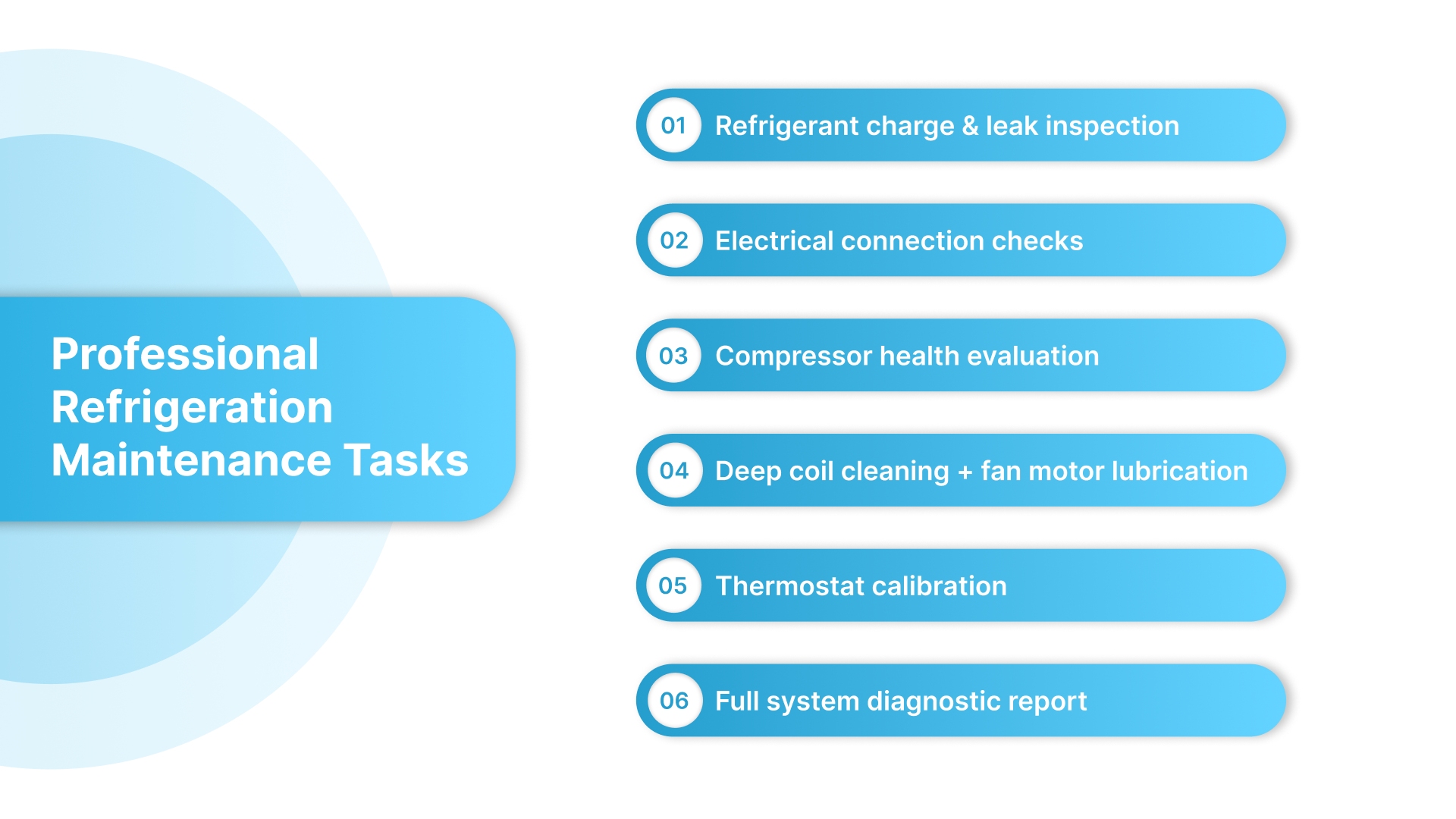
Refrigerant charge and leak inspection
Proper refrigerant levels are critical for efficient cooling.
Low refrigerant leads to weak cooling, temperature fluctuations, and increased energy use
It can also cause the compressor to overheat, shortening equipment lifespan
Technicians use gauges and electronic leak detectors to identify and correct refrigerant issues safely
Electrical connection checks
Faulty wiring can cause intermittent cooling failures or complete system shutdowns.
Professionals inspect and tighten electrical terminals
Loose wiring can create resistance, overheating, and potential fire risks
Voltage and amperage checks ensure components are operating within safe limits
Compressor health evaluation
The compressor is the most expensive component in a refrigeration system.
Technicians test amperage draw, operating temperatures, vibration levels, and startup performance
Early signs of compressor stress help prevent costly emergency replacements
Regular evaluation helps ensure long-term reliability
Deep coil cleaning + fan motor lubrication
Homeowners can clean surface dust, but deep cleaning requires specialized tools.
Technicians remove heavy debris and buildup that reduce efficiency
They lubricate fan motors to ensure smooth, quiet operation
Proper airflow reduces strain and supports optimal cooling performance
Thermostat calibration
Accurate temperature control is essential for food safety.
Technicians verify that thermostat readings match actual internal temperatures
Miscalibrated thermostats can cause unnecessary energy waste or food spoilage
Full system diagnostic report
A professional maintenance visit includes a complete system evaluation.
Technicians assess defrost cycles, fans, pressures, temperatures, sensors, and airflow
They identify early warning signs and create a plan to prevent future breakdowns
Homeowners receive a report outlining system condition and recommended improvements
Knowing what technicians do is only part of the equation—frequency is equally important.
How Often Should You Perform Refrigeration Preventive Maintenance?
Creating a consistent maintenance schedule ensures your refrigerator and freezer run efficiently year-round, especially in high-heat regions like Texas, where systems face additional strain.
Monthly checks
These quick tasks help catch small issues before they become serious:
Monitor internal temperatures using an appliance thermometer
Inspect door seals for cracks, moisture, or looseness
Regular monthly attention helps prevent unexpected performance drops.
Quarterly maintenance
Every 3 months, homeowners should perform deeper checks:
Clean condenser coils to maintain airflow and efficiency
Flush drain lines to prevent blockages and water leaks
Inspect fans for dust buildup or unusual noise
Quarterly maintenance is especially important in homes with high usage or warm climates.
Annual professional service
Once a year, schedule a full service with a licensed technician:
Comprehensive system tune-up including refrigerant, electrical, and component checks
Performance efficiency testing to ensure the system is cooling properly and operating safely
Annual service helps identify early warning signs and ensures food safety.
Extra considerations for Texas homes
Hot, humid Texas weather can increase workload and maintenance frequency:
Heavy summer loads may require more frequent coil cleanings or airflow checks
Homes with pets should clean coils more often due to increased hair and dust buildup
Older kitchens or enclosed refrigerator spaces may require airflow adjustments
Accounting for Texas climate conditions helps maintain reliable operation all year.
Next, let’s look at the warning signs that indicate something may already be wrong with your refrigeration system.
Early Warning Signs Your Refrigerator Needs Immediate Attention
Even well-maintained refrigerators can develop issues over time. Catching these early warning signs helps prevent food loss, costly repairs, and complete system failures.
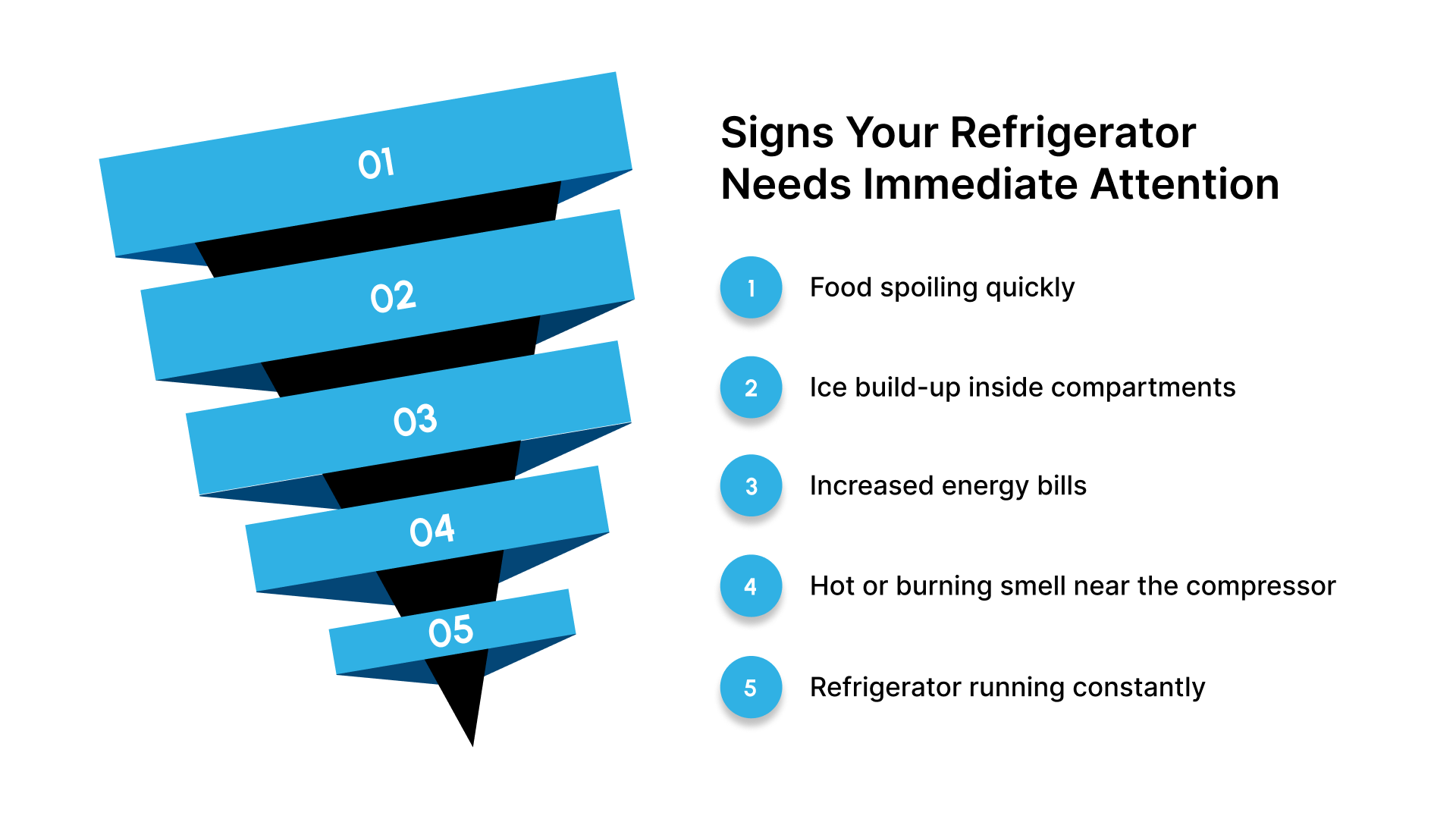
Food spoiling quickly
If milk, produce, or leftovers expire sooner than normal, it usually means the unit is struggling to maintain safe temperatures. This is often an early indicator of thermostat problems, weak cooling, or airflow restrictions.
Ice build-up inside compartments
Frost on the walls, drawers, or freezer shelves suggests a failing defrost system, clogged drain lines, or damaged door gaskets. Left unaddressed, this can lead to water leaks and reduced cooling efficiency.
Increased energy bills
A sudden spike in electricity use often means the system is running longer than it should—commonly caused by dirty coils, failing components, or refrigerant issues. Because refrigeration already accounts for about 13% of household energy use, inefficiency becomes noticeable fast.
Hot or burning smell near the compressor
Any warm, electrical, or burning smell behind the fridge is a serious red flag. It may be due to overheating, wiring problems, or compressor strain. Shut the unit off and schedule service immediately to avoid fire hazards or total system failure.
Refrigerator running constantly
While refrigerators cycle on and off throughout the day, non-stop operation points to temperature loss, weak refrigerant levels, dirty coils, or a failing thermostat. Continuous operation dramatically increases wear and electricity use.
Preventive maintenance offers protection, but its impact is even greater when paired with a trusted professional partner.
How Central Air & Refrigeration Helps You Protect Your Refrigeration System
A reliable refrigerator is essential for daily living, especially in regions where heat and humidity place extra strain on cooling appliances. Central Air & Refrigeration provides homeowners and businesses in Texas with local, dependable support to keep their systems running efficiently year-round. Here’s how:
Local expertise for Texas climate
Refrigeration systems in Texas experience heavier workloads due to high ambient temperatures and humidity. Central Air & Refrigeration’s technicians understand how local weather affects compressor performance, coil temperatures, and system efficiency, allowing equipment to be optimized for real-world conditions.
Rapid same-day or next-day service
When a refrigerator or freezer fails, delays can lead to spoiled food and avoidable expenses. Central Air & Refrigeration prioritizes refrigeration service calls to ensure fast scheduling and timely restoration of cooling performance.
Preventive maintenance plans available
Comprehensive maintenance programs include detailed inspections, coil cleaning, temperature verification, and performance testing. These preventive services help reduce the likelihood of sudden breakdowns, extend equipment lifespan, and lower long-term operating costs.
Support for multiple systems
Technicians are trained to service a wide range of residential cooling appliances, including standard refrigerators, standalone freezers, garage refrigerators, wine coolers, and compact units, ensuring consistent, high-quality support across all equipment types.
Conclusion
Refrigeration systems play a critical role in everyday home comfort, food safety, and energy efficiency. Routine preventive maintenance helps prevent costly breakdowns, reduces energy waste, prolongs equipment lifespan, and ensures your refrigerator consistently holds safe temperatures.
For homeowners and businesses who want peace of mind and better long-term performance, partnering with a trusted local expert is the smartest approach. Central Air & Refrigeration provides thorough inspections, fast service, and reliable preventive maintenance tailored to Texas conditions. Schedule your service today.
Frequently Asked Questions (FAQ)
1. How often should refrigeration systems be serviced?
Home refrigerators should receive basic checks like temperature monitoring and gasket inspection every month. Coil cleaning and airflow checks are typically recommended every 3–6 months. A full professional tune-up is ideal once per year, especially in hot climates where systems operate more heavily.
2. What are the most common refrigeration problems?
Frequent issues include dirty condenser coils, worn door seals, blocked drain lines, low refrigerant, faulty thermostats, compressor strain, and failed evaporator fans. Many of these problems start small and worsen over time if preventive maintenance is skipped.
3. How do I know if my refrigerator needs maintenance?
Warning signs include food spoiling faster than usual, frost buildup, unusual noises, rising electricity bills, water pooling, or the refrigerator running constantly. Any hot or burning smell near the back of the unit should be treated as urgent.
4. How long should a refrigerator last with proper maintenance?
Most modern refrigerators last 10–15 years, but regular maintenance, such as coil cleaning, gasket inspection, and annual tune-ups, can significantly extend lifespan and reduce failure rates, especially in high-use climates like Texas.
5. Does cleaning refrigerator coils really make a difference?
Yes. Dirty coils can force the compressor to work harder, increasing energy consumption by 10–30% and accelerating wear. Cleaning coils every few months is one of the easiest and most impactful maintenance tasks homeowners can perform.